
微塑料通过改变土壤性质和直接吸附对土壤胞外酶活性的抑制作用——在土壤团聚体水平上的研究
Title: Inhibitory effect of microplastics on soil extracellular enzymatic activities by changing soil properties and direct adsorption: An investigation at the aggregate-fraction level.
DOI: https://doi.org/10.1016/j.envpol.2020.115544
Abstract
Microplastics (MPs), as a new type of environmental pollutant, pose a serious threat to soil ecosystems. The activities of soil extracellular enzymes produced by microorganisms are the potential sensitive indicators of soil quality. However, little is known about the response mechanism of enzyme activities toward MPs on a long-term scale. Moreover, information on differences in enzyme activities across different soil aggregates is lacking. In this study, 150 days of incubation experiments and soil aggregate fractionation were combined to investigate the influence of MPs on extracellular enzyme activities in soil. 28% concentration of polyethylene with size 100 mm was adopted in the treatments added with MPs. The results show that MPs inhibited enzyme activities through changing soil nutritional substrates and physicochemical properties or through adsorption. Moreover, MPs competed with soil microorganisms for physicochemical niches to reduce microbial activity and eventually, extracellular enzyme activity. Enzyme activities in different aggregate-size fractions responded differently to the MPs exposure. The catalase in the coarse particulate fraction and phenol oxidase and b-glucosidase in the micro-aggregate fraction exerted the greatest response. With comparison, urease, manganese peroxidase, and laccase activities showed the greatest responses in the non-aggregated silt and clay fraction. These observations are believed to stem from differences in the key factors determining the enzyme activities in different aggregate-size fractions. The inhibitory pathway of microplastics on activities of extracellular enzymes in soil varies significantly across different aggregate fractions.
Keywords: polyethylene particles; physicochemical properties; extracellular enzyme activities; aggregate-size fractions; long-term incubation
Methods
1. Classification of soil aggregate components
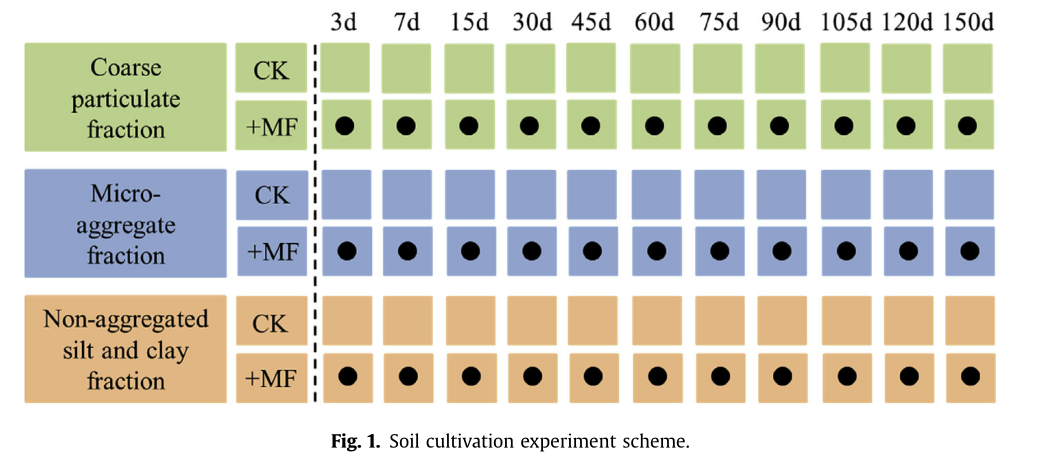
The dried soil samples were shaken through a series of sieves with mesh sizes of 2, 0.25, and 0.053 mm and then separated into PF(coarse particulate fraction, 250~2000μm), MOF(micro-aggregate fraction, 53~250μm), and NASCF(non-aggregated silt and clay fraction, <53μm) fractions by dry sieving. According to whether PE(polyethylene , 28%,w/w) is added or not, it is divided into the following six treatments:PF-CK; PF-MP; MOF-CK; MOF-MP; NASCF-CK; NASCF-MP (Fig. 1).
100 g of soil fractions without MPs addition or soil-MPs mixture were placed into a filter bag with the mesh size of 40 mm. The main purpose of using filter bags was to keep the soil aggregate fractions in an environment that simulated the real soil and facilitate collections of soil aggregate fractions during the soil incubation process.Finally, the filter bags were buried in plastic containers with 4 kg of un-fractionated soil that had been preincubated for 7 days.
Filter bags were taken out of the incubation containers on 3, 7, 15, 30, 45, 60, 75, 90, 105, 120, and 150 days (Fig. 1). The collected soil samples were divided into two sub-samples for the determination of soil physical and chemical properties and soil enzyme activity.
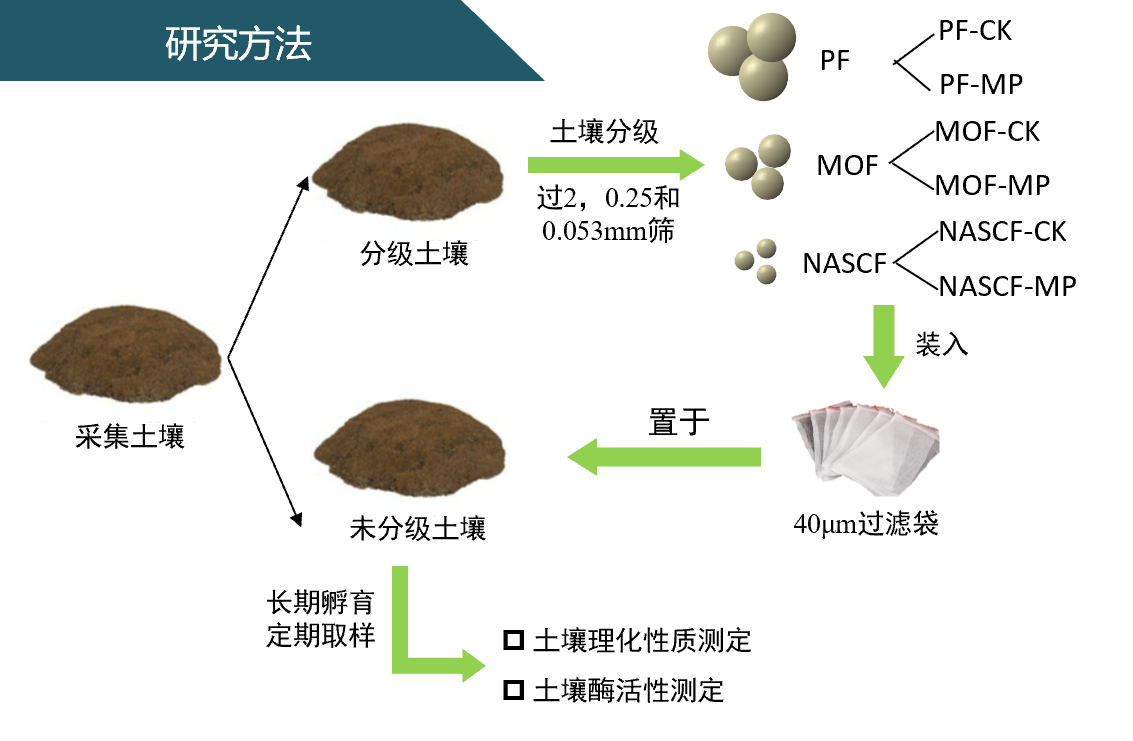
Soil classification operation process(Editor's personal supplement)
2. Measurement indicators and analysis methods
(1)Soil physicochemical analysis: TOC、DOC、TN、ON、TP、OP、K、pH、CEC(cation exchange capacity)
(2)Soil enzyme activity assay: CAT(catalase)、PO(phenol oxidase)、URE(urease)、MnP(manganese peroxidase)、LAC(laccase)、GLU(β-glucosidase)
(3)Correlation analysis was performed to determine the relationship between extracellular enzyme activities and soil physicochemical factors throughout incubation period.
(4)Structural equation models (SEMs) were used to establish the relationship among enzyme activities and soil physicochemical factors.
Results
1. Effects of MPs on soil microenvironments in different aggregate-size fractions.
After 150 days, the addition of PE had a significant negative impact on the physical and chemical properties of the soil: PE additon reduced the content of N, P, K in the soil, and significantly reduced TOC and DOC. It may be related to the longer research period of cultivation, which destroys the structure of soil aggregates and loses organic carbon.
In addition, soil pH decreases and CEC (cation exchange capacity) decreases. In addition, soil pH decreases and CEC (cation exchange capacity) decreases.
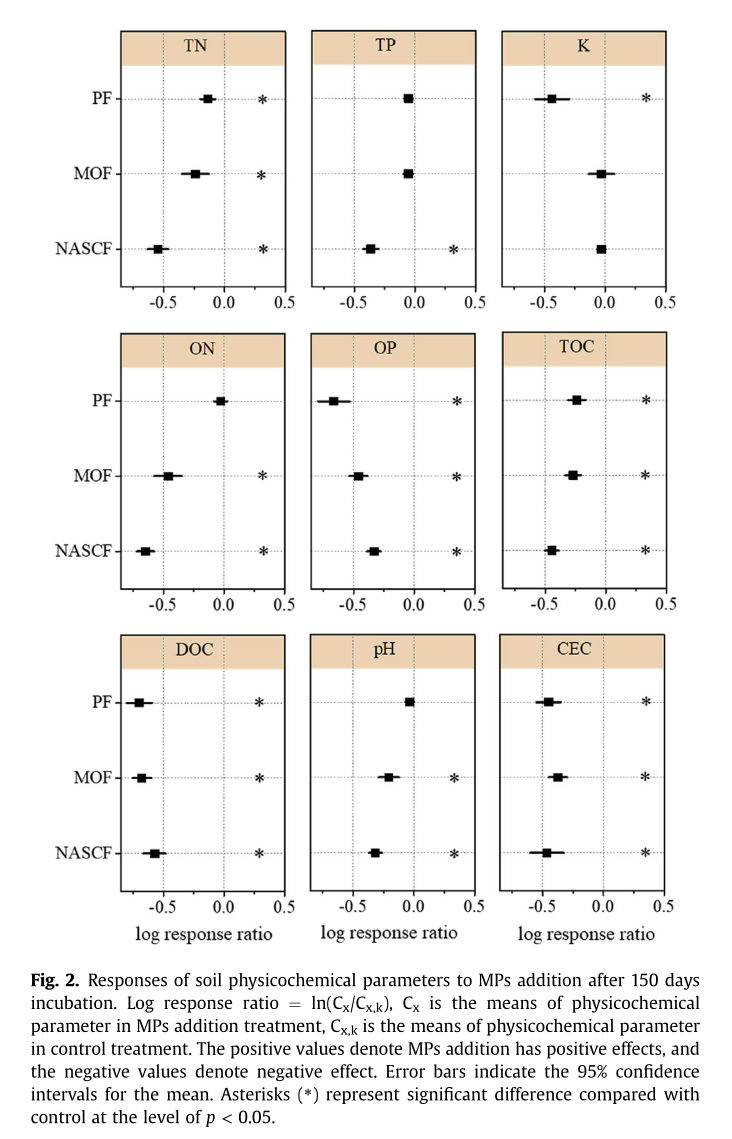
Fig. 2. Responses of soil physicochemical parameters to MPs addition after 150 days incubation. Log response ratio = ln(Cx/Cx,k), Cx is the means of physicochemical parameter in MPs addition treatment, Cx,k is the means of physicochemical parameter in control treatment. The positive values denote MPs addition has positive effects, and the negative values denote negative effect. Error bars indicate the 95% confidence intervals for the mean. Asterisks (*) represent significant difference compared with control at the level of p < 0.05. 2. PHBV addition increases soil enzyme activity, especially its effect on leucine aminopeptidase (LAP).
2. Differences in extracellular enzyme activities in response to MP exposure in different aggregate-size fractions.
After 150 days of PE treatment, the activities of CAT, MnP, PO, LAC, URE and GLU were all significantly reduced. Generally, the enzyme activity of larger soil aggregates was higher than that of smaller soil aggregates.
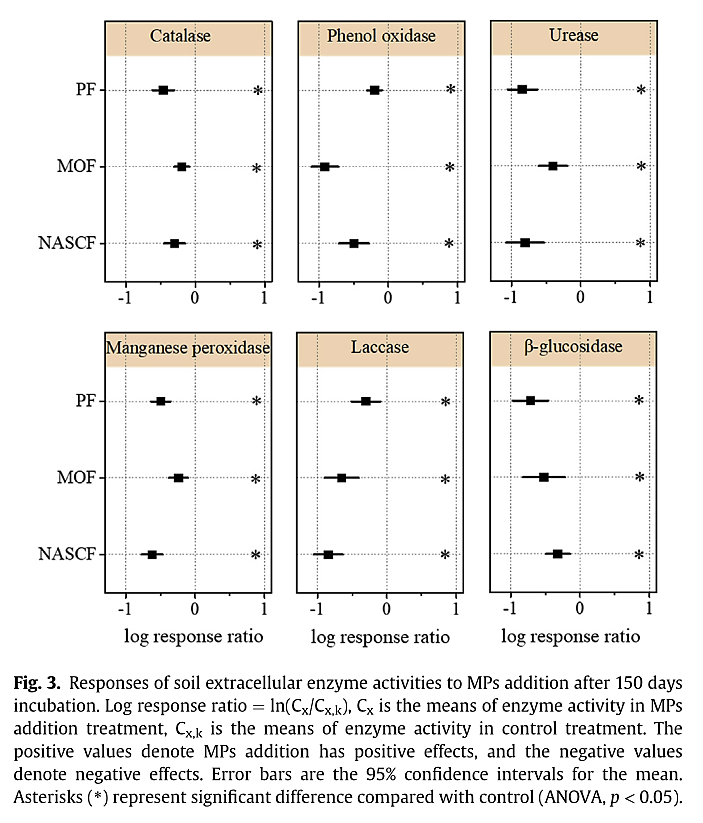
Fig. 3. Responses of soil extracellular enzyme activities to MPs addition after 150 days incubation. Log response ratio ¼ ln(Cx/Cx,k), Cx is the means of enzyme activity in MPs addition treatment, Cx,k is the means of enzyme activity in control treatment. The positive values denote MPs addition has positive effects, and the negative values denote negative effects. Error bars are the 95% confidence intervals for the mean. Asterisks (*) represent significant difference compared with control (ANOVA, p < 0.05).
3. Key factors determining enzyme activities in the presence of MPs in different aggregate-size fractions.
(1)Correlation coefficient analysis shows that TN, DOC and OP were significantly positively correlated with the activities of various enzymes in the three soil components(Fig. 4).
(2)The correlation between soil physical and chemical factors and enzyme activity in NASCF was stronger than that of PF and MOF(Fig. 4), indicated that small aggregate soil was more sensitive to microplastic pollution.
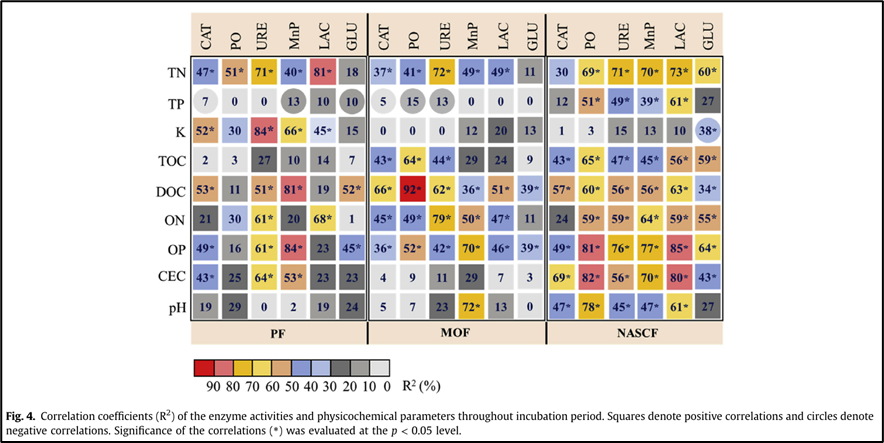
Fig. 4. Correlation coefficients (R2) of the enzyme activities and physicochemical parameters throughout incubation period. Squares denote positive correlations and circles denote negative correlations. Significance of the correlations (*) was evaluated at the p < 0.05 level.
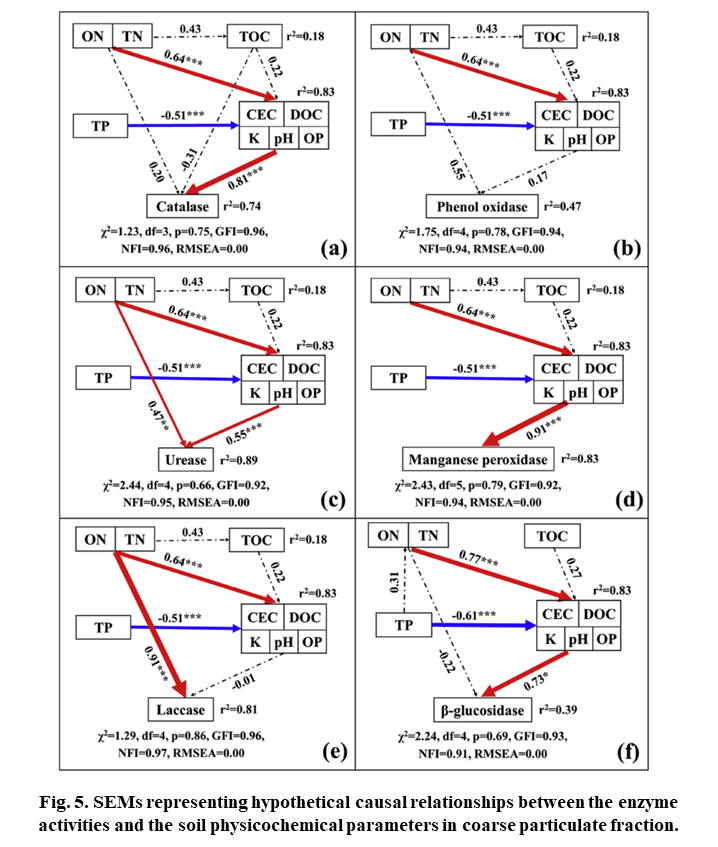
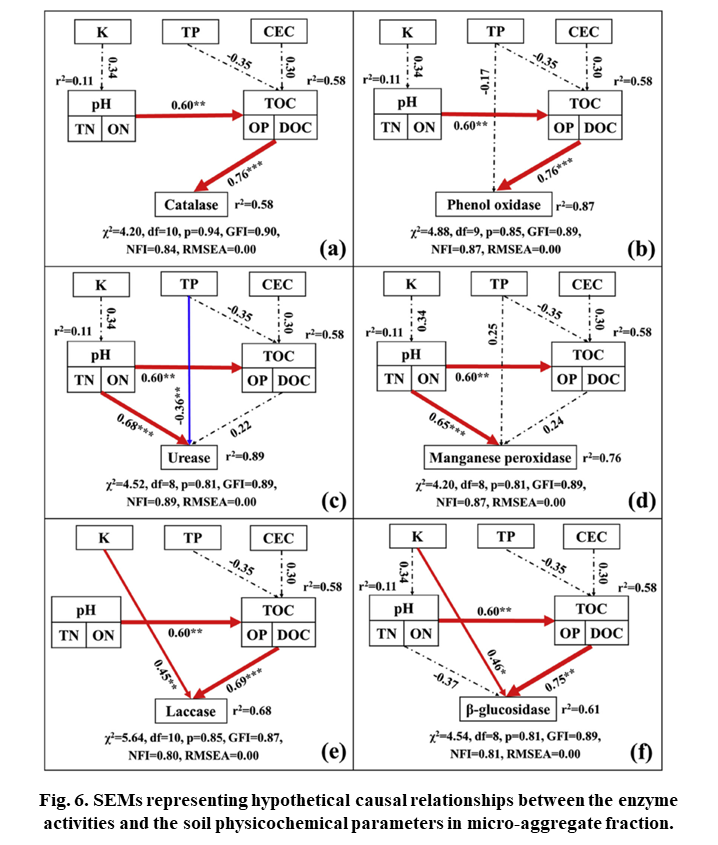
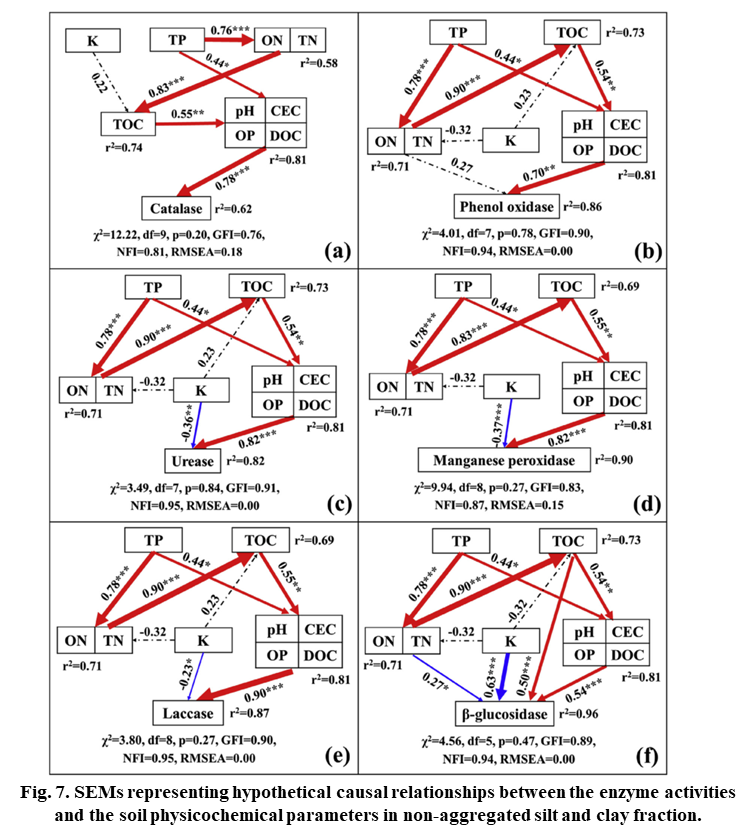
(3)SEM analysis of key factors affecting soil enzyme activity showed that DOC and OP had direct and significant positive effects on the activities of various enzymes in the three components. TN, ON, and TP were also significantly related to enzyme activity, mainly manifested as indirect effects. In addition, soil pH and K content were also important influencing factors(Fig. 5-7).
Conclusion
Soil MP contamination significantly affected the physical and chemical properties of soil. The nutrient elements of N, P, and K, and the nutritional components of DOC, OP, and ON declined as a result of MP contamination, resulting in reductions in soil nutrient levels. The reduction of soil nutrients led to significant reductions in the activities of CAT, PO, URE, MnP, LAC, and GLU. MPs reduced the availability of substrates with important effects on enzyme activities through adsorption or competed with soil microorganisms for physicochemical niches to reduce microbial activity and reduce soil enzyme activities. On basis of our findings, we conclude that the effects of MP addition on soil enzyme activities include a combination of direct (i.e., through changes in enzyme substrates and physicochemical niches) and indirect (i.e., through changes in physical and chemical soil properties) effects.
From: Cai Sulin