
气候和人类活动的相互作用
Title:
Climate–land-use interactions shape tropical mountain biodiversity and ecosystem functions
DOI:
https://doi.org/10.1038/s41586-019-1048-z
Main contents:
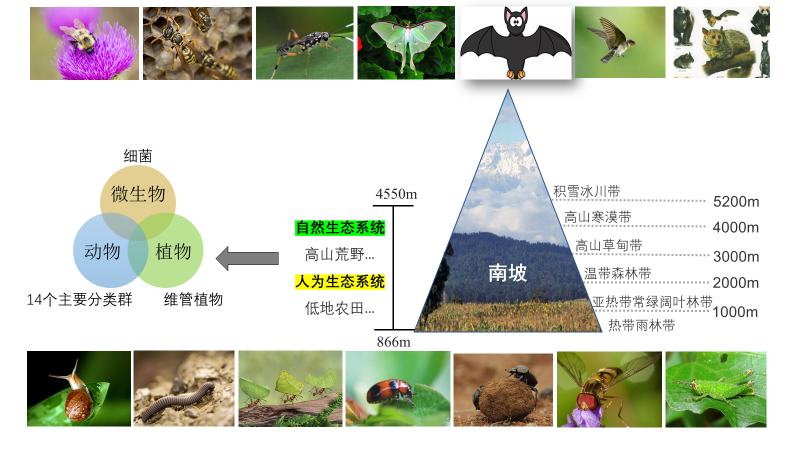
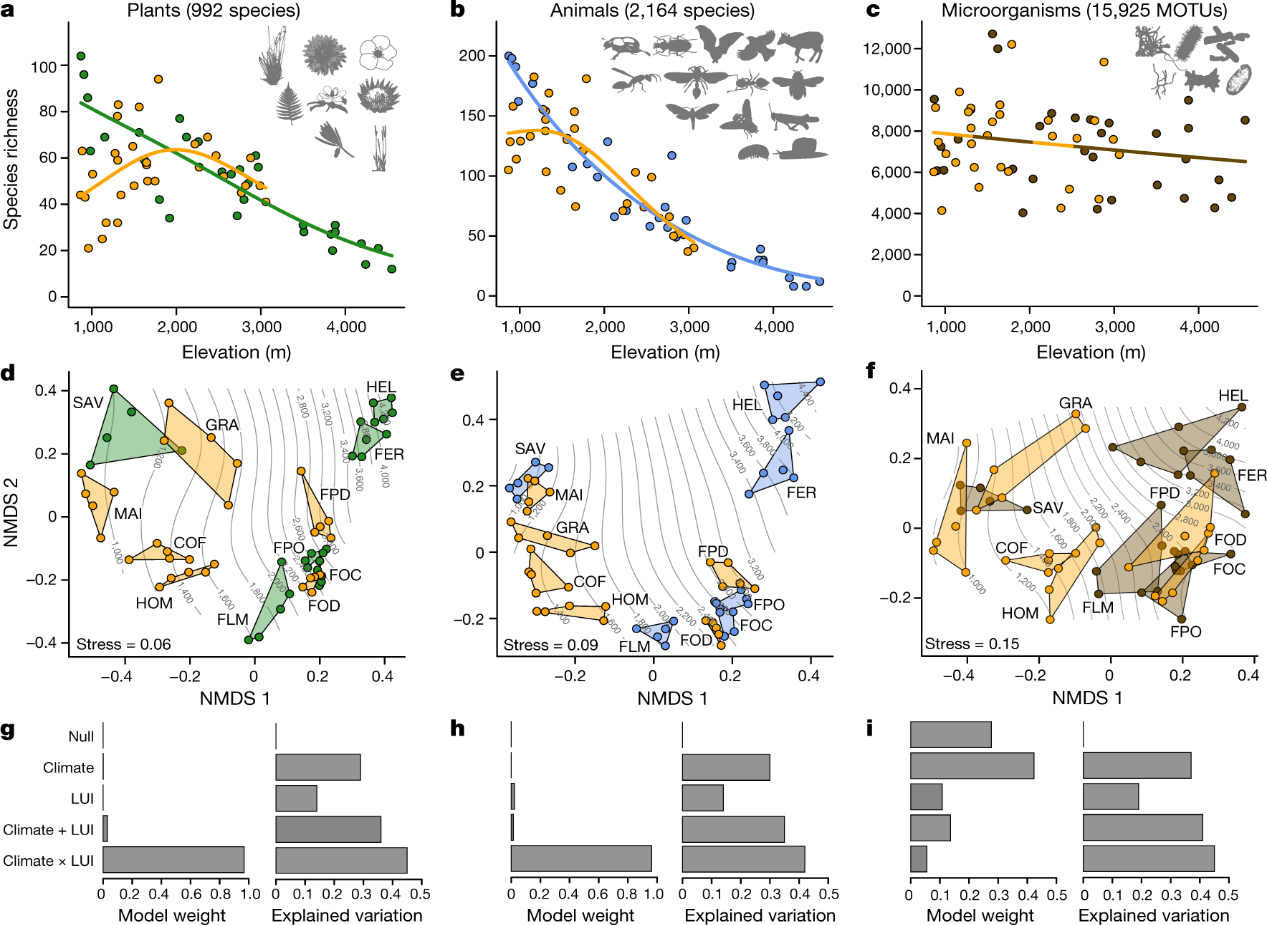
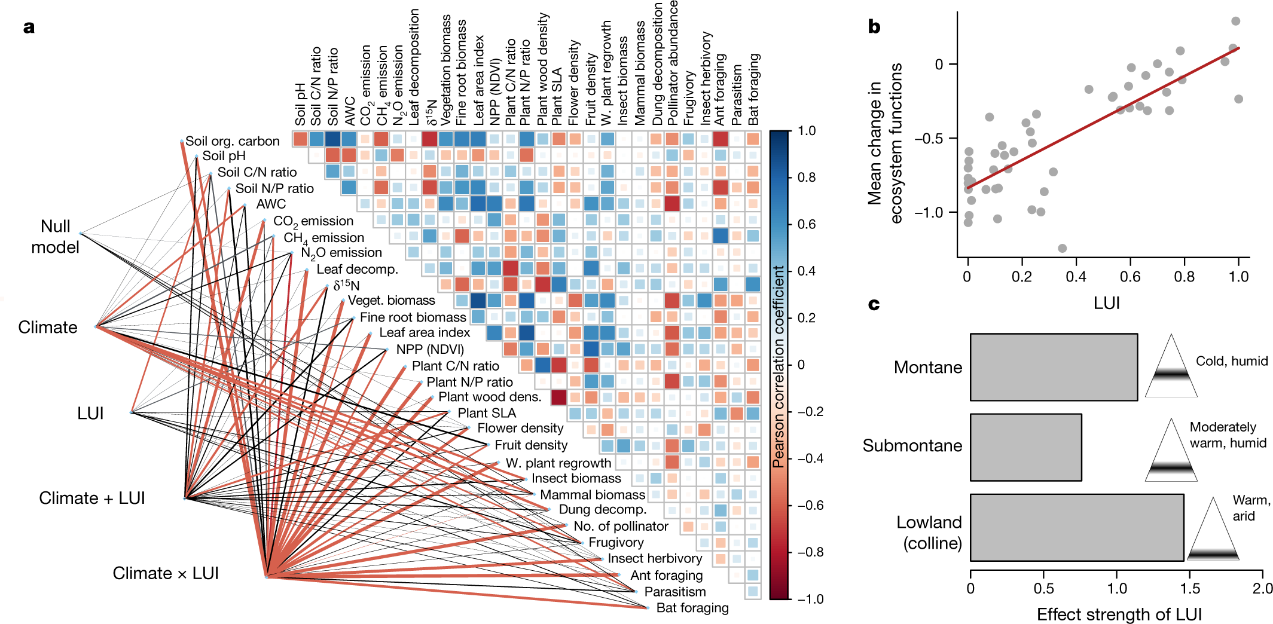
Agriculture and the exploitation of natural resources have transformed tropical mountain ecosystems across the world, and the consequences of these transformations for biodiversity and ecosystem functioning are largely unknown1–3. Conclusions that are derived from studies in non-mountainous areas are not suitable for predicting the effects of land-use changes on tropical mountains because the climatic environment rapidly changes with elevation, which may mitigate or amplify the effects of land use4,5. It is of key importance to understand how the interplay of climate and land use constrains biodiversity and ecosystem functions to determine the consequences of global change for mountain ecosystems. Here we show that the interacting effects of climate and land use reshape elevational trends in biodiversity and ecosystem functions on Africa’s largest mountain, Mount Kilimanjaro (Tanzania). We find that increasing land-use intensity causes larger losses of plant and animal species richness in the arid lowlands than in humid submontane and montane zones. Increases in land-use intensity are associated with significant changes in the composition of plant, animal and microorganism communities; stronger modifications of plant and animal communities occur in arid and humid ecosystems, respectively. T emperature, precipitation and land use jointly modulate soil properties, nutrient turnover, greenhouse gas emissions, plant biomass and productivity, as well as animal interactions. Our data suggest that the response of ecosystem functions to land-use intensity depends strongly on climate; moresevere changes in ecosystem functioning occur in the arid lowlands and the cold montane zone. Interactions between climate and land use explained—on average—54% of the variation in species richness, species composition and ecosystem functions, whereas only 30% of variation was related to single drivers. Our study reveals that climate can modulate the effects of land use on biodiversity and ecosystem functioning, and points to a lowered resistance of ecosystems in climatically challenging environments to ongoing land-use changes in tropical mountainous regions.
Methods:
Results:
气候和土地利用影响了沿着海拔梯度的生物多样性
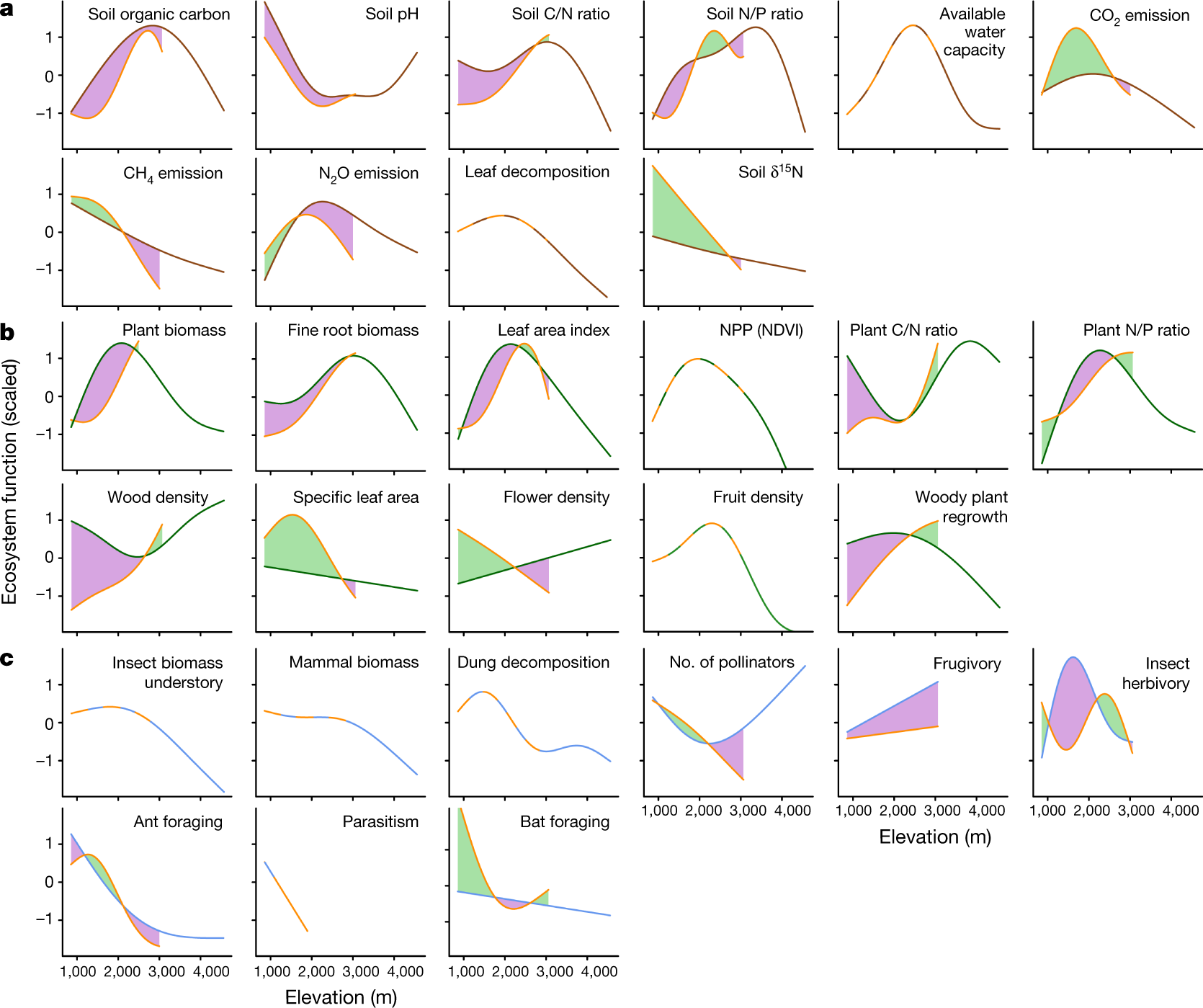
气候可以调节土地利用对生物多样性和生态系统功能的影响
结论:
生态系统功能在土地使用强度更大的地方受到更严重的影响,这些影响在低海拔和高海拔地区比在中等海拔地区更强烈。
气候可以调节土地利用对生物多样性和生态系统功能的影响,并指出在气候具有挑战性的环境中,生态系统对热带山区正在发生的土地利用变化的抵抗力降低。
Contact: Liu Run
E-mail: recho24@126.com