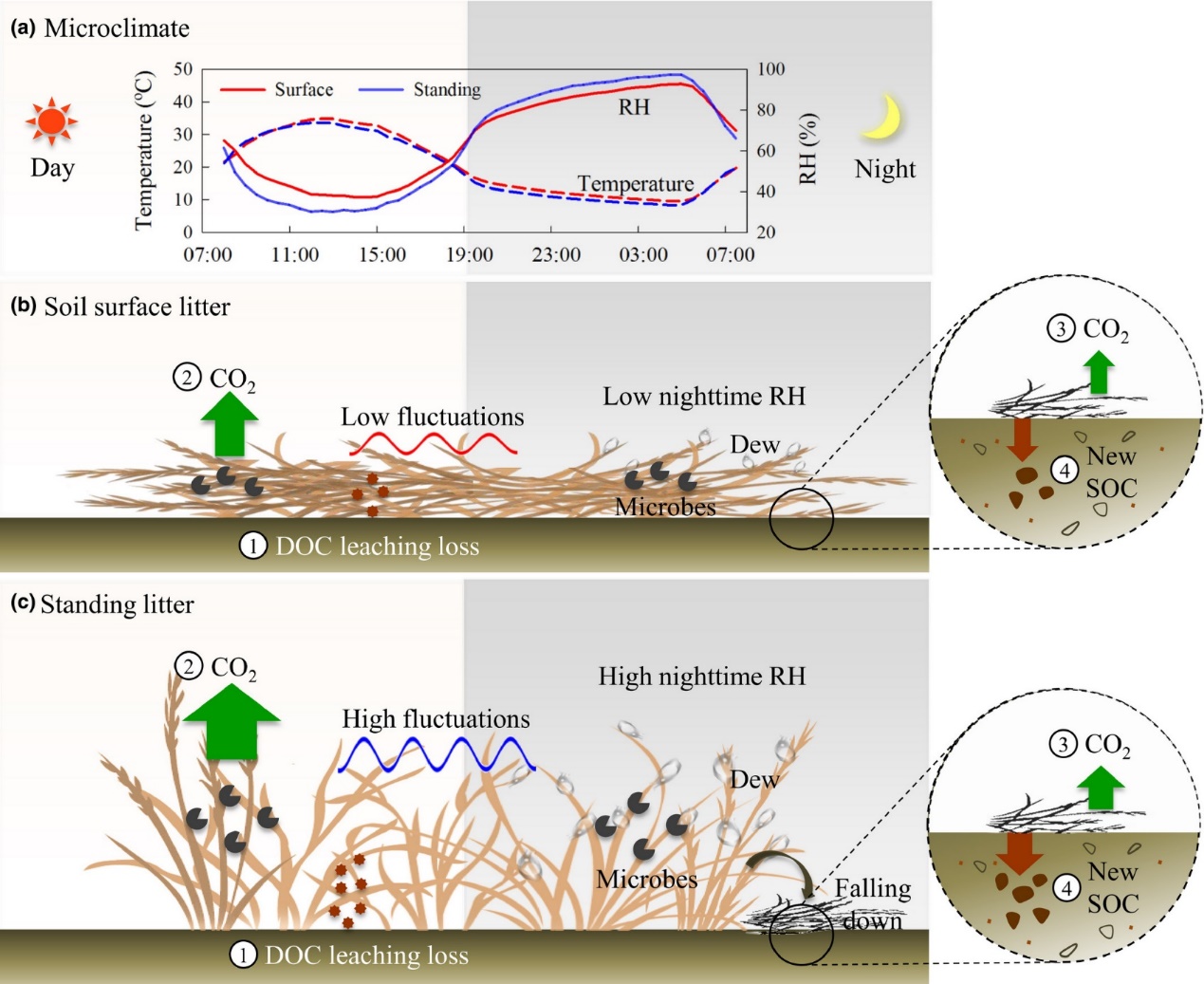
High night-time humidity and dissolved organic carbon content support rapid decomposition of standing litter in a semi-arid landscape
Download website: https://besjournals.onlinelibrary.wiley.com/doi/10.1111/1365-2435.12854
Abstract:
Litter in arid and semi-arid ecosystems usually exhibits a prolonged standing dead phase after senescence; however, we know little about the ways in which abiotic and microbial processes affect standing litter decomposition.
We conducted a 26-monthin situdecomposition experiment in a steppe to investigate the potential mechanisms governing the decomposition of standing litter, and a 192-day laboratory incubation experiment to further explore the impacts of the standing dead stage on the subsequent litter decomposition and soil organic carbon (SOC) formation after the litter falls to the soil surface.
We conclude that the long-neglected standing phase greatly determines litter decomposition and soil carbon storage in semi-arid regions. Accounting for standing litter decomposition is critical for accurately simulating carbon turnover in arid and semi-arid ecosystems.
Main contents: We aim to explore whether decomposition rates differ between standing litter and soil surface litter, and how abiotic factors and biotic factors, measured by microbial community size, composition and respiration, affect standing litter decomposition.
Results:
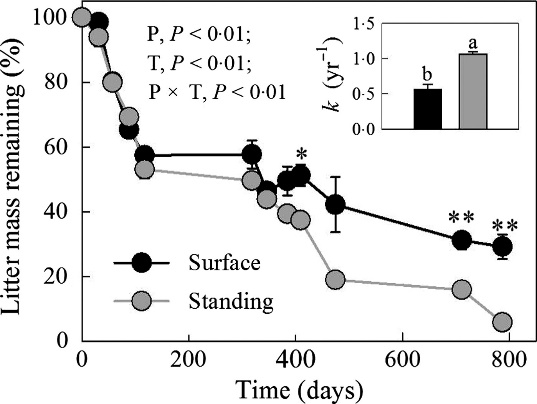
(1)The decomposition rate (k) of standing litter was 92% higher than that of soil surface litter.
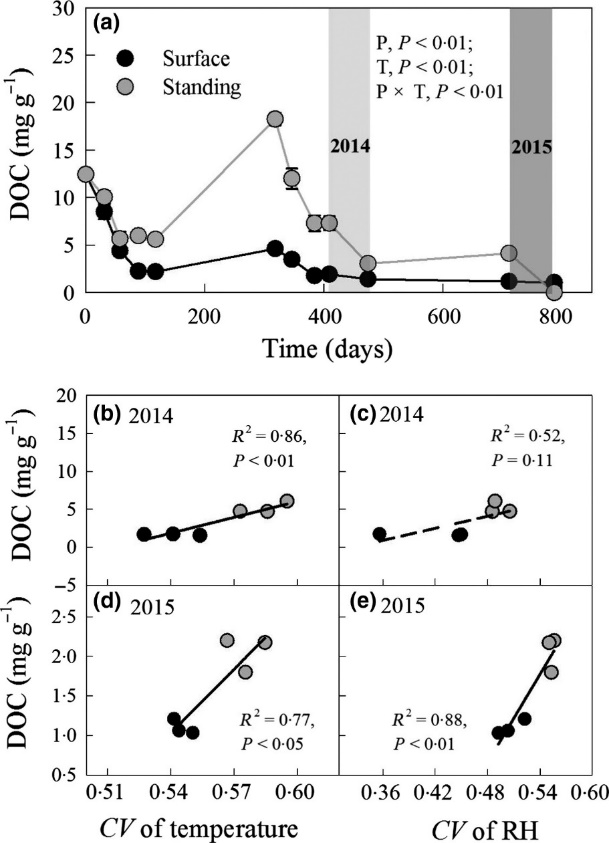
(2)Compared with soil surface litter, standing litter has higher dissolved organic carbon (DOC) content.
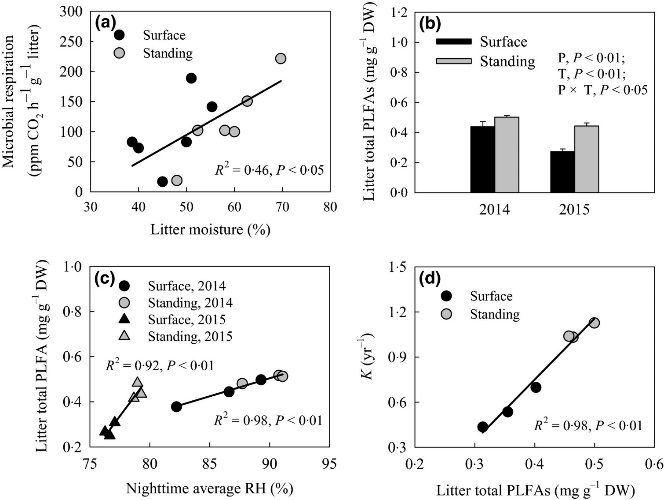
(3)Standing litter also experienced higher night-time relative humidity on its surface, which enhanced litter moisture content.
(4)The higher DOC concentration, combined with the greater night-time moisture content, stimulated more microbial activity in standing litter.
(5)The standing phase conditioned the litter, leading to more rapid decomposition after the litter fell to the soil surface, and increasing the efficiency with which the litter formed SOC.
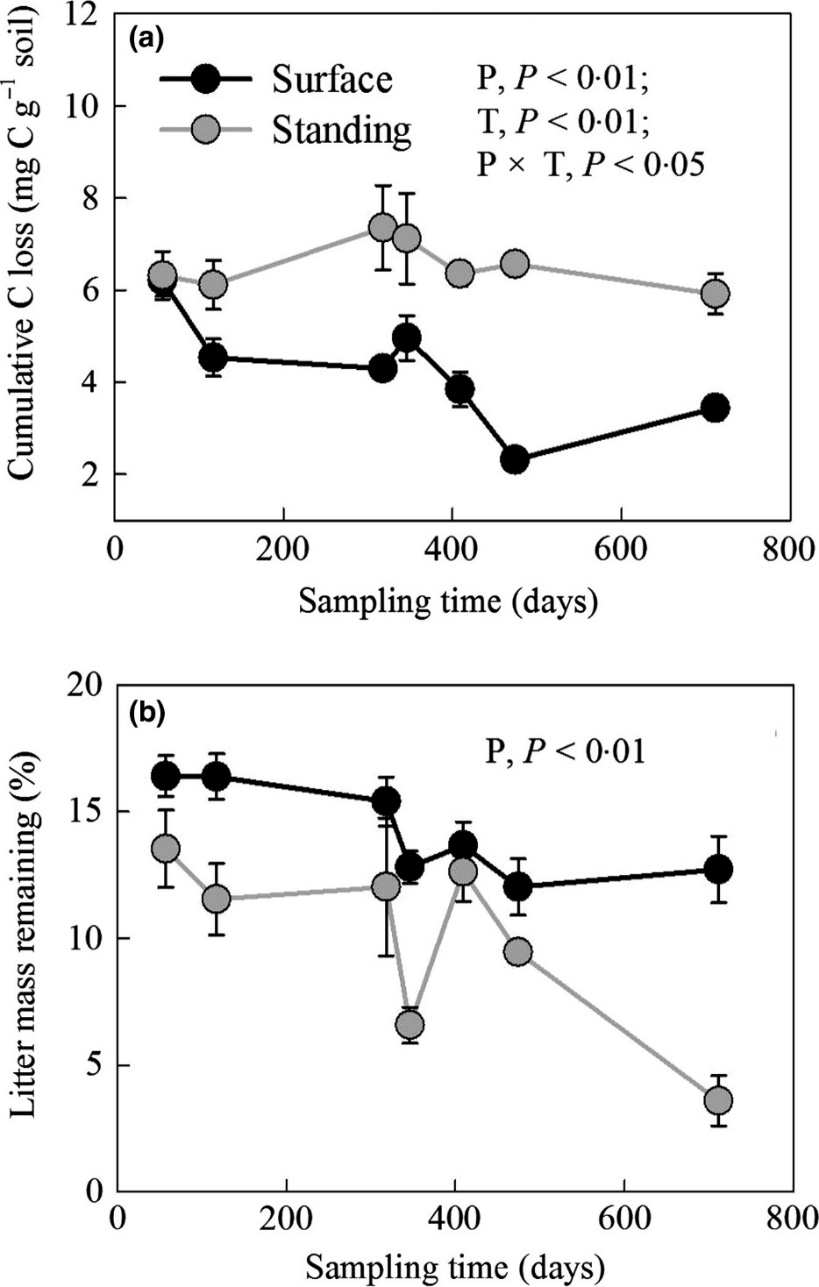
Conclusion: Our findings highlight the importance of microclimate fluctuation and night-time RH for rapid decomposition during the standing dead phase of litter. Likewise, our findings highlight the positive legacy effects of the standing phase on the sequential decomposition process that is initiated after the litter collapses to the soil surface. The decomposition of standing litter has significant effects on ecosystem functions, not only on carbon and nutrient cycling but also on seed germination and species turnover. However, this process has long been ignored. Our study demonstrated the critical role of standing dead phase in regulating litter decomposition and the SOC formation efficiency of litter in arid and semi-arid ecosystems.