
放线菌生物肥料提高不同植物的产量和改变根际微生物群落的组装过程
Title:Actinobacterial biofertilizer improves the yields of different plants and alters the assembly processes of rhizosphere microbial communities
Download website:
https://doi.org/10.1016/j.apsoil.2021.104345
Abstract:
Biofertilizers are not always applicable for the local environment or specific plant species. Therefore, it is necessary to assess the universal effects of a biofertilizer when applied to different plants across regions. Particularly, how actinobacteria-based biofertilizers affect the assembly of rhizosphere microbial communities remains unknown. Here, we assessed the universal validity and regulatory role of a biofertilizer containing Streptomyces pactum Act12 and Streptomyces rochei D74 in reshaping the rhizosphere microbial communities associated with different plants grown in Shaanxi, Inner Mongolia, and Xinjiang of northwest China. A green house pot experiment was conducted with cucumber, and field experiments were conducted with tomato, pepper, sunflower, and jujube. Compared with the control, biofertilizer application improved the yield of the different plants by 7.7%–55.6%. The community composition of rhizosphere fungi shifted in biofertilizer-treated soils, despite no significant differences in the species diversity or richness of bacteria and fungi. For single plant species, the alpha diversity indices of rhizosphere microbial communities showed distinctly different trends in response to biofertilizer application. Following biofertilizer application, the relative abundance of some plant beneficial taxa (such as Chitinophaga, Dokdonella, Pseudoxanthomonas, and Coprinellus) increased, while the relative abundance of some phytopathogenic taxa (such as Cladosporium and Gibberella) decreased. Stochastic processes contributed predominantly to the bacterial community assembly, whereas the relative contribution of stochastic processes to fungal community assembly increased by 6.3% under biofertilizer treatment. Biofertilizer application reduced the average connectivity and density of microbial co-occurrence networks and changed some of the keystone genera. The results of this study may provide direction for the use of biofertilizers containing Streptomyces strains.
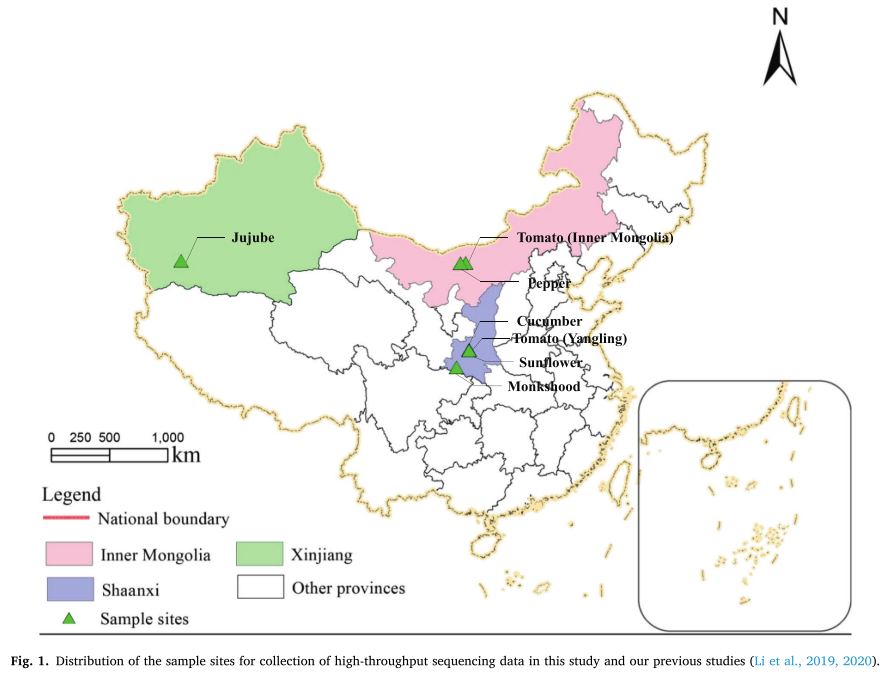
研究中用于收集高通量测序数据的样点分布
Results:
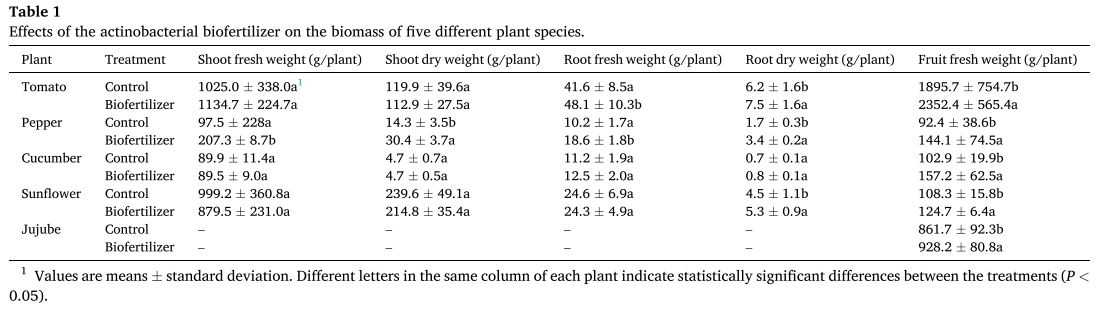
Plant biomass
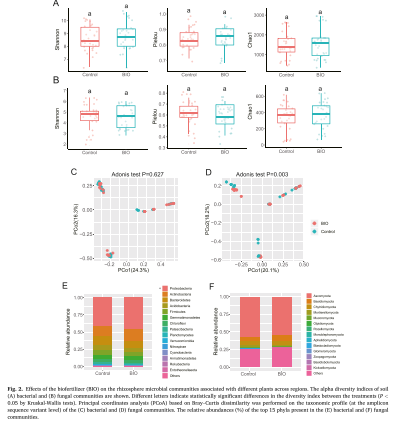
Diversity, taxonomy, and composition of rhizosphere microbial communities
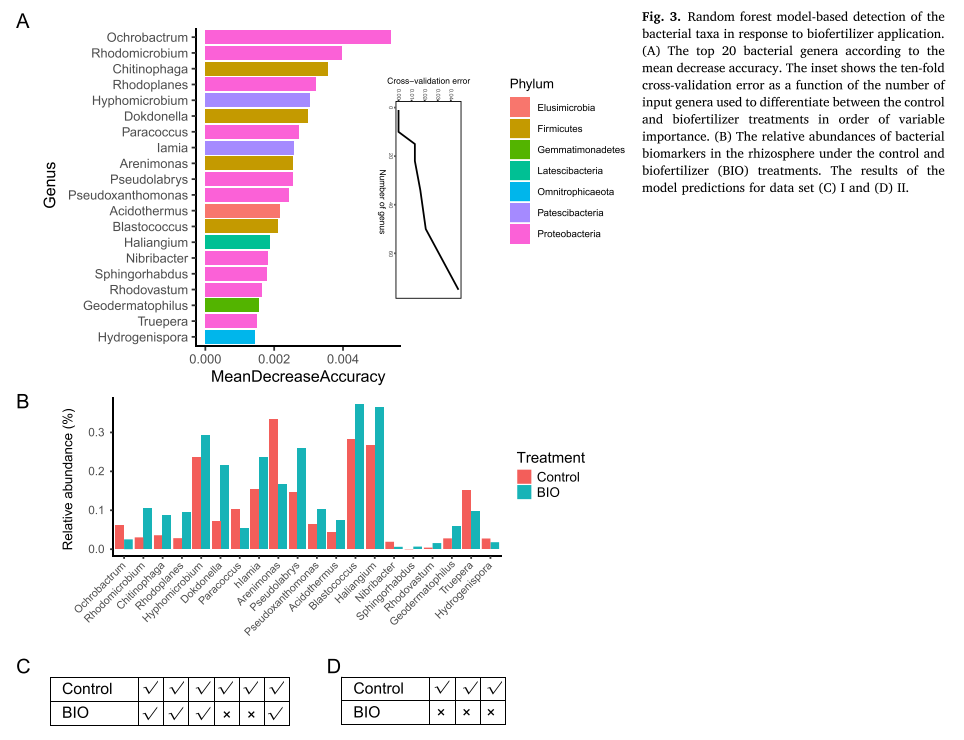
Biomarkers in response to biofertilizer application
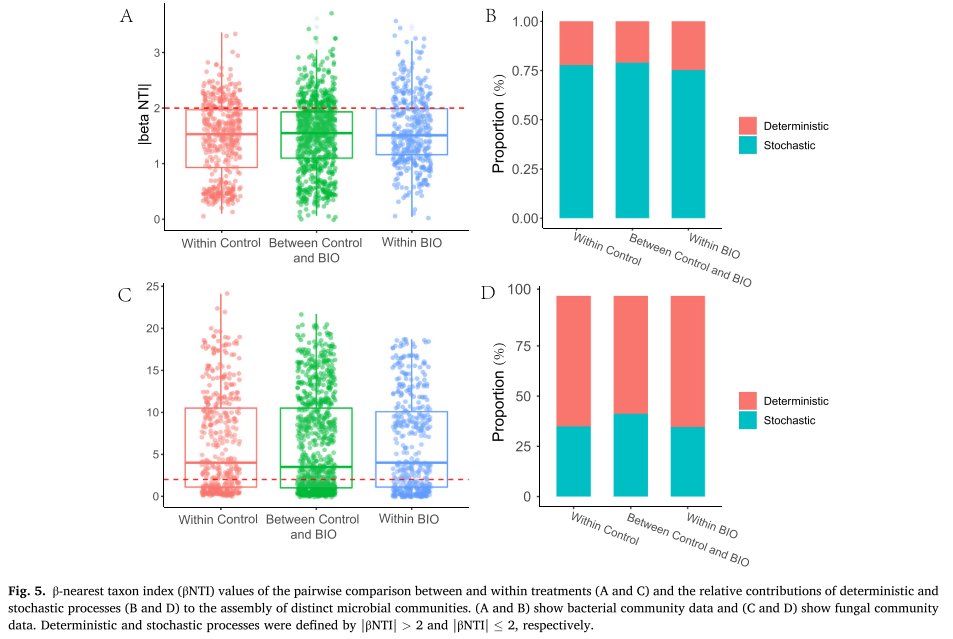
Microbial community assembly processes
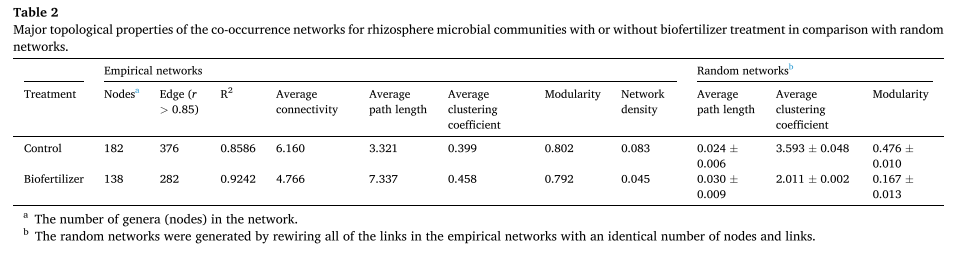
Microbial co-occurrence patterns
主要研究结果:
施用含有链霉菌Act12和D74的放线菌生物肥料可提高不同植物的产量,并改变不同地理区域的相关根际微生物群落。
施用生物肥料显著改变了根际真菌的群落组成,而不是细菌。根际微生物群落的alpha多样性表现出明显不同的模式。
施用生物肥料后,根际一些对植物有益菌类群得到了丰富,而其他致病菌类群则减少。
随机过程对真菌群落的组成起主导作用,而施用生物肥料增加了随机过程对处理间(对照-肥料)真菌群落组成的相对贡献,而对处理内(对照-对照、肥料-肥料)真菌群落组成的相对贡献较小。
施用生物肥料还降低了微生物共生网络的连通性和密度,并改变了部分关键属。
Conclusions:
Applying the actinobacterial biofertilizer containing S. pactum Act12 and S. rochei D74 improved the yield of different plants and altered the associated rhizosphere microbial communities across geographical re gions. Particularly, biofertilizer application considerably shifted the community composition of rhizosphere fungi, but not bacteria. The alpha diversity of rhizosphere microbial communities exhibited distinctly different patterns for single plant species. Following bio fertilizer application, some plant beneficial taxa were enriched, while other phytopathogenic taxa were depleted in the rhizosphere. Stochastic processes played a dominant role in the bacterial community assembly, whereas biofertilizer application increased the relative contribution of stochastic processes to the fungal community assembly of intertreatment (control–biofertilizer) compared with intra-treatment (control–control and biofertilizer–biofertilizer). Biofertilizer application also reduced the connectivity and density of the microbial co-occurrence network, and changed some of the keystone genera. The results of this study may facilitate the selection of plant species and geographical regions for the use of actinobacterial biofertilizers containing Streptomyces strains.
Contact: 黎海东
E-mail: hadwinli@163.com