
补充降水加速了凋落物的分解,但仅在光降解的凋落物中,这表明阳光促进了淋溶损失
Title:Supplemental precipitation accelerates decay but only in photodegraded litter and implications that sunlight promotes leaching loss
Download websites:https://link.springer.com/article/10.1007/s10533-022-00888-x
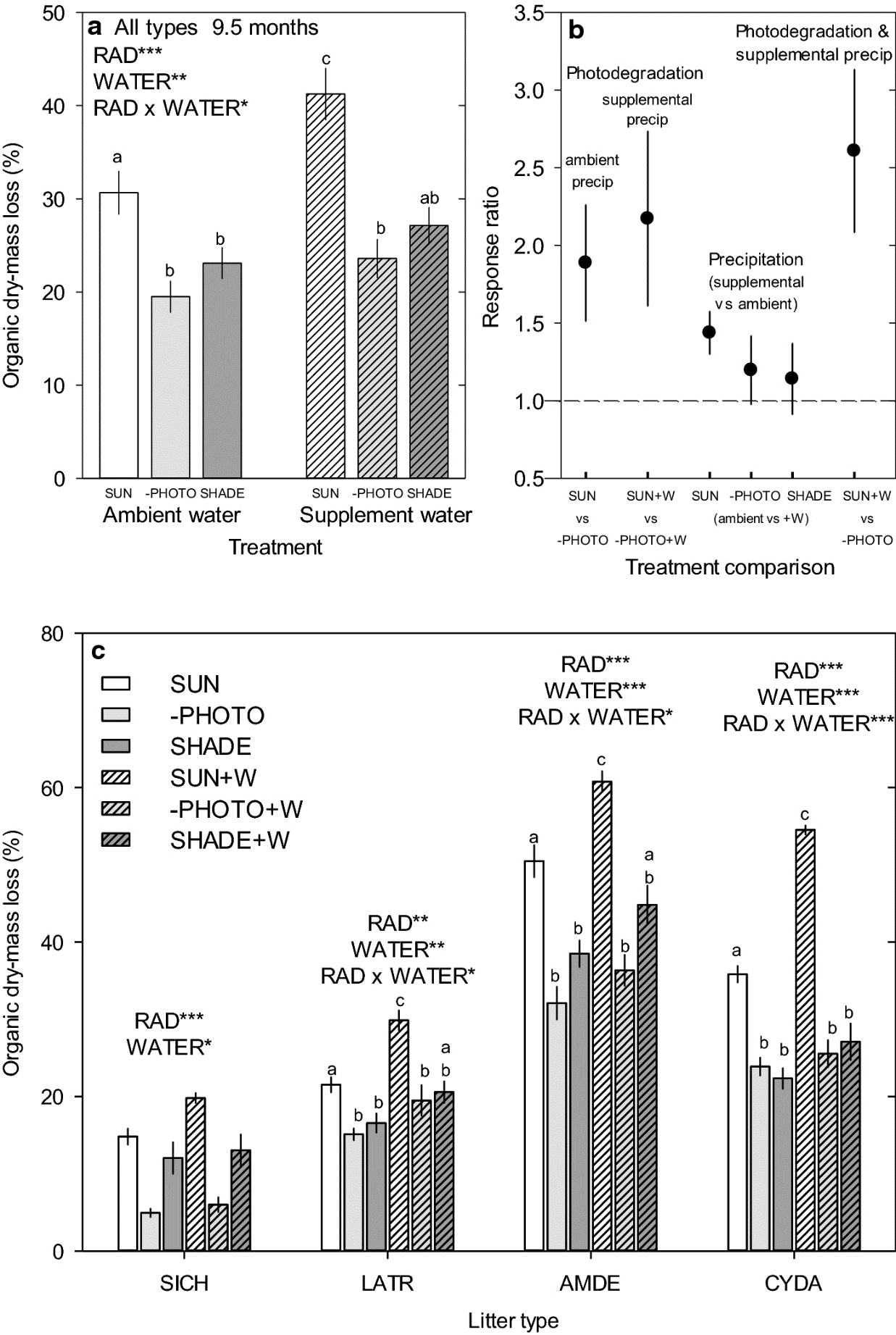
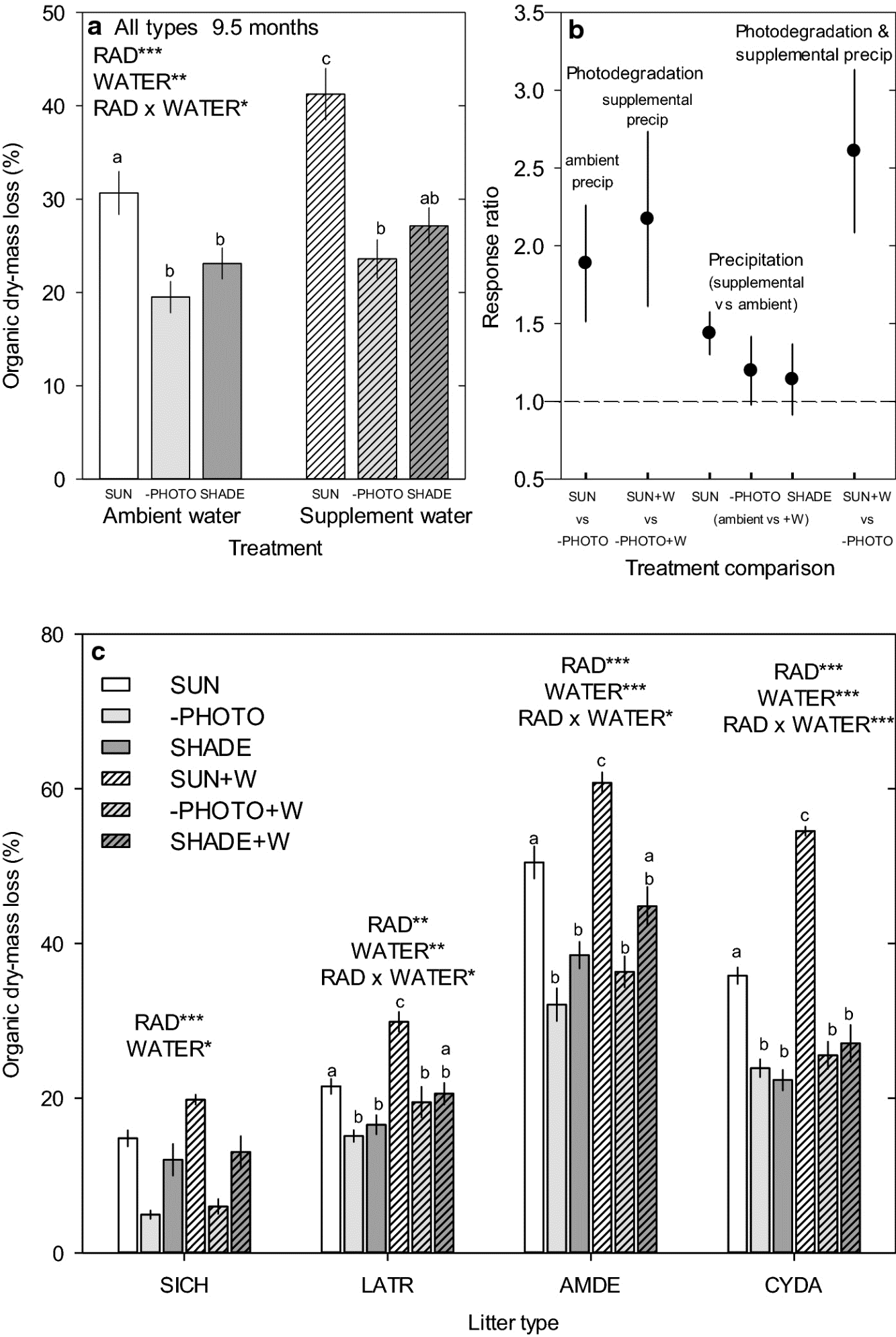
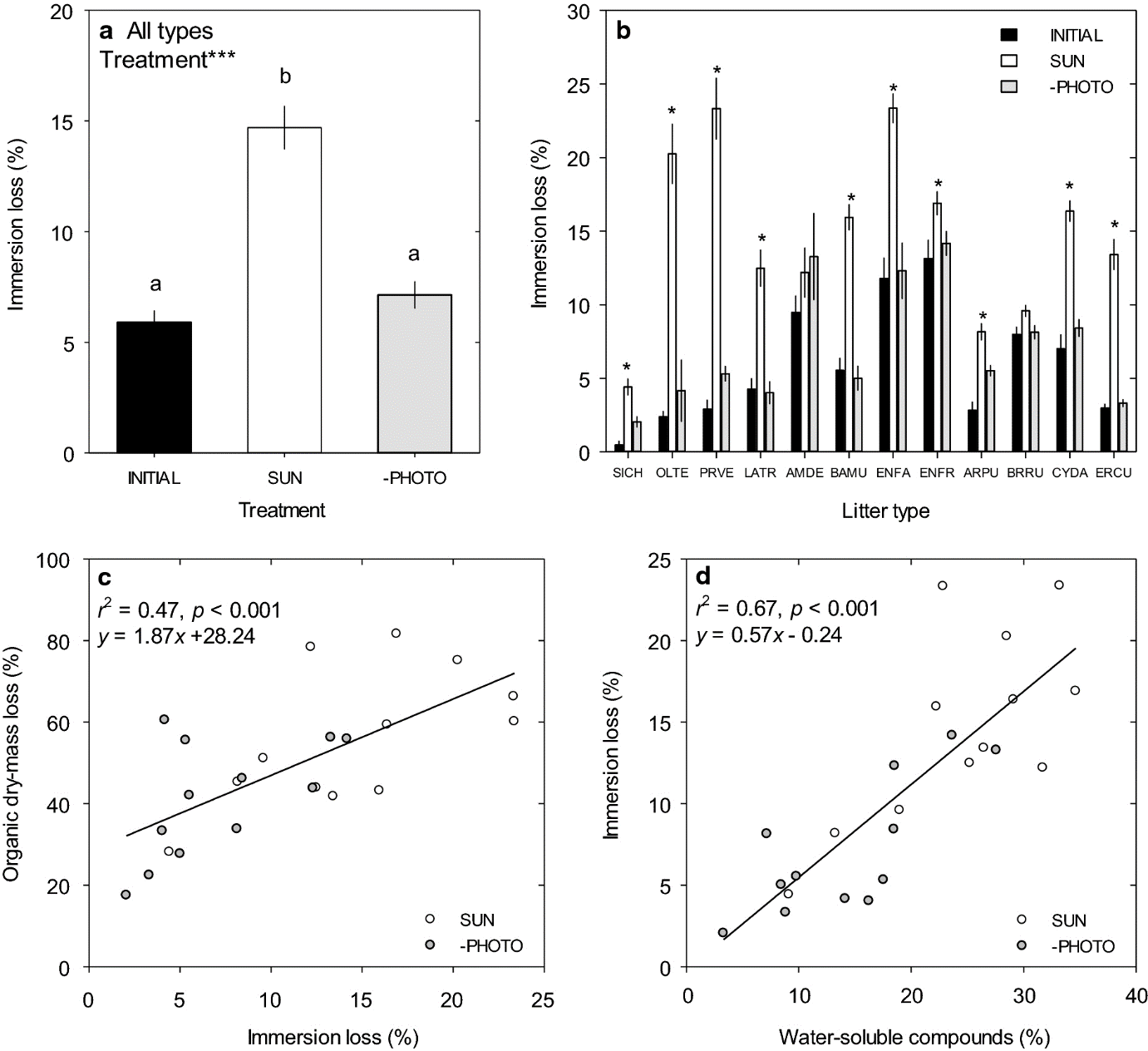
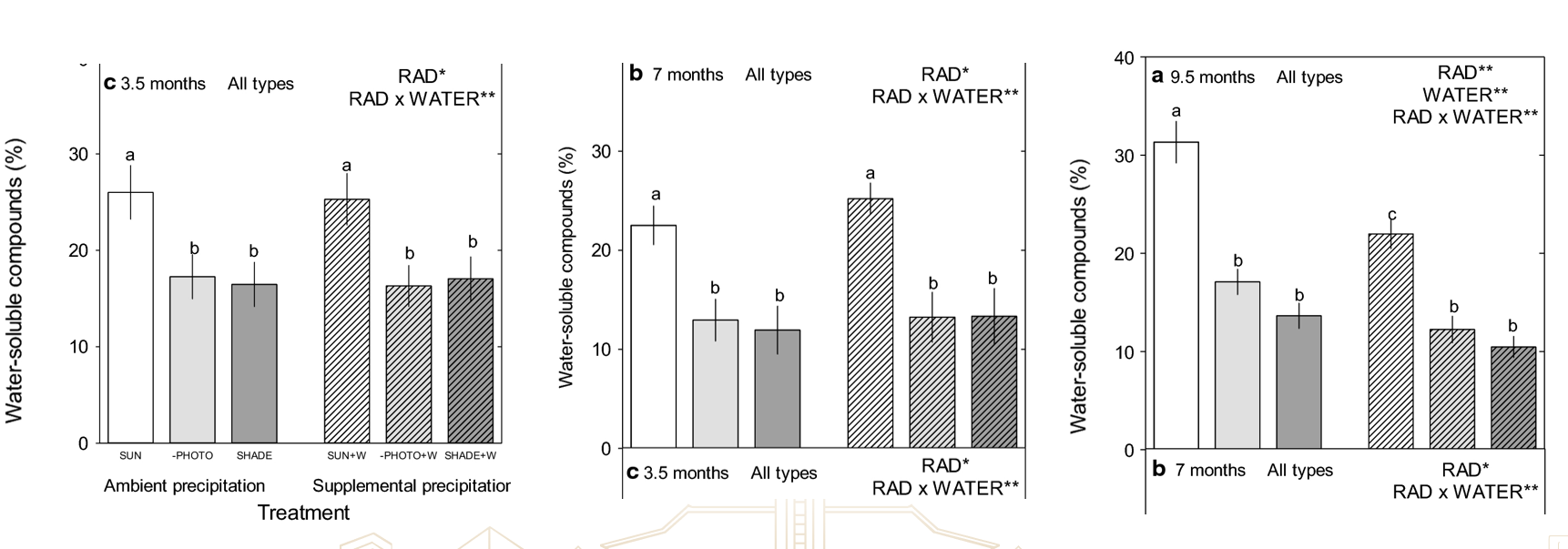
Abstract:While moisture availability exerts strong controls on biogeochemical processes in drylands, several studies have found no relationship between litter decay and precipitation. We examined whether interactions between precipitation and photodegradation could play a role in the inconsistent response of decay to precipitation. We assessed mass loss of 4 leaf litter types on the surface of the Sonoran Desert over 9.5 months in a full-factorial experiment consisting of 3 radiation treatments (full sunlight, filtered from photodegrading (UV/violet-blue) sunlight, complete shade) and 2 precipitation levels (ambient, supplemental (2.7 × ambient)). Exposure to photodegrading sunlight nearly doubled (i.e. 1.9) litter mass loss, and in combination with supplemental precipitation accelerated decay by 2.6 times. Surprisingly, supplemental precipitation had no influence on decay of litter that did not receive photodegrading sunlight. That photodegradation was required for supplemental precipitation to accelerate decay could explain past findings that decay is not related to precipitation, as most studies assessed litter shaded by plant canopies. Sunlight or precipitation treatments had no effect on litter microbial respiration, even though concentrations of water-soluble compounds were > 2 times greater in photodegraded litter. In a second experiment, we assessed the mass loss from litter attributable to a 30-min immersion in water. Immersion losses were 2.5 times greater from litter exposed to photodegrading sunlight for 20 months in the field than litter filtered from this sunlight, and these losses were strongly correlated with decay. Our findings demonstrate that photodegrading sunlight greatly accelerates litter decay, precipitation magnifies this effect, and leaching is likely a significant mechanism.
Results:
Conclusions:
Photodegradation was a strong driver of decay in our system, nearly doubling the decay of litter, and when combined with supplemental precipitation increased decay by an impressive 2.6 times. Surprisingly, precipitation supplements had no influence on the decay of litter in the absence of sunlight. That photodegradation was required for supplemental precipitation to accelerate litter decay could explain one of the puzzling enigmas of dryland litter decay: the lack of a relationship between precipitation and decay in several dryland litter studies. Most of these studies assessed litter that was shaded by plant canopies, and likely not photodegraded –photodegradation may be required for precipitation to accelerate litter decay, particularly during early stages of decomposition. The much greater immersion losses we observed from photodegraded litter, together with no evidence for enhanced microbial activity, suggest that leaching played a significant role in the faster decay of sunlit litter during the early stages of decay we addressed.
Contact: Ran Zunian
E-mail:317804398@qq.com