
通过凋落物质量损失的生化和物理途径形成土壤有机质
Title: Clarifying the evidence for microbial- and plant-derived soil organic matter, and the path toward a more quantitative understanding
Abstract:Predicting and mitigating changes in soil carbon (C) stocks under global change requires a coherent understanding of the factors regulating soil organic matter (SOM) formation and persistence, including knowledge of the direct sources of SOM (plants vs. microbes). In recent years, conceptual models of SOM formation have emphasized the primacy of microbial-derived organic matter inputs, proposing that microbial physiological traits (e.g., growth efficiency) are dominant controls on SOM quantity. However, recent quantitative studies have challenged this view, suggesting that plants make larger direct contributions to SOM than is currently recognized by this paradigm. In this review, we attempt to reconcile these perspectives by highlighting that variation across estimates of plant- versus microbial-derived SOM may arise in part from methodological limitations. We show that all major methods used to estimate plant versus microbial contributions to SOM have substantial shortcomings, highlighting the uncertainty in our current quantitative estimates. We demonstrate that there is significant overlap in the chemical signatures of compounds produced by microbes, plant roots, and through the extracellular decomposition of plant litter, which introduces uncertainty into the use of common biomarkers for parsing plant- and microbial-derived SOM, especially in the mineral-associated organic matter (MAOM) fraction. Although the studies that we review have contributed to a deeper understanding of microbial contributions to SOM, limitations with current methods constrain quantitative estimates. In light of recent advances, we suggest that now is a critical time to re-evaluate long-standing methods, clearly define their limitations, and develop a strategic plan for improving the quantification of plant- and microbial derived SOM. From our synthesis, we outline key questions and challenges for future research on the mechanisms of SOM formation and stabilization from plant and microbial pathways
Results:
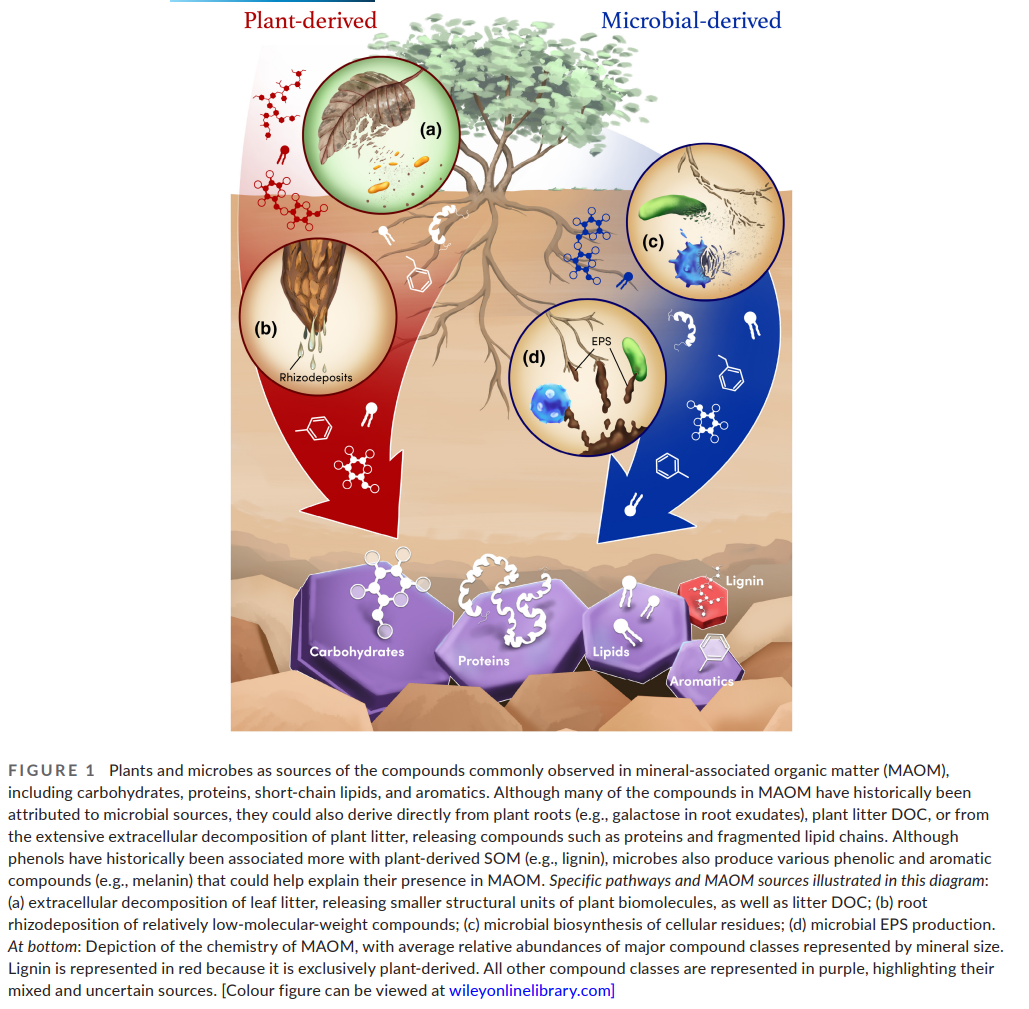

Conclusion:
1. There is compelling evidence for both significant plant and microbial contributions to SOM, with variation likely across ecosystems and soil types. However, all major methods used to quantify plant versus microbial contributions to SOM have substantial limitations, highlighting the uncertainty in our current estimates.
2. We identify four key limitations common to the methods used to parse plant- and microbial-derived SOM (Table 1).
3. A major source of uncertainty derives from challenges associated with parsing plant and microbial-derived compounds in the MAOM pool (e.g., proteins, hexoses, short-chain lipids, phenols). The number of truly quantitative studies examining the plant and microbial origins of MAOM is limited; more studies are needed using a variety of methodological approaches. 4. Resolving the direct sources of MAOM (e.g., root exudates, plant litter DOM, microbial cell residues, EPS) will help to elucidate the dominant controls on SOM formation.
5. Future research would benefit from a strategic plan for improving quantification of plant- versus microbial-derived SOM. Below, we outline several tangible steps, as well as key challenges and open questions for further research