
原名:Contribution of fungal and invertebrate communities to wood decay in tropical terrestrial and aquatic habitats
译名:真菌和无脊椎动物群落对热带陆地和水生生境中木材腐烂的贡献
期刊:Ecology
发表时间:2020年5月
DOI: https://doi.org/10.1002/ecy.3097
Abstract Wood is a major carbon input into aquatic ecosystems and is thought to decay slowly, yet surprisingly little terrestrial carbon accumulates in marine sediments. A better mechanistic understanding of how habitat conditions and decomposer communities influence wood decay processes along the river–estuary–ocean continuum can address this seeming paradox. We measured mass loss, wood element, and polymer concentrations, quantified invertebrate-induced decay, and sequenced fungal communities associated with replicate sections of Guazuma branch wood submerged in freshwater, estuarine, and near-shore marine habitats and placed on the soil surface in nearby terrestrial habitats in three watersheds in the tropical eastern Pacific. Over 15 months, we found that wood decayed at similar rates in estuarine, marine, and terrestrial sites, reflecting the combined activity of invertebrate and microbial decomposers. In contrast, in the absence of shipworms (Teredinidae), which accounted for ~40% of wood mass loss in the estuarine habitats, decay proceeded more slowly in freshwater. Over the experiment, wood element chemistry diverged among freshwater, estuarine, and marine habitats, due to differences in both nutrient losses (e.g., potassium and phosphorus) and gains (e.g., calcium and aluminum) through decay. Similarly, we observed changes in wood polymer content, with the highest losses of cellulose, hemicellulose, and lignin moieties in the marine habitat. Aquatic fungal communities were strongly dominated by ascomycetes (88–99% of taxa), compared to terrestrial communities (55% ascomycetes). Large differences in fungal diversity were also observed across habitats with threefold higher richness in terrestrial than freshwater habitats and twofold higher diversity in freshwater than estuarine/marine habitats. Divergent decay trajectories across habitats were associated with widespread order-level differences in fungal composition, with distinct communities found in freshwater, estuarine and marine habitats. However, few individual taxa that were significantly associated with mass loss were broadly distributed, suggesting a high level of functional redundancy. The rapid processing of wood entering tropical rivers by microbes and invertebrates, comparable to that on land, indicates that estuaries and coastal oceans are hotspots not just for the processing of particulate and dissolved organic carbon, but also for woody debris and for the breakdown of lignin, the most recalcitrant polymer in plant tissue.
KEYWORDS aquatic fungi; cellulose; Coiba Island; hemicellulose; lignin breakdown; shipworms; wood decomposition
Study sites
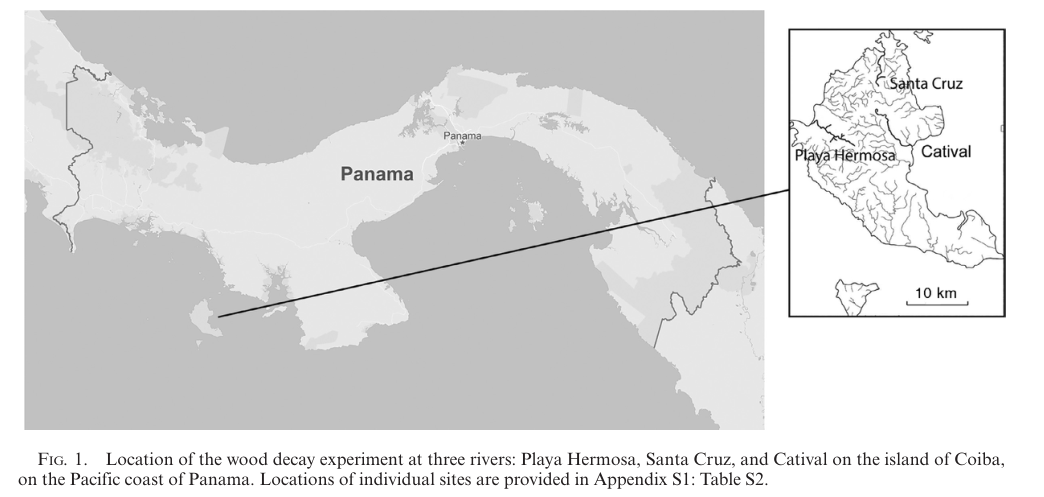
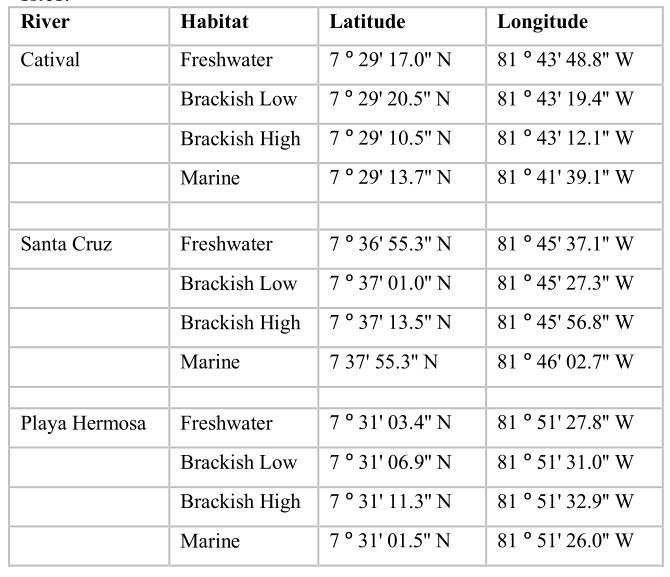
Locations of sites where wood samples were anchored for periods of 3-15 months in
three rivers on Coiba Island. Marine sites were in the open ocean adjacent to the mouth of each river. Salinity was measured at the beginning of the experiment using a refractometer to ensure that freshwater sites were salt-free. Soil sites were established on land adjacent to Freshwater sites.
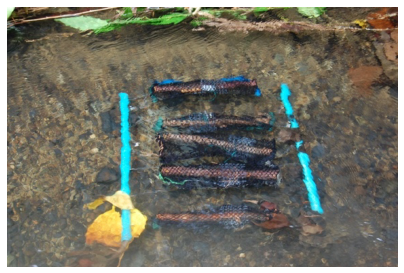
One set of replicate sections (sticks) of Guazuma ulmifolia wood anchored to the stream bed and submerged in the water column in mesh bags
Results:
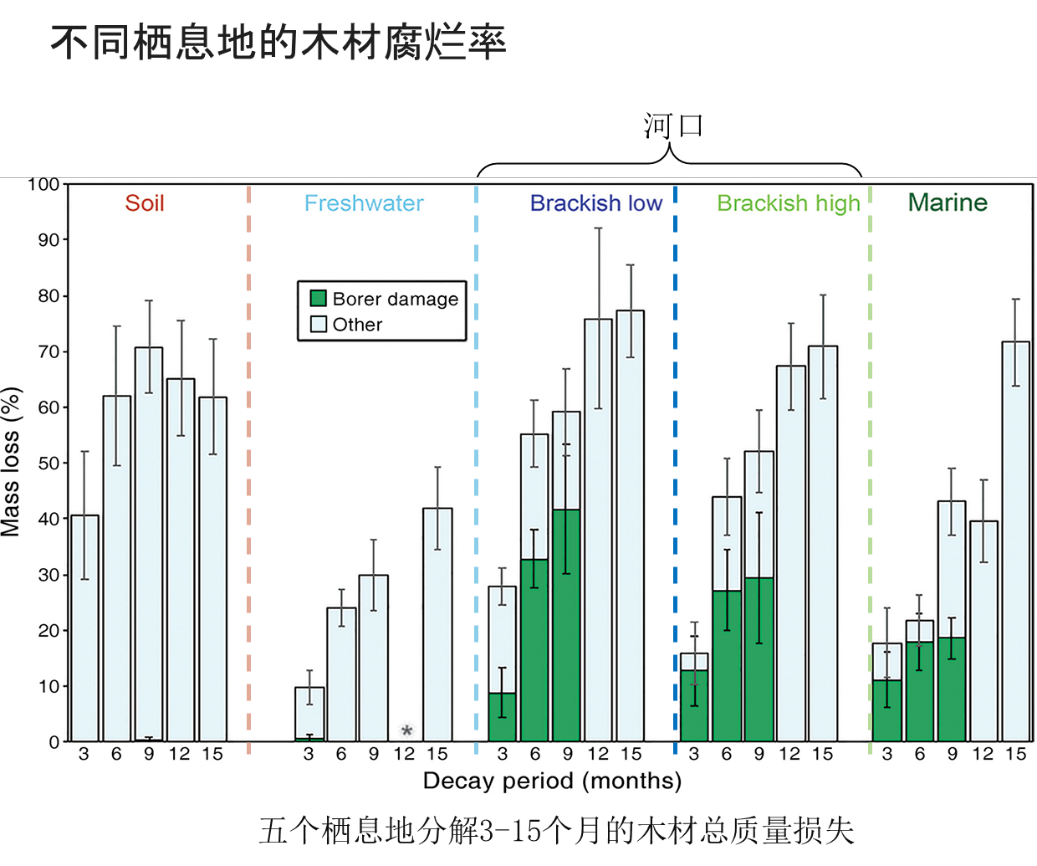
锚定在淡水中的木棒的质量损失只有河口和海洋栖息地的一半,含盐的栖息地是腐烂的热点,质量损失率与陆地相当
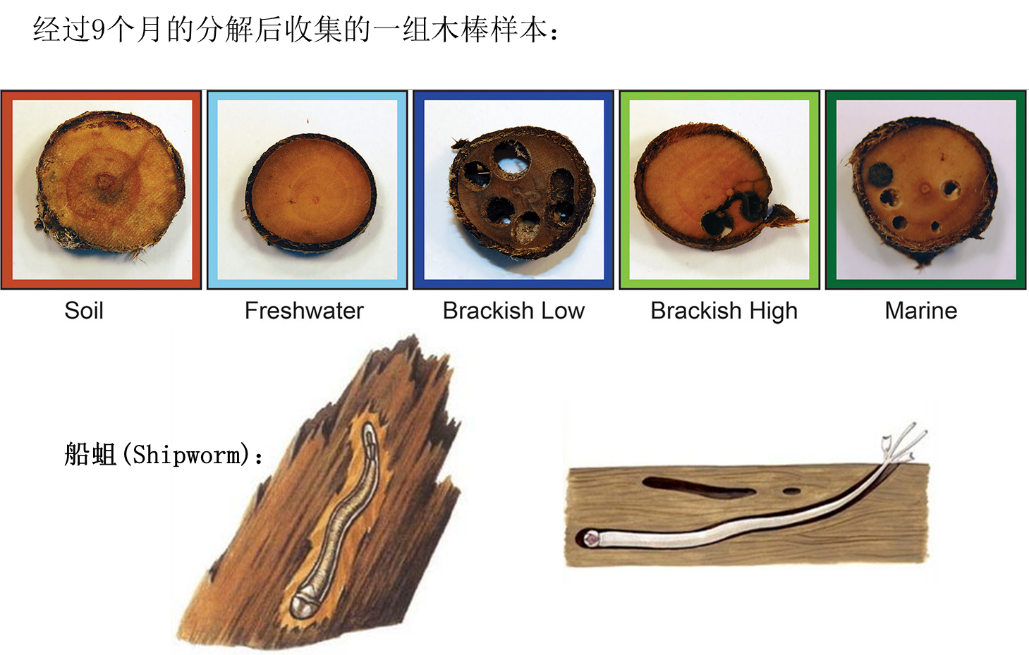
不同生境之间腐烂率的差异主要归因于无脊椎动物分解者的活动。在陆地上,最初的快速腐烂,其中一些树枝在3个月内损失了>80%的质量,可归因于白蚁,而在两个半咸的河口栖息地,以及在较小程度上在海洋栖息地,木材受到船虫的攻击,船蛆在木材中形成许多纵向洞穴。如上图
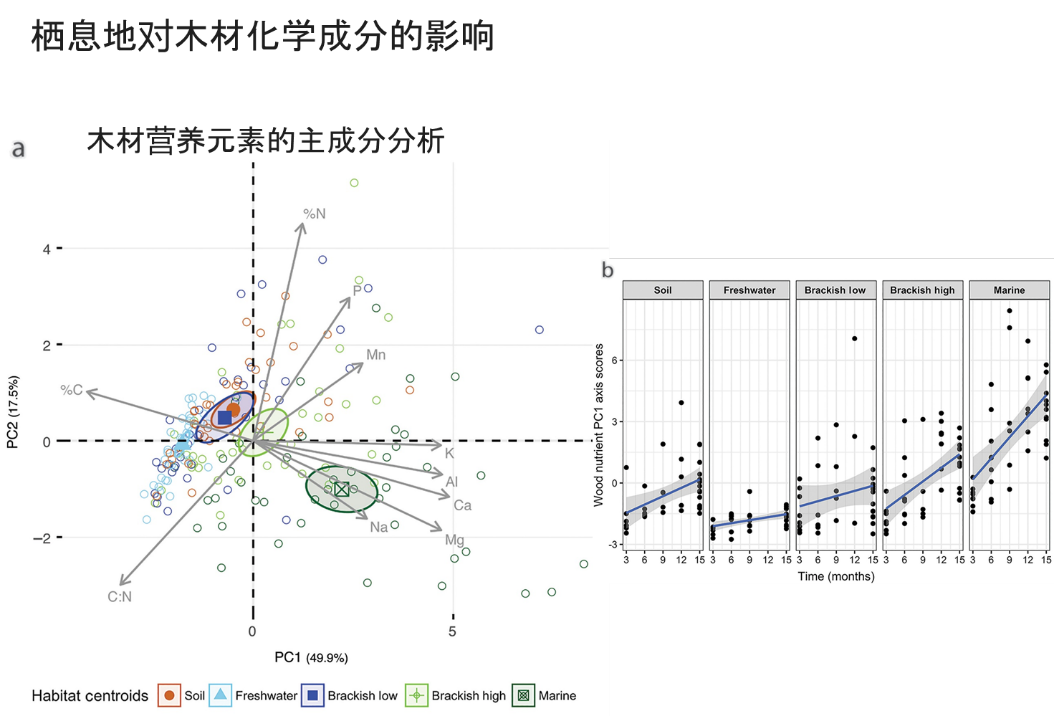
栖息地对质量损失的影响伴随着木材元素浓度的显著变化,随着时间的推移,含盐高的环境中木材的Na,Mg和Ca浓度会增加,随着盐度的增加,木材营养元素的变化幅度随着分解时间越来越大
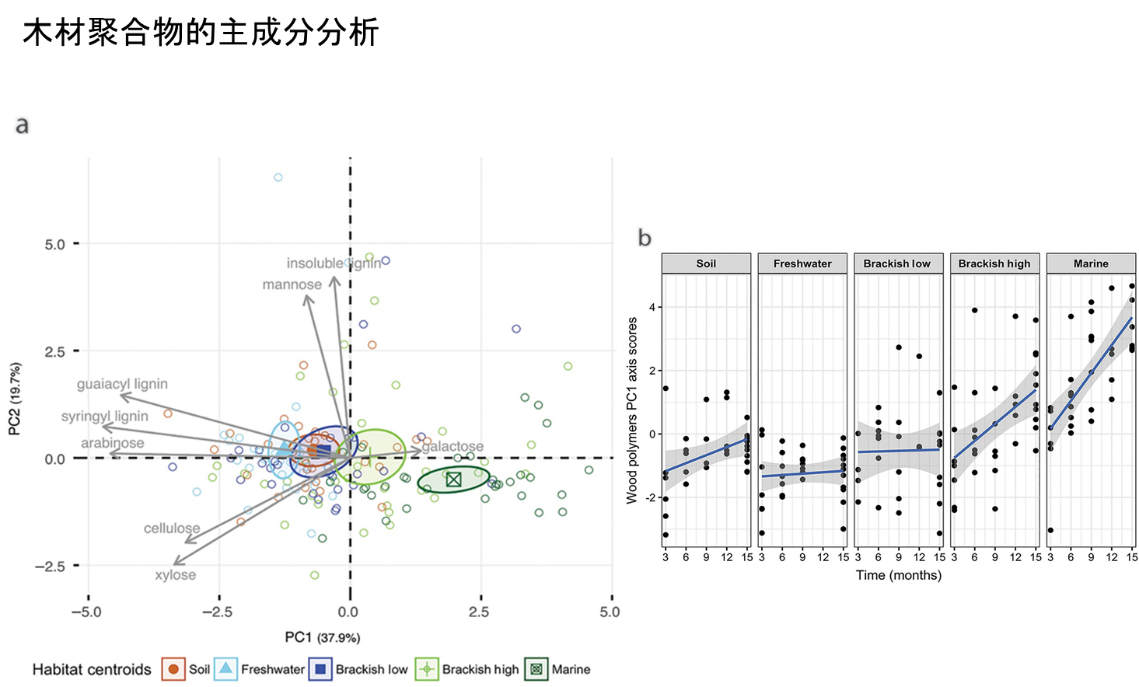
木材碳水化合物、木质素成分也因生境和分解时间而异,与淡水或陆地生境相比,海洋中木质素,半纤维素和纤维素的浓度变化幅度更大。
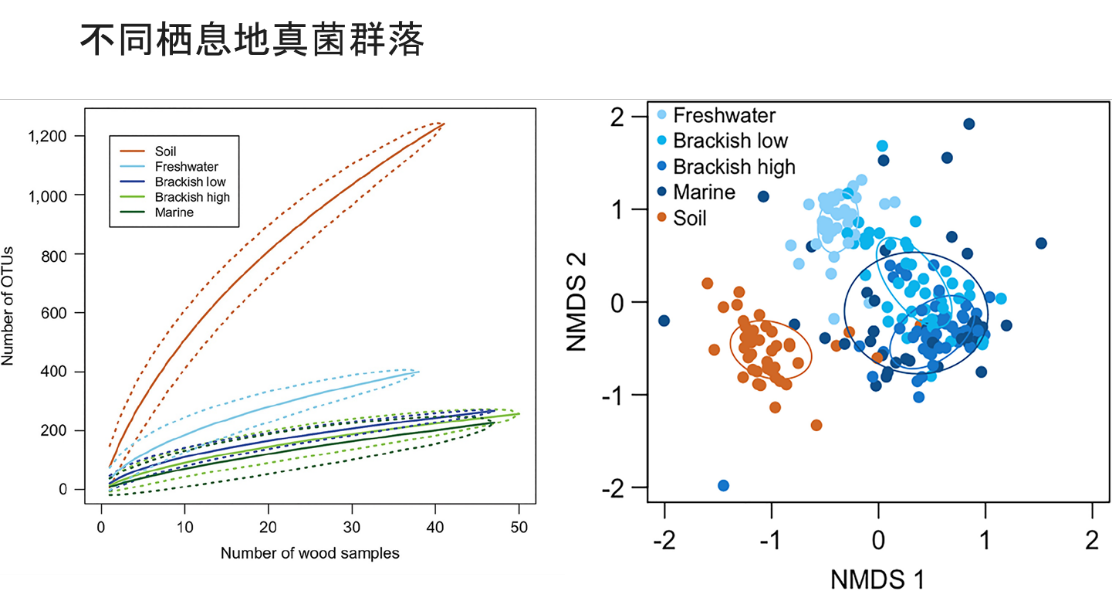
陆地生境的总OTU丰富度比水生生境高三倍,淡水生境比半咸水和海洋生境高两倍,不同栖息地的真菌群落有明显差异。
Contact: Liu Run
E-mail: LiuRun24@outlook.com