
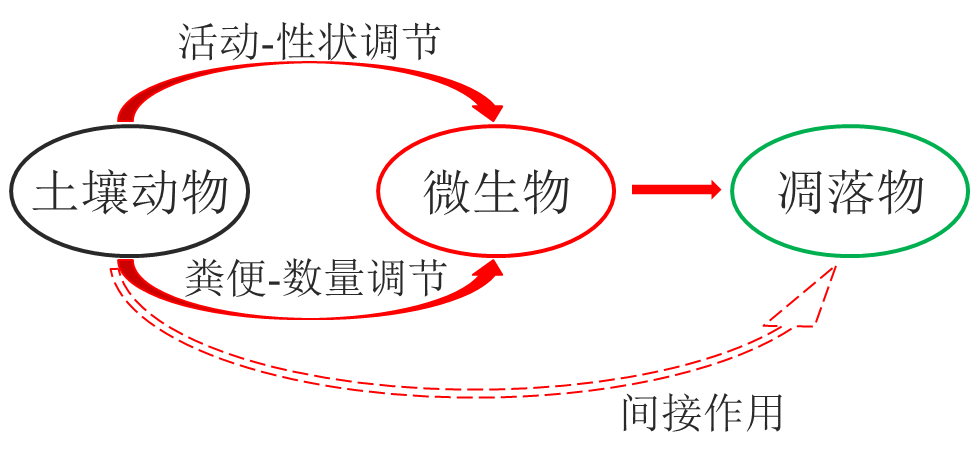
Trait-mediated indirect interactions 性状调节的间接作用
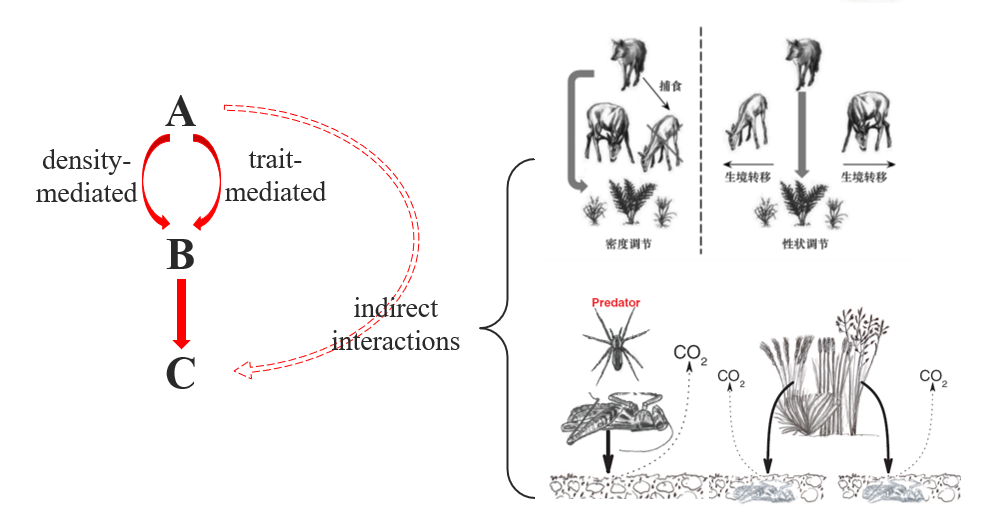
‘Trait-mediated indirect interactions' is the interspecific relationship based on the regulation of species traits.
Article 1:
Title: Fear of Predation Slows Plant-Litter Decomposition
Download website:
https://science.sciencemag.org/content/336/6087/1434
Main contents:
Aboveground consumers are believed to affect ecosystem functioning by regulating the quantity and quality of plant litter entering the soil. We uncovered a pathway whereby terrestrial predators regulate ecosystem processes via indirect control over soil community function. Grasshopper herbivores stressed by spider predators have a higher body carbon-to-nitrogen ratio than do grasshoppers raised without spiders. This change in elemental content does not slow grasshopper decomposition but perturbs belowground community function, decelerating the subsequent decomposition of plant litter. This legacy effect of predation on soil community function appears to be regulated by the amount of herbivore protein entering the soil.
Results:
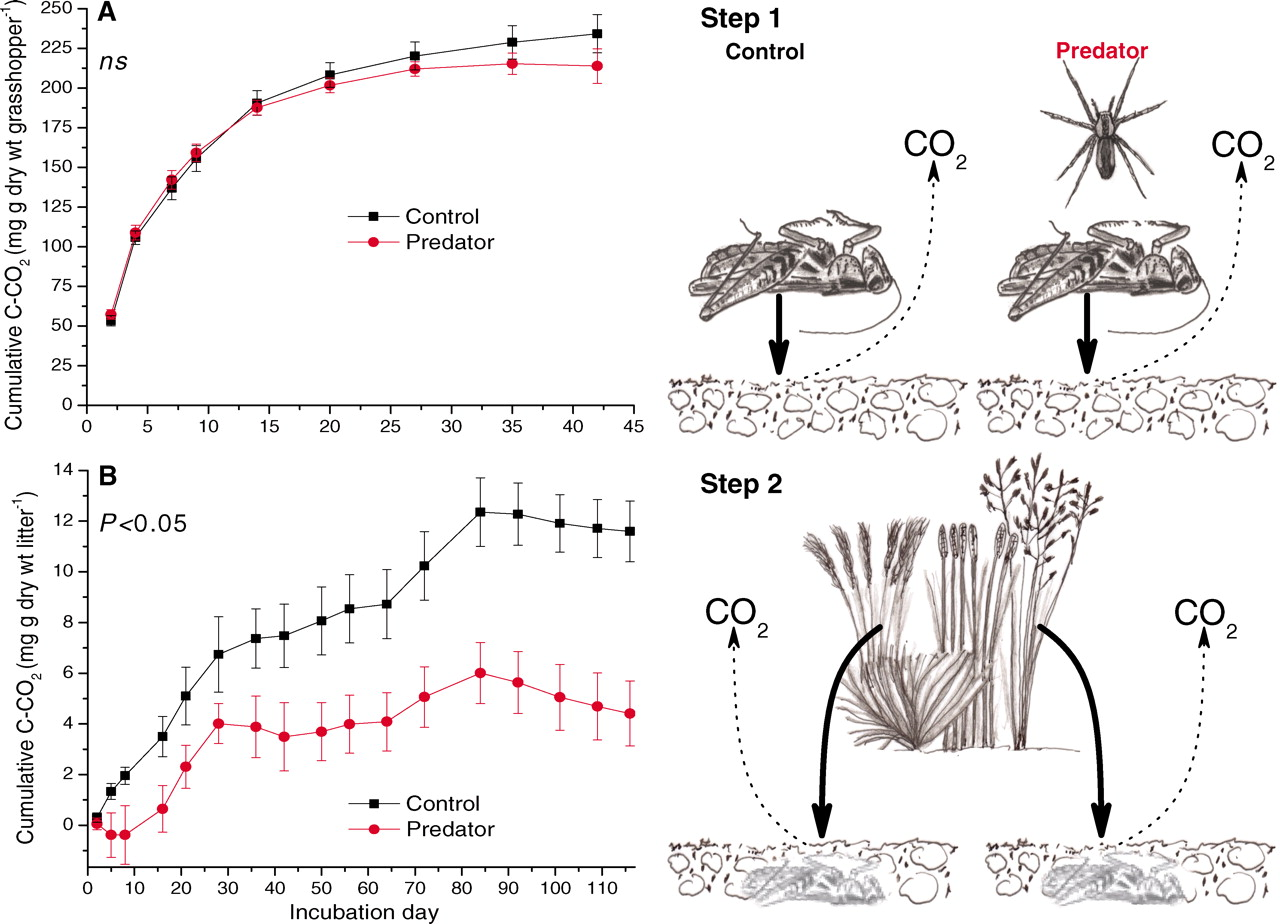
Fig. 1
Cumulative C mineralization (mean ± 1 SE, n = 5 microcosms) during decomposition of (A) nonstressed grasshoppers versus those stressed by predators (step 1); and (B) grass litter added to the same microcosms (step 2) after the completion of the grasshopper decomposition experiment shown in step 1. Although control and stressed grasshoppers were mineralized at similar rates (P > 0.05), the addition of grasshopper carcasses reared with disarmed predators led to subsequent reductions in plant-litter decomposition rates (P < 0.05). Rates are differences from microcosms not amended with grasshoppers, so cumulative values can be negative.
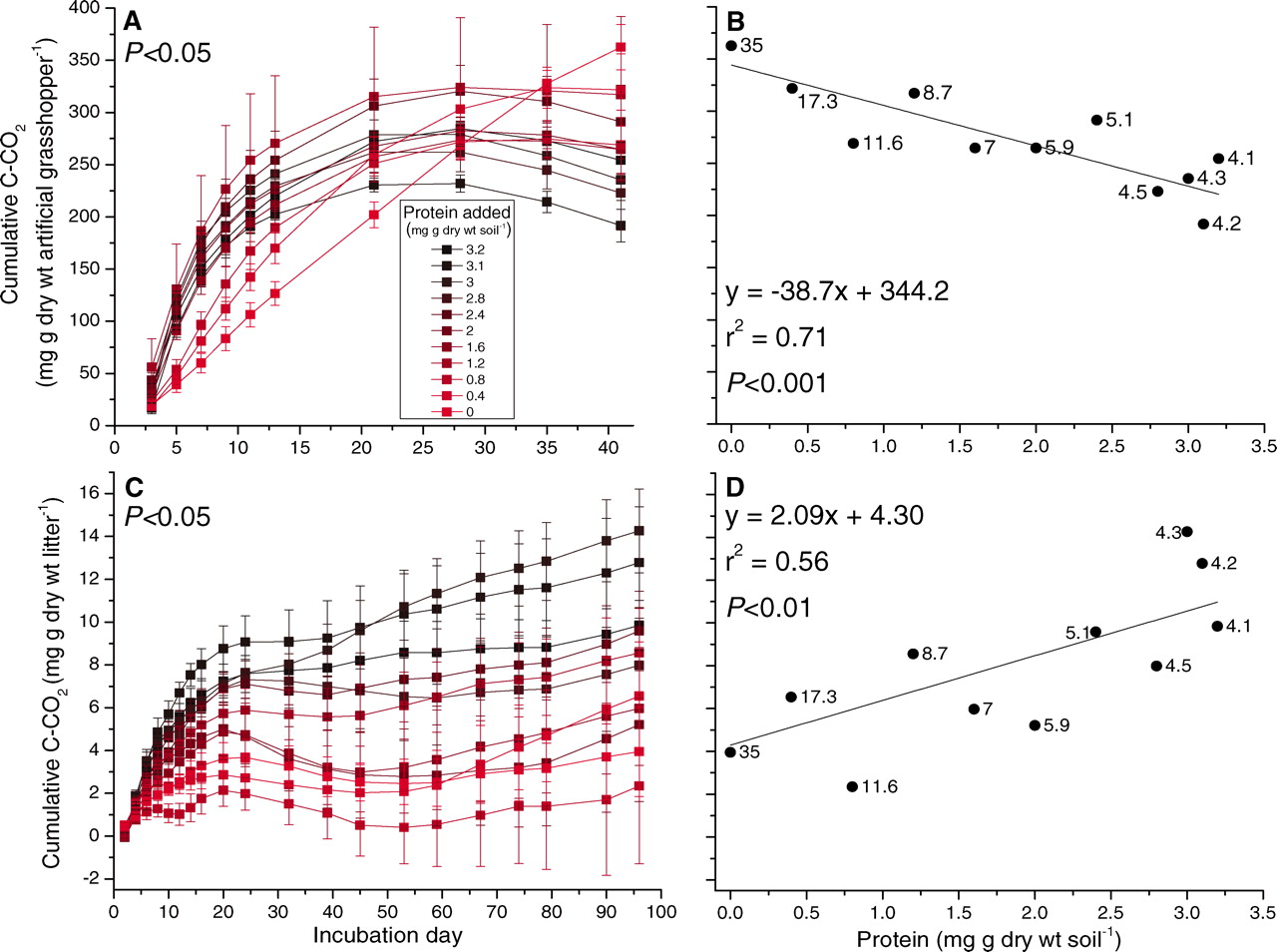
Fig. 2
(A) Cumulative C mineralization (mean ± 1 SE, n = 6 microcosms) during decomposition of artificial grasshoppers with varying C:N ratios and protein contents and (B) the relationship between the amount of protein added and the cumulative mineralization associated with these artificial grasshoppers. (C) The cumulative C mineralization (mean ± 1 SE) of grass litter added to the same microcosms after completion of artificial grasshopper decomposition and (D) the relationship between the amount of protein added and subsequent grass-litter mineralization. Rates are differences from microcosms not amended with artificial grasshoppers, so cumulative values can be negative [as in (C)]. The C:N ratios associated with the different artificial grasshoppers are shown next to their respective points.
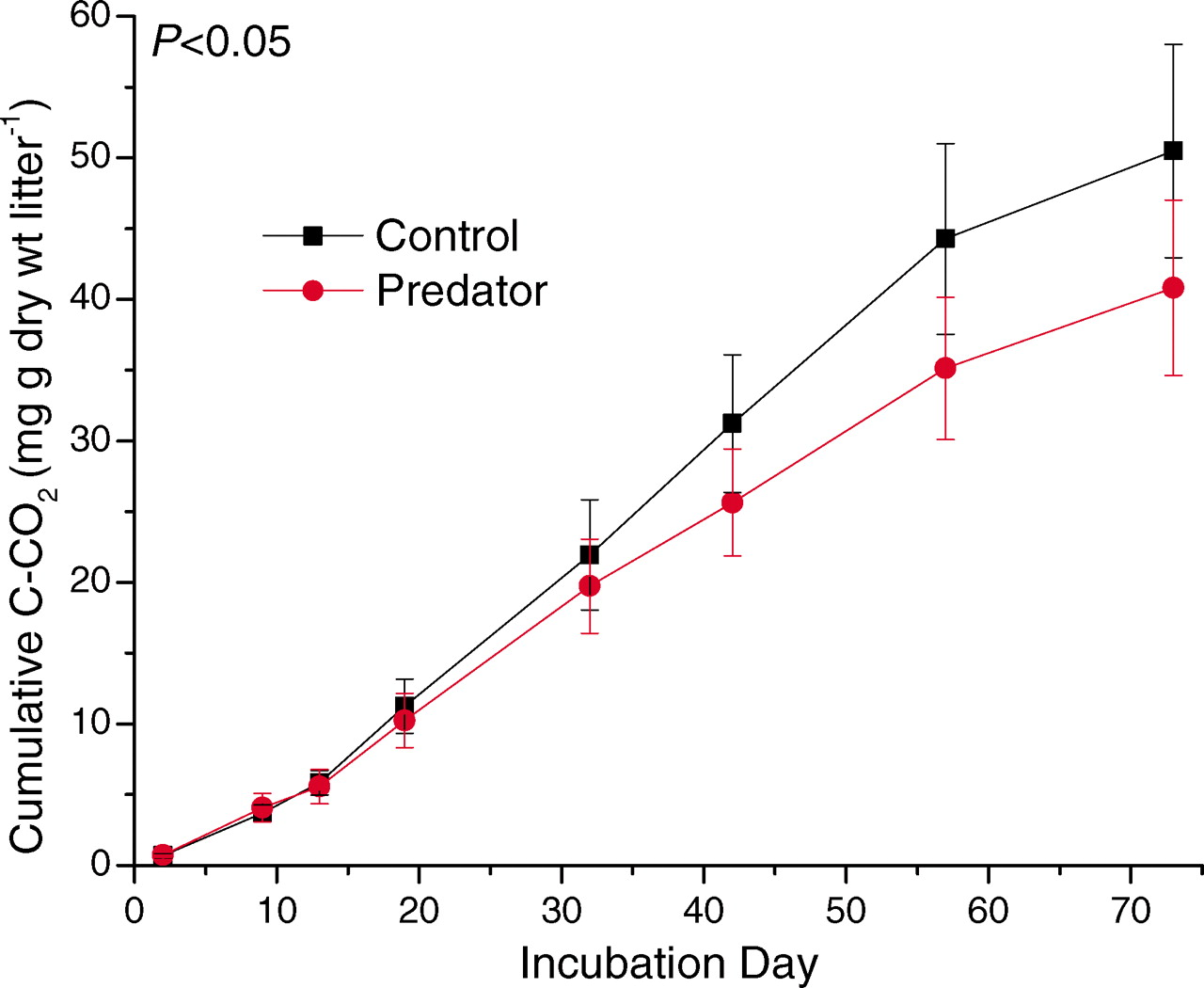
Fig. 3
Cumulative C mineralization (mean ± 1 SE, n = 7 field plots) of 13C-labeled grass litter decomposed in blocked field plots, first amended with control grasshoppers or those stressed by predator presence.

Fig. 4
Cumulative C mineralization (mean ± 1 SE, n = 7 microcosms) of grass litter on soil collected from blocked field plots with or without predation risk. Rates are differences from reference soils, so cumulative values can be negative.
Conclusion:
Traditional concepts of trophic pyramids in ecosystems highlight the idea that inputs of plant-derived materials to soils are more important for regulating belowground processes than are inputs from other trophic levels, because plant inputs are dominant. Accordingly, predators are presumed to regulate ecosystem processes mainly by altering the quality and quantity of plant-derived materials entering belowground systems, through the control of herbivore density (that is, through trophic cascades) and/or by altering herbivore foraging behavior. Our work instead suggests that predators can regulate ecosystem processes more directly through stress-induced changes in the chemical composition of prey body tissue. We find that small additions of high-quality herbivore biomass influence the decomposition of much larger inputs of recalcitrant plant litter, with effects lasting for at least the duration of a normal growing season (80 to 110 days). Indeed, we show that predator-induced changes in the nutritional composition of herbivore biomass dramatically slow the decomposition of plant litter through legacy effects on soil communities. Our work suggests that the mechanism governing these effects is the amount of animal protein that enters the soil. Our work adds to the body of recent work showing that predators exert top-down control, through multiple mechanisms, on ecosystem processes. Evaluating the importance of these newly identified roles of predators in ecosystems is made all the more urgent because we are losing them from ecosystems at disproportionately higher rates than other species.
归纳主题:
Article 2:
Title: Soil macrofauna and leaf functional traits drive the decomposition of secondary metabolites in leaf litter
Download website:
https://www.sciencedirect.com/science/article/pii/S003807171930166X
Highlights:
1. Litter species identity rather than litter diversity drives polyphenol decomposition.
2. Soil macrofauna negatively affects the decomposition of secondary plant metabolites.
3. Leaf nitrogen content positively affects the phenolics decomposition rates.
4. Tannin-to-nitrogen ratio is best predictor of whole-leaf decomposition.
关注观点:
1、首次发现大型土壤动物降低了凋落物中次生代谢产物的降解速率。
2、土壤动物活动可能导致凋落物与水和菌丝接触不足,而其粪便吸引微生物可能导致凋落物对微生物吸引不足。
归纳主题:
Contact: Luo Yunchao
E-mail: luoyunchao@outlook.com; luoyunchaolyc@qq.com