
Title: Regional variation in the temperature sensitivity of soil organic matter decomposition in China’s forests and grasslands
Download website:https://onlinelibrary.wiley.com/doi/10.1111/gcb.13613
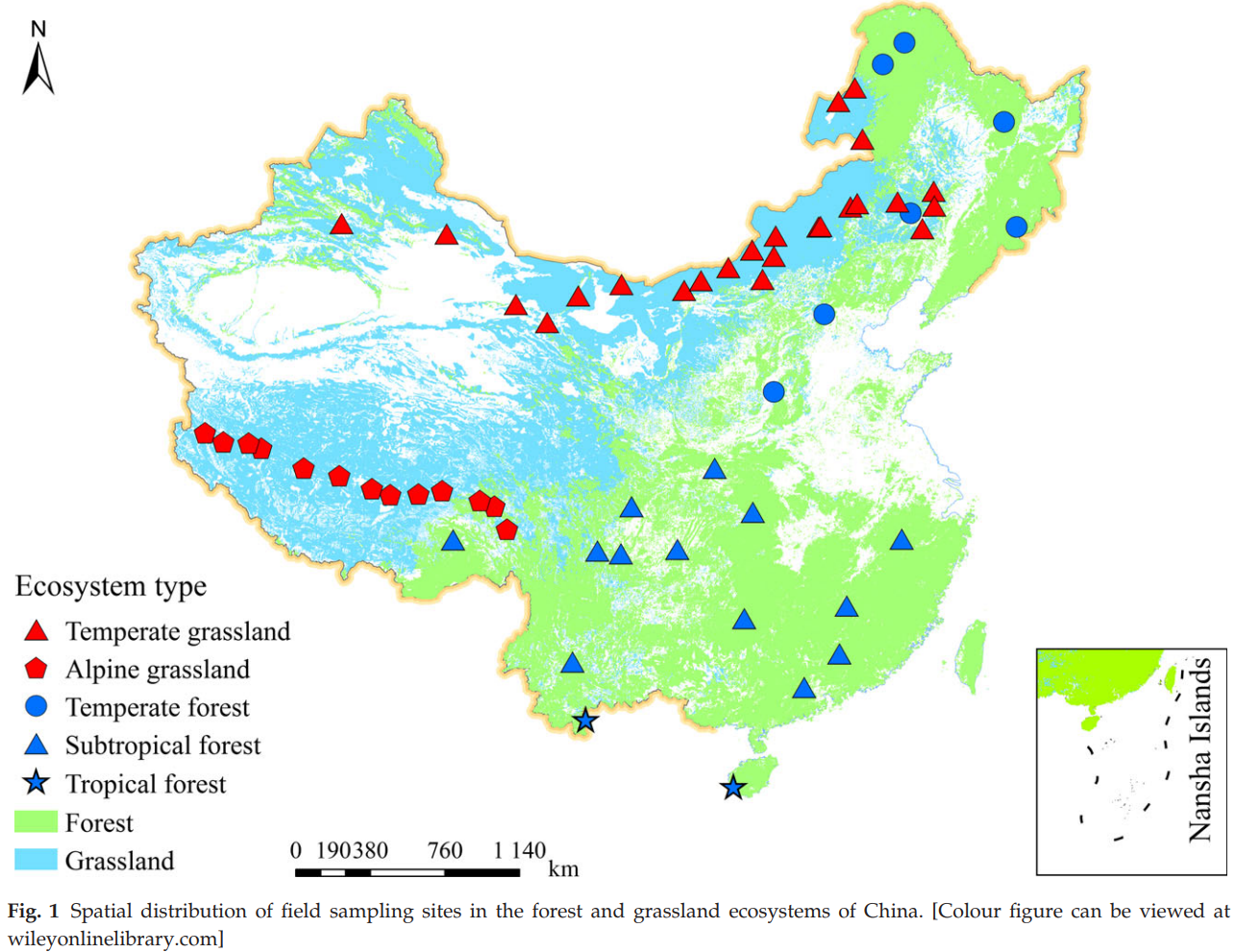
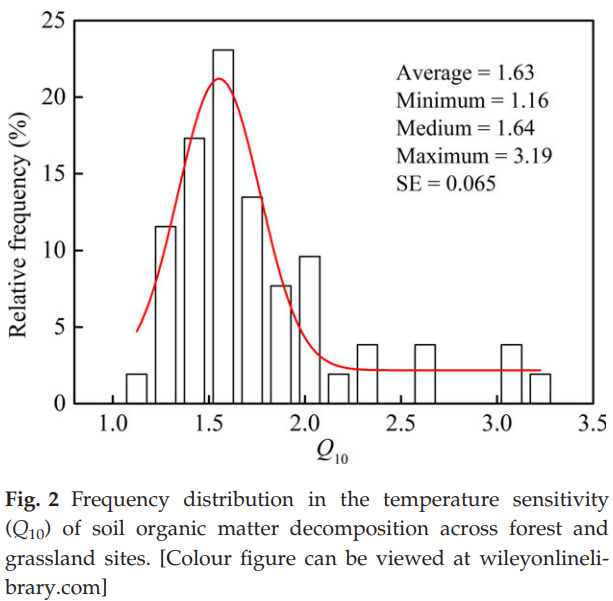
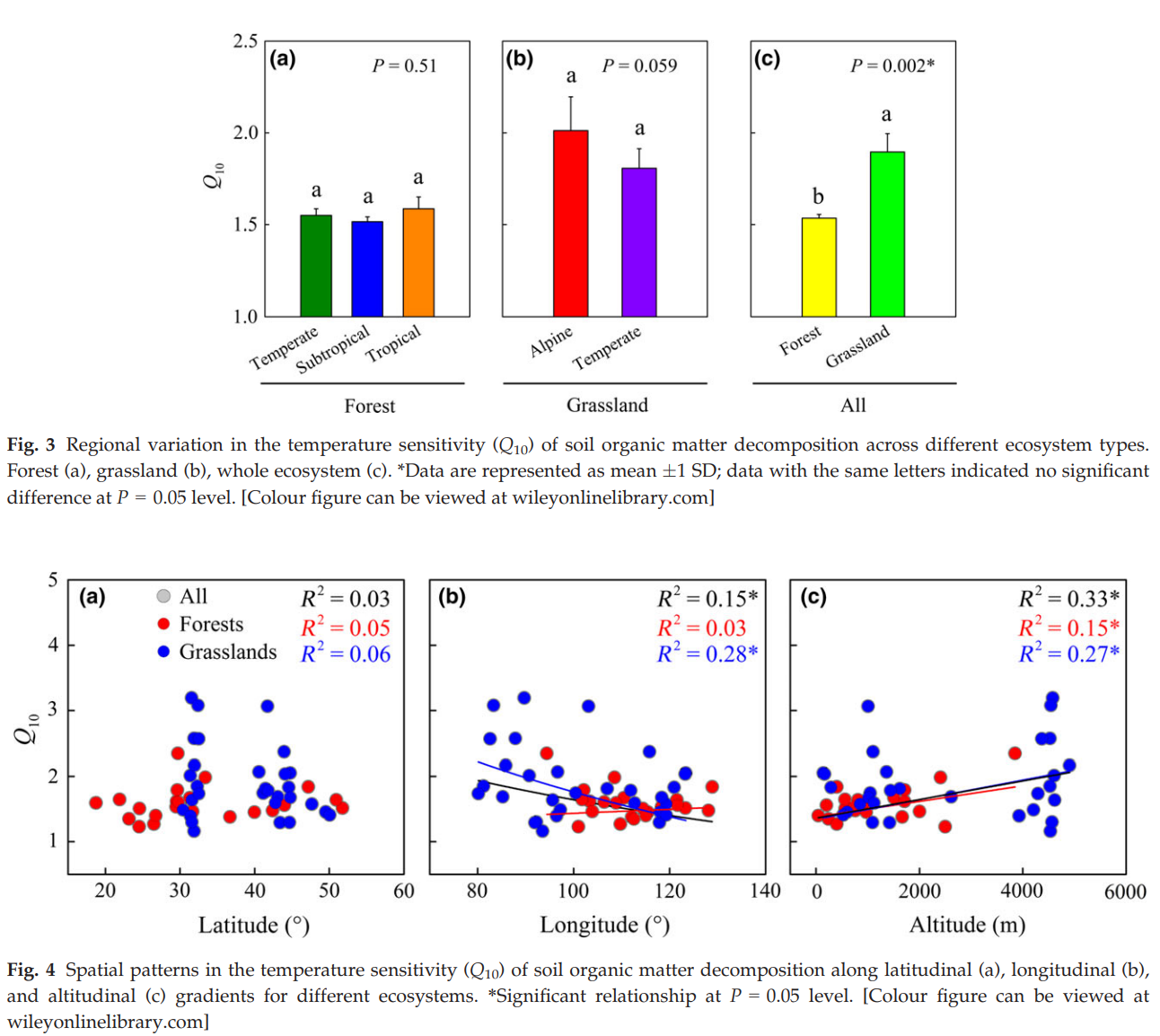
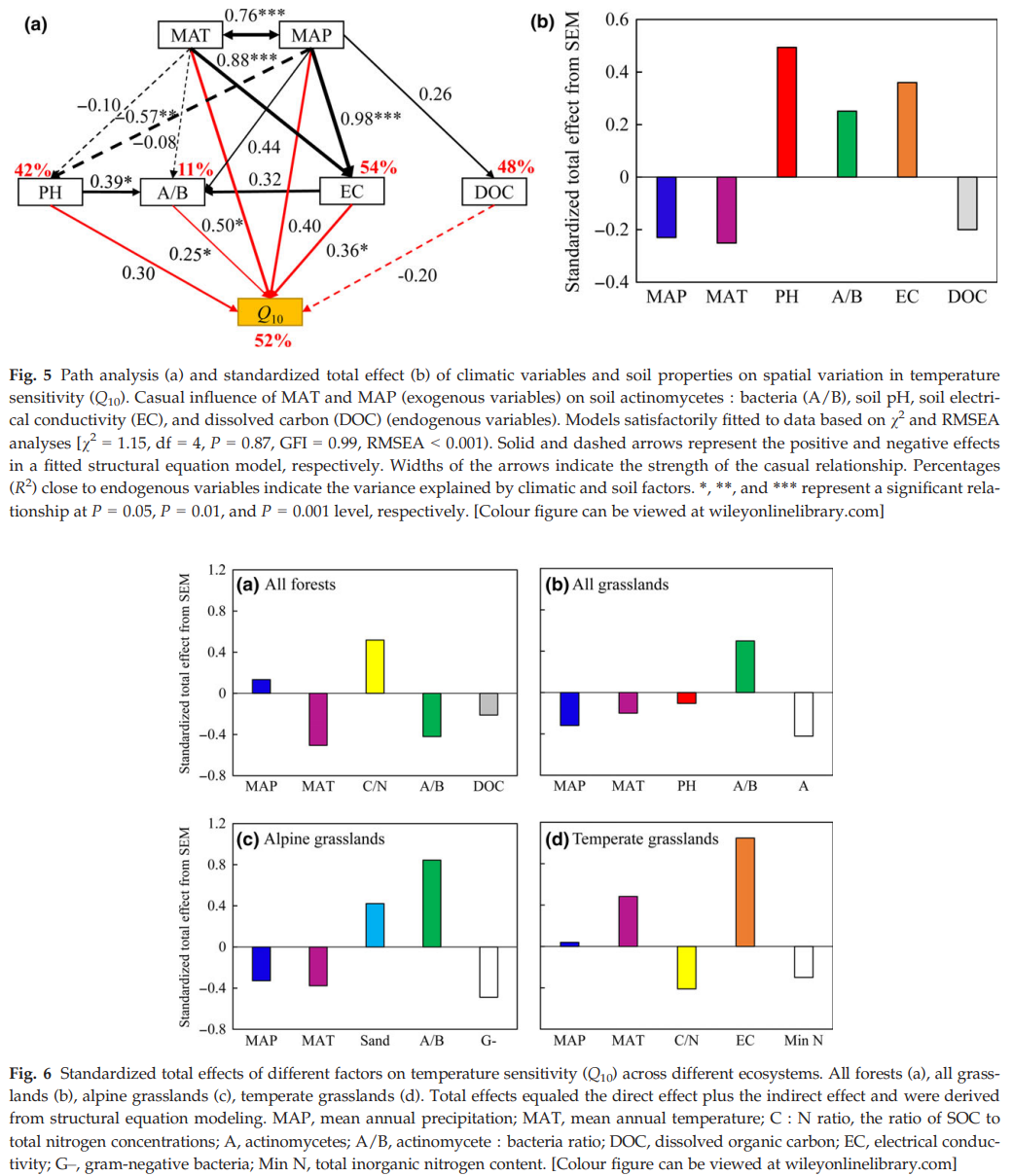
Abstract: How to assess the temperature sensitivity (Q10) of soil organic matter (SOM) decomposition and its regional variation with high accuracy is one of the largest uncertainties in determining the intensity and direction of the global carbon (C) cycle in response to climate change. In this study, we collected a series of soils from 22 forest sites and 30 grassland sites across China to explore regional variation in Q10 and its underlying mechanisms. We conducted a novel incubation experiment with periodically changing temperature (5–30 °C), while continuously measuring soil microbial respiration rates. The results showed that Q10 varied significantly across different ecosystems, ranging from 1.16 to 3.19 (mean 1.63). Q10 was ordered as follows: alpine grasslands (2.01) > temperate grasslands (1.81) > tropical forests (1.59) > temperate forests (1.55) > subtropical forests (1.52). The Q10 of grasslands (1.90) was significantly higher than that of forests (1.54). Furthermore, Q10 significantly increased with increasing altitude and decreased with increasing longitude. Environmental variables and substrate properties together explained 52% of total variation in Q10 across all sites. Overall, pH and soil electrical conductivity primarily explained spatial variation in Q10. The general negative relationships between Q10 and substrate quality among all ecosystem types supported the C quality temperature (CQT) hypothesis at a large scale, which indicated that soils with low quality should have higher temperature sensitivity. Furthermore, alpine grasslands, which had the highest Q10, were predicted to be more sensitive to climate change under the scenario of global warming.
Main content:
Conclusion:
In summary, the temperature sensitivity (Q10) of SOM decomposition varied significantly across different ecosystems. SOM decomposition in the alpine grasslands of the Tibetan Plateau and higher altitude ecosystems were more sensitive to climate change, due to their higher Q10 values. Factors regulating SOM decomposition across different regions were different. Overall, soil pH was the dominant factor regulating regional variation in Q10 through an indirect influence on soil microbes. The combination of climate, soil chemical properties, and soil microbial properties explained most of the variations in Q10 (55–92%). These findings advance our understanding on regional variation in Q10 and how it is likely to be driven by global warming scenarios. Because Q10 varied greatly among different ecosystems, future studies focusing on modeling the feedback between the global C cycle and climate change should consider this variation.