
生物多样性与碳氮循环
Biodiversity and carbon-nitrogen cycles
Article 1:
Title: Consequences of biodiversity loss for litter decomposition across biomes
Download website:
https://www.nature.com/articles/nature13247
Main contents:
The decomposition of dead organic matter is a major determinant of carbon and nutrient cycling in ecosystems, and of carbon fluxes between the biosphere and the atmosphere. Decomposition is driven by a vast diversity of organisms that are structured in complex food webs. Identifying the mechanisms underlying the effects of biodiversity on decomposition is critical given the rapid loss of species worldwide and the effects of this loss on human well-being. Yet despite comprehensive syntheses of studies on how biodiversity affects litter decomposition, key questions remain, including when, where and how biodiversity has a role and whether general patterns and mechanisms occur across ecosystems and different functional types of organism. Here, in field experiments across five terrestrial and aquatic locations, ranging from the subarctic to the tropics, we show that reducing the functional diversity of decomposer organisms and plant litter types slowed the cycling of litter carbon and nitrogen. Moreover, we found evidence of nitrogen transfer from the litter of nitrogen-fixing plants to that of rapidly decomposing plants, but not between other plant functional types, highlighting that specific interactions in litter mixtures control carbon and nitrogen cycling during decomposition. The emergence of this general mechanism and the coherence of patterns across contrasting terrestrial and aquatic ecosystems suggest that biodiversity loss has consistent consequences for litter decomposition and the cycling of major elements on broad spatial scales.
Results:
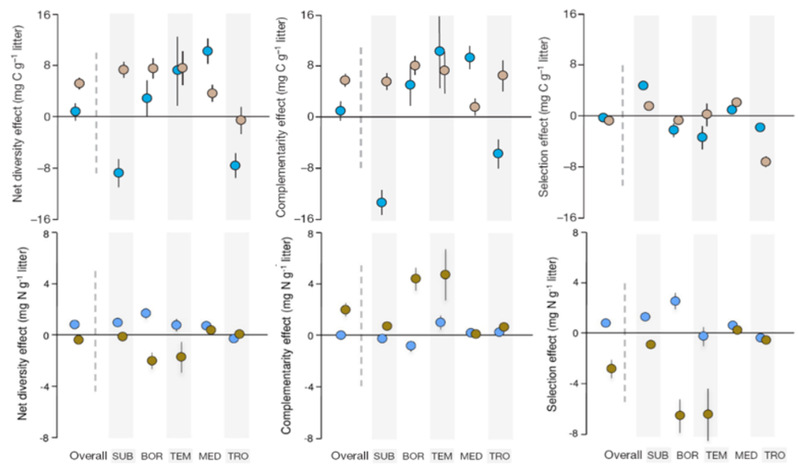
Fig. 1 Net diversity, complementarity and selection effects of plant litter mixtures on C and N loss.
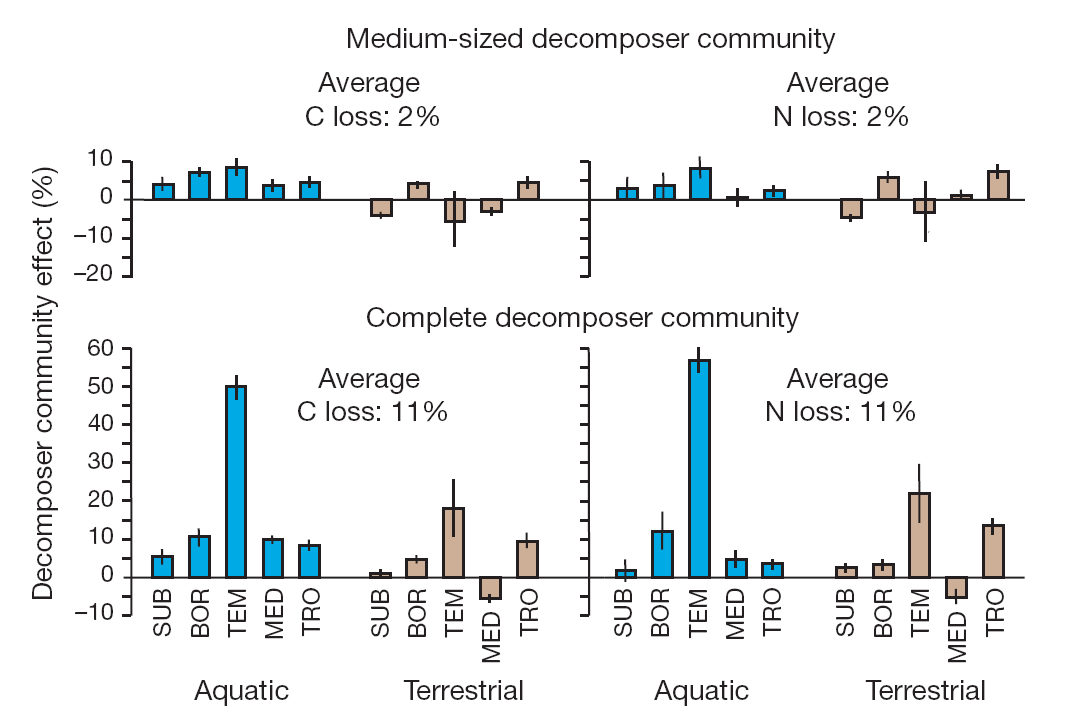
Fig. 2 Effect of decomposer community completeness on litter C and N loss.
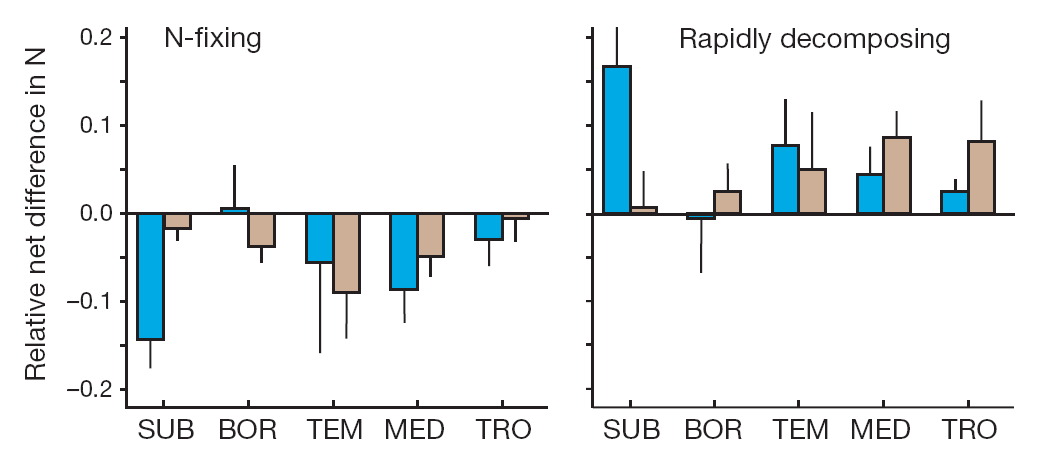
Fig. 3 Relative change in the total amount of litter N.
Conclusion:
The implications of our results are that changes in C and N cycling in response to biodiversity loss are largely predictable across vastly different latitudes in both terrestrial and aquatic ecosystems, by taking into account relatively simple plant traits and the structural characteristics of decomposer communities. To provide robust projections of how ecosystems respond to a loss of biodiversity, it is essential to identify the mechanisms that result from specific interactions between the components of biodiversity as we describe here. With the consistent patterns and mechanisms of biodiversity effects that we have shown, such projections now seem to be within reach.
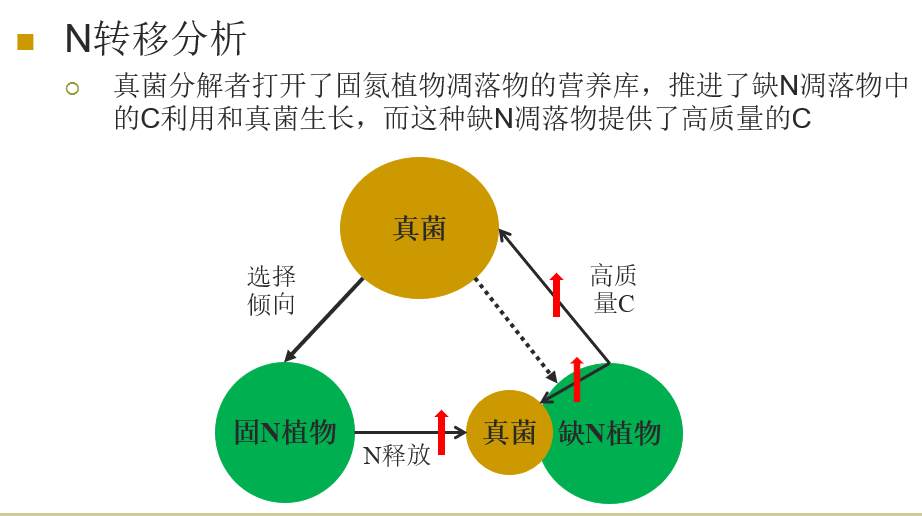
N转移分析:
Article 2:
Title: Rare microbial taxa as the major drivers of ecosystem multifunctionality in long-term fertilized soils
Download website:
https://www.sciencedirect.com/science/article/pii/S0038071719303505
Abstract:
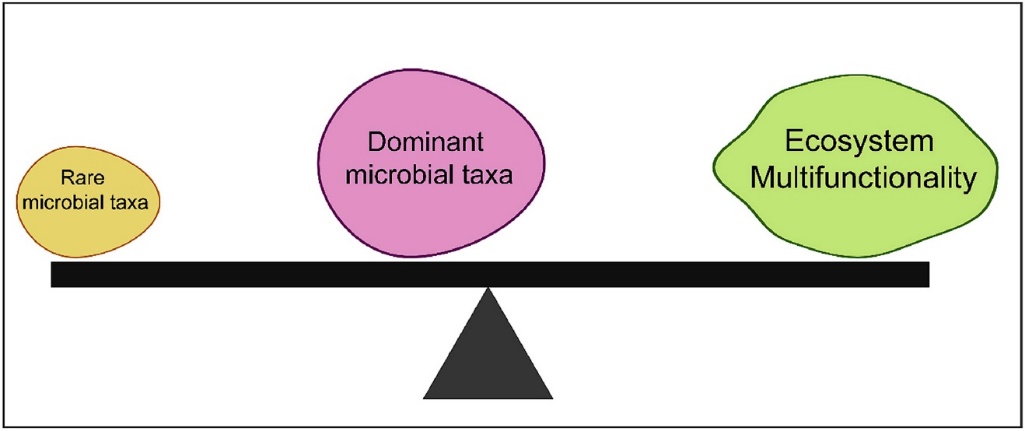
Soil microbial communities play an essential role in driving multiple functions (i.e., multifunctionality) that are central to the global biogeochemical cycles. Long-term fertilization has been reported to reduce the soil microbial diversity, however, the impact of fertilization on multifunctionality and its relationship with soil microbial diversity remains poorly understood. We used amplicon sequencing and high-throughput quantitative-PCR array to characterize the microbial community compositions and 70 functional genes in a long-term experimental field station with multiple inorganic and organic fertilization treatments. Compared with inorganic fertilization, the application of organic fertilizer improved the soil multifunctionality, which positively correlated with the both bacterial and fungal diversity. Random Forest regression analysis indicated that rare microbial taxa (e.g. Cyanobacteria and Glomeromycota) rather than the dominant taxa (e.g. Proteobacteria and Ascomycota) were the major drivers of multifunctionality, suggesting that rare taxa had an over-proportional role in biological processes. Therefore, preserving the diversity of soil microbial communities especially the rare microbial taxa could be crucial to the sustainable provision of ecosystem functions in the future.
关注观点:
稀有类群而非优势类群是多种功能(全球生物地球化学循环)的主要驱动因素 → 稀有类群具有超比例的作用。
图形摘要:
Contact: Luo Yunchao
E-mail: luoyunchao@outlook.com; luoyunchaolyc@qq.com