
https://doi.org/10.1007/s00374-018-1325-2
Introduction:
30 to 65% of soiltotal P is organic P,organic P must be converted into inorganic P via soilphosphatase hydrolysis before it can be utilized by plants.
Considering thatthe phoD gene has been frequently observed in soils, and its abundanceis correlated with soil alkaline phosphomonoesteraseactivity it has been considered as a useful molecular marker to investigate soilorganic P transformation processes by alkaline phosphomonoesterase activity.
Crop strawretention is recommended as an effective measure to improve soil structure andto mitigate fertility degradation caused by inorganic fertilizers,cellulose andlignin are the dominant components of crop straw, the effect ofcellulose may involve microbiological processes, while that of lignin may berelated to physico-chemical processes.
the effect ofcellulose and lignin on phoD-harboring bacteria responsible for organic Pmineralization is unknown.
Hypothesis:
the effects of cellulose and lignin on soil P fractionsand phoD -harboring bacterial community were investigated in twoP-deficient soils, one upland and one paddy soil.
(1) cellulose increases available P content in soil bychanging the composition of phoD-harboring microbial community, while ligninincreases soil available P by decreasing P soil fixation;
(2) cellulose, rather than lignin, significantly changes thecomposition of the phoD-harboring bacterial community;
(3) the response of the phoD-harboring bacterialcommunity may be slower to cellulose in the paddy soil than in the upland soil,owing to the oxygen-deficient conditions of the former soil.
Material and methods:
upland soil:28° 33′ N, 113° 19′ E; mean annual rainfall:1330mm;mean annual temperature:17.5 °C
paddy soil:28° 55′ N, 111° 27′ E; mean annualrainfall:1440mm; mean annual temperature:16.5 °C
0-20m topsoil layer
homogenized and sieved (< 2 mm) to remove plantresidues and stones
pre-incubated at 25°C for 14 days; the upland soil kept at 45% water holding capacity (WHC)whereas the paddy soil was flooded with distilled water. Then measuring majorchemical properties.
The experiment for upland and paddy soilswas laid in a completely randomized blocks design with three treatments, fourreplicates, and three soil samplings: 5, 30, and 60 days.
Therefore, the experiment was comprised of72 experimental units, 36 units for each soil. The three treatments were (1)nonamendment as control, (2) cellulose amendment, and (3) lignin
amendment. Each experimental unit wasprepared with 150 g dry mass equivalent soil in a plastic jar and the celluloseand lignin additionwas 5 g C kg−1; both organic polymer were
mixed with each soil sample.
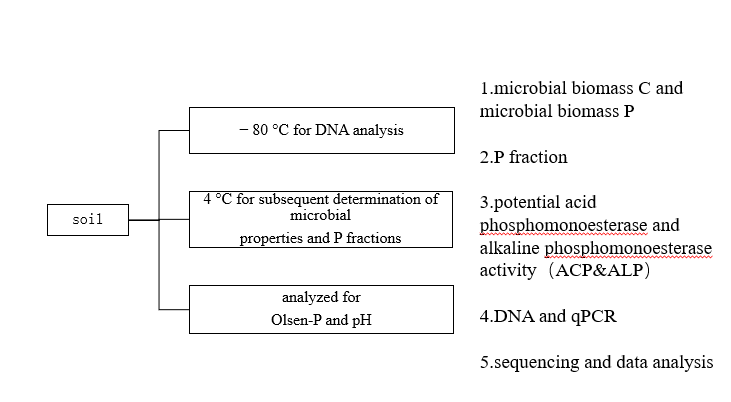
Determination of microbial biomass C andmicrobial biomass P:
microbial biomass C(MBC) and microbial biomass P (MBP) were determined using the CHCl3fumigationextraction method
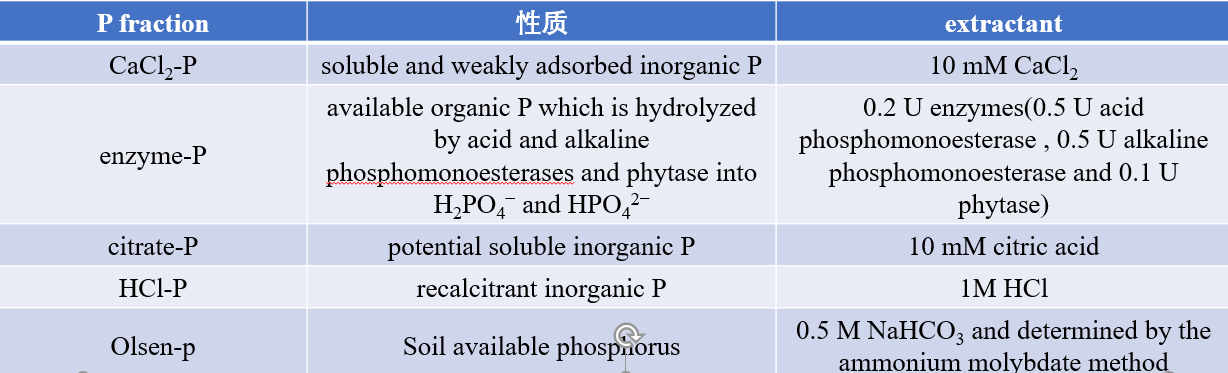
Measurement of biologically based Pfractions:
Determination ofpotential acid phosphomonoesterase and alkaline phosphomonoesterase activity:
ACP&ALP were determinedbythe modified fluorometric method of Loeppmann et al.
DNA extraction and qPCR assay
Illumina MiSeq sequencing and data analysis:
Thecommunity of phoD-harboring bacteria was analyzed using the Illumina Miseq 250bp paired-end sequencing platform.
Thevariable barcodes were designed and respectively linked to the 5′end of primerpairs (ALPS-F730/ALPS-1101) to distinguish the sequences of each sample.
3min at 95 °C, followed by 35 cycles at 95 °C for 30 s, 30 s at 57 °C forannealing, and finally extension step was carried out for 15 min at 72 °C.
ThePCR reaction mixture: 0.3 μl Ex Taq+2.5 μl10× Ex Taq buffer (Mg2+ plus) + 0.5 μl of each primer + 2 μl of dilutedDNA + final volume of 25 μl with ddH2O.
PCRproducts were checked and purified by 1.5% agarose gel electrophoresis in 0.5×TAE. Then, three purified PCR products were pooled to one PCR amplicon sampleafter assessing its quantity and quality.
Result:
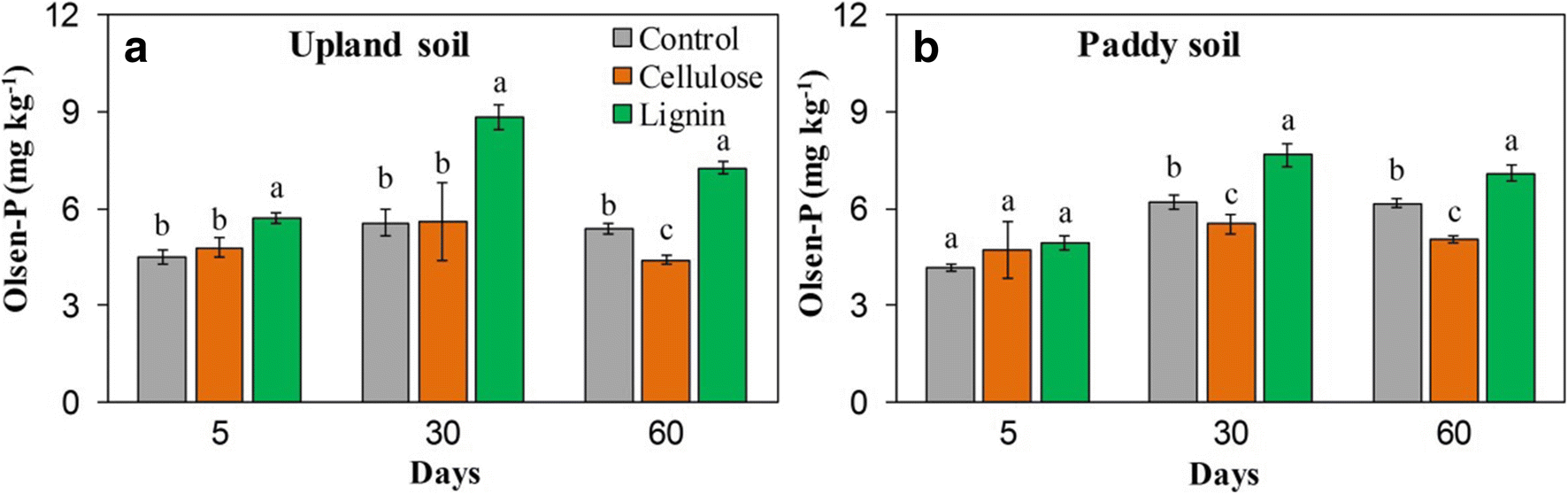
The Olsen-P content slightly increasedduring the incubation period in both soils. Lignin significantly increased,while cellulose decreased Olsen-P content, compared to controls of both soils,after 60 days of incubation.
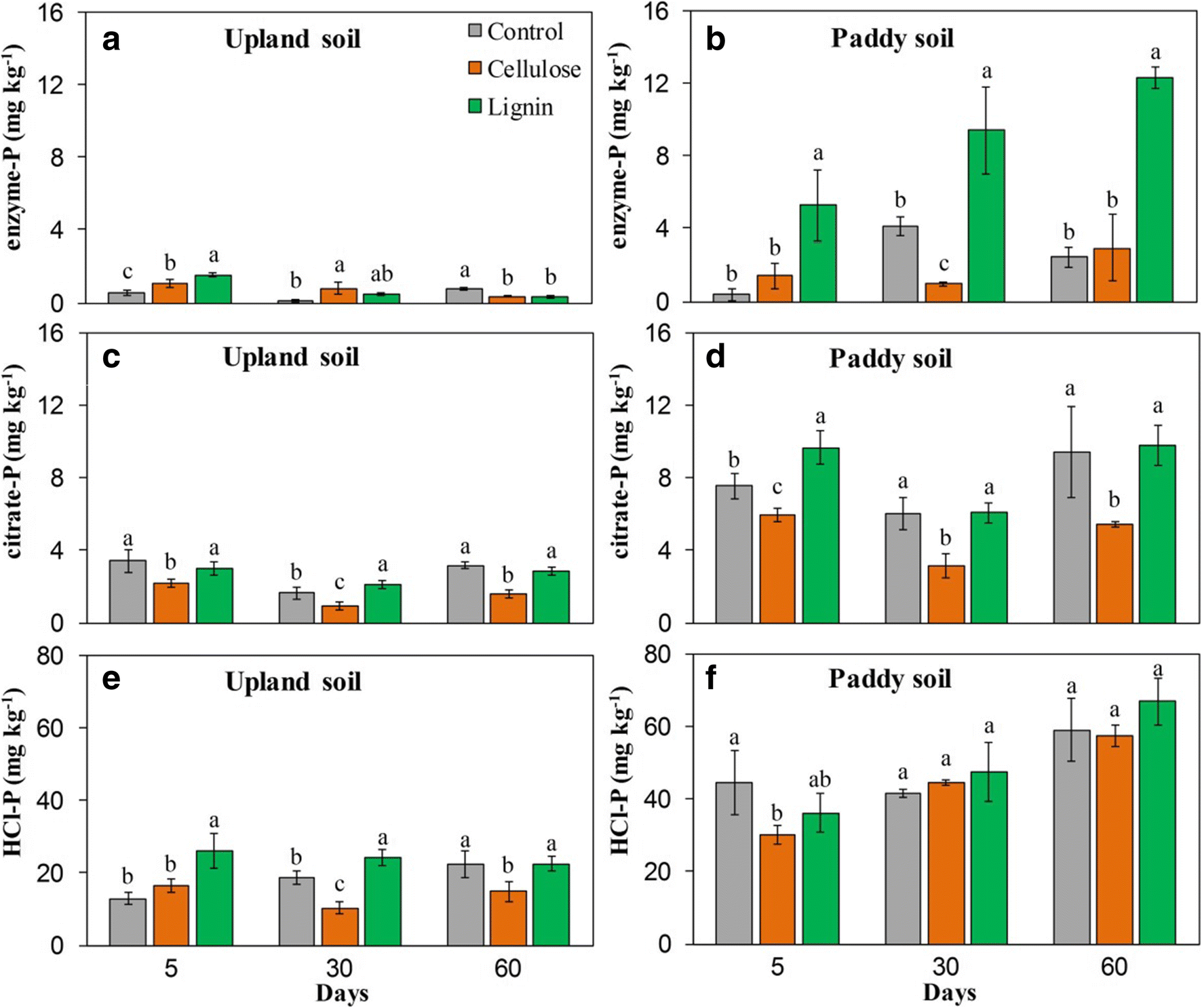
As for the P fractions, the content ofenzyme-P, citrate-P, and HCl-P fractions was significantly higher in the paddythan in the upland soil. Compared with control, cellulose, but not lignin amendment,significantly decreased citrate-P and HCl-P content during incubation of theupland soil. However, lignin increased enzyme-P content, while cellulosedecreased citrate-P content in the paddy soil. CaCl2-Pwas not detected in either soil.
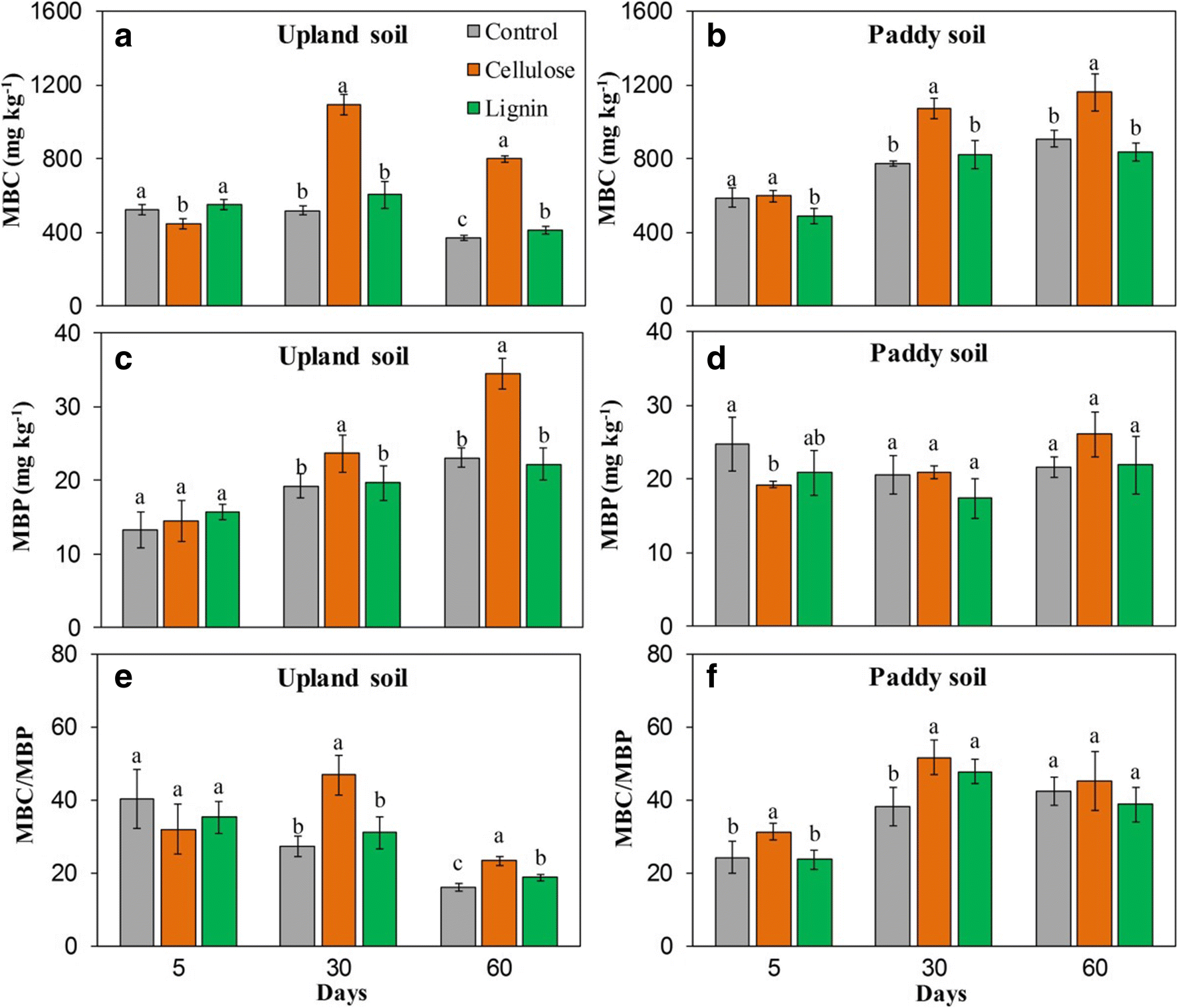
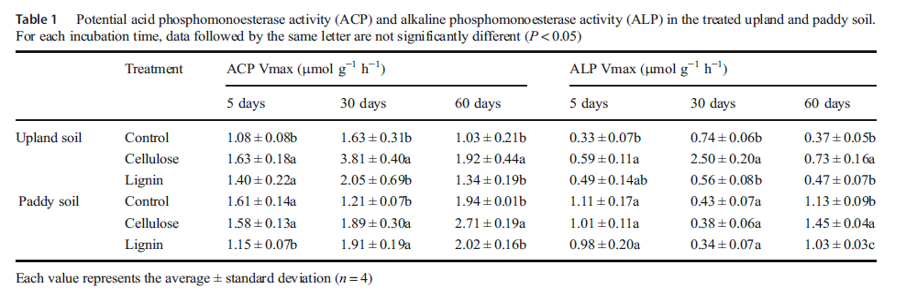 Similar positive effects of cellulose onseveral microbial properties, such as MBC, MBP, ratio of MBC/MBP, ALP, and ACP,were observed in upland soil samples at the mid and later incubation periods incomparison to controls. Conversely, lignin had limited effects on the sameproperties. Although the positive effects of cellulose on the aforementionedmicrobial properties were also observed in the paddy soil, these effects werelower than in the upland soil, while lignin effects on the same microbialproperties in the paddy soil were negligible.
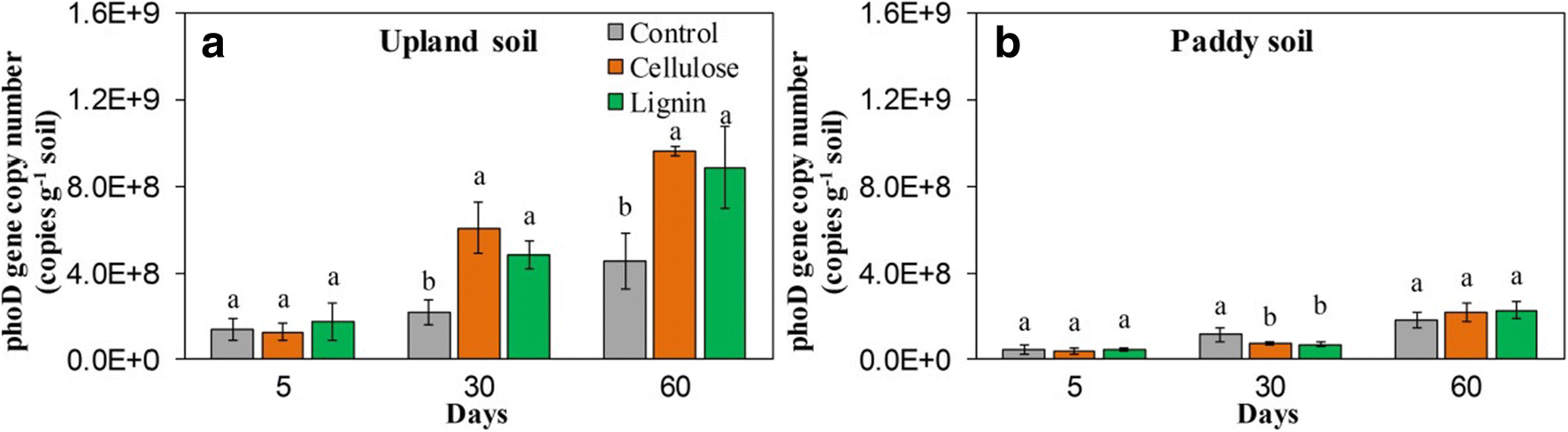
Compared to paddy soil samples, higher phoD geneabundance was detected in upland soil samples.
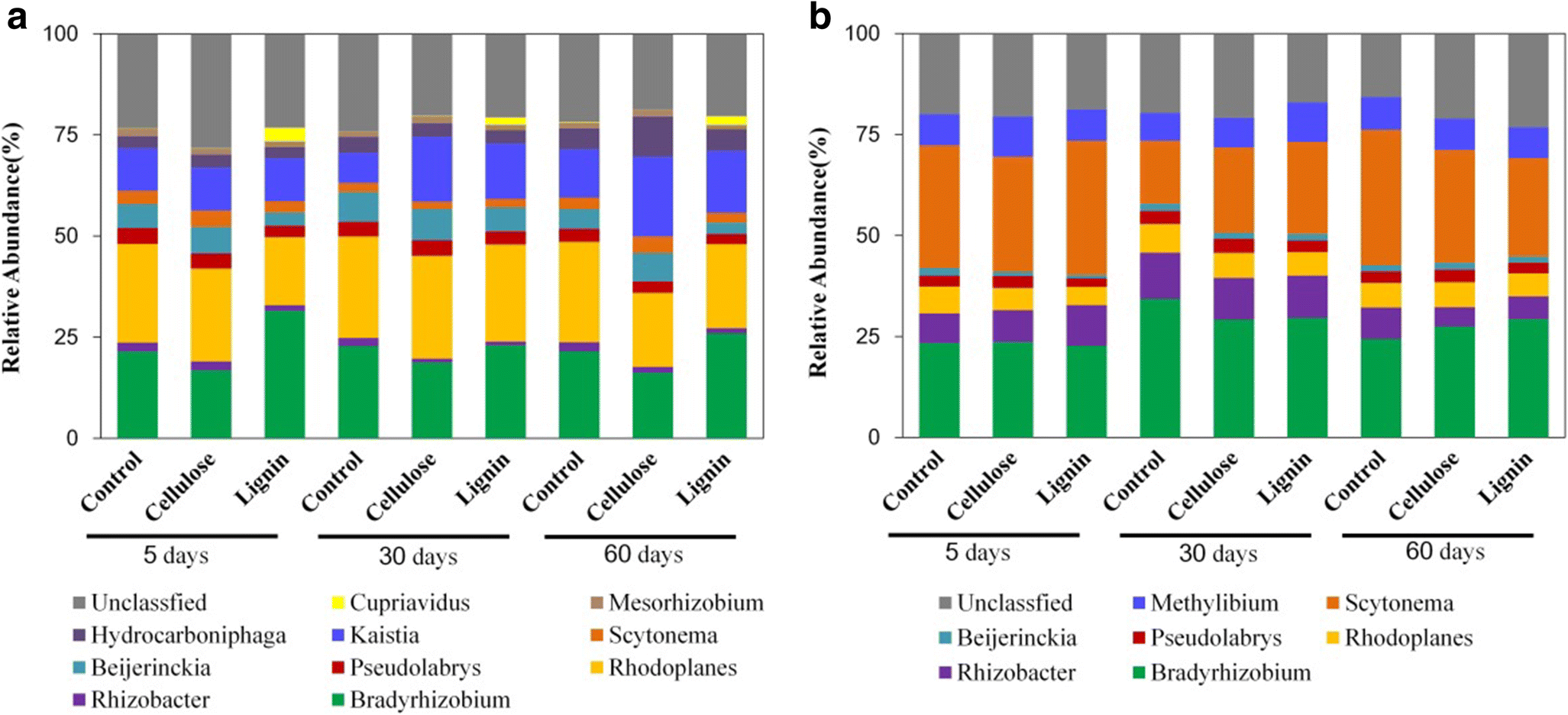
After 60 days incubation, both thecellulose and lignin had no effect on the most of phoD-harboringbacteria and only Scytonema was negatively affectedby the lignin amendment in the paddy soil. Compared to the control, cellulosesignificantly increased the relative abundance of Kaistia, Hydrocarboniphaga, and Beijerinckia, while significantly decreased the relativeabundance of Rhodoplanes, and the lignin significantly increasedthe relative abundance of Cupriavidus and Bradyrhizobium, while significantly decreased therelative abundance of Rhodoplanes in upland soil.
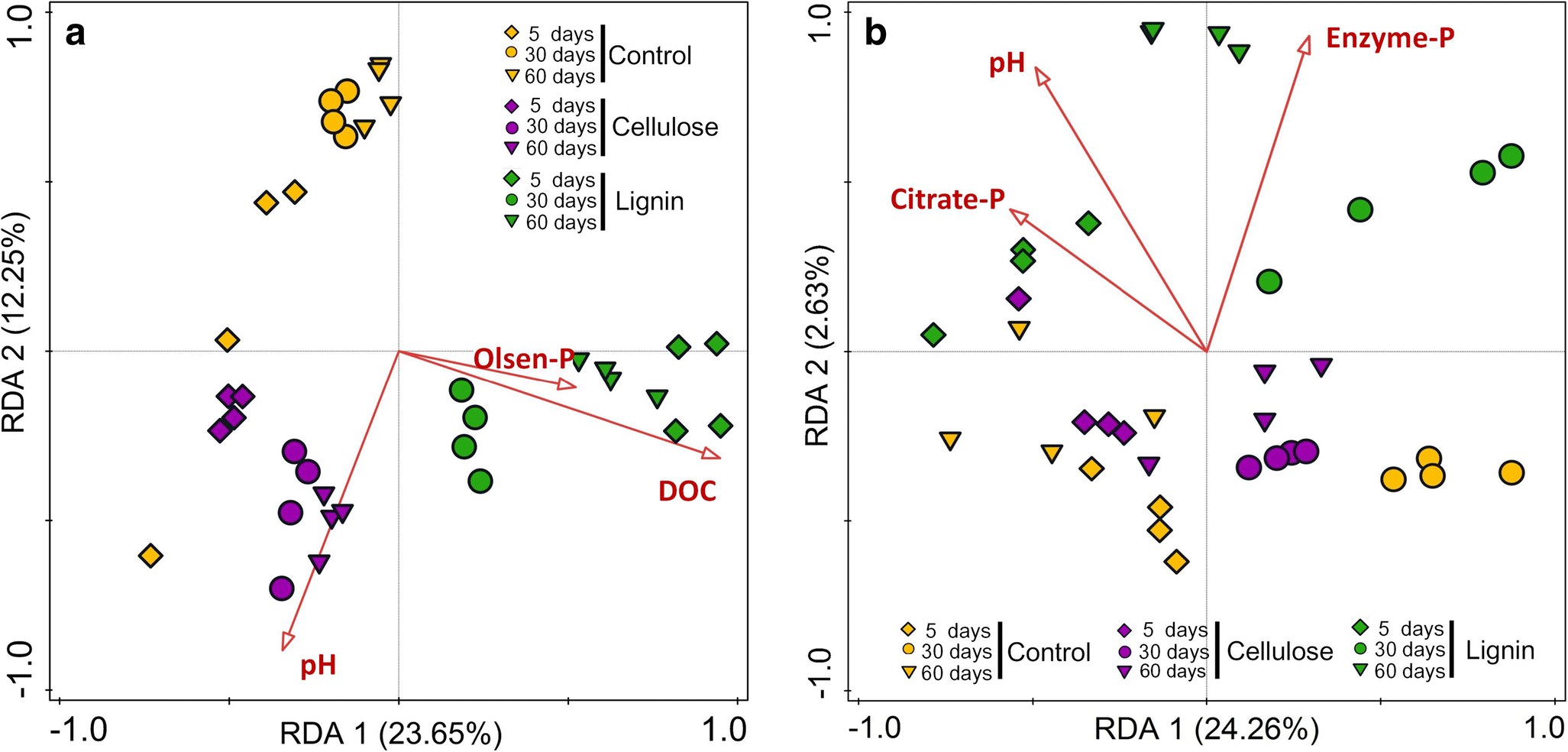
The RDA model selection procedure revealedthat DOC content (F = 9.9, P =0.002), pH (F =6.5, P =0.002), and Olsen-P content (F = 3.9, P =0.004) were significant predictors for the composition of phoD-harboringbacterial community in the upland soil (P <0.05), while they accounted for 35.90% of the total variance in the phoD OTUsprofile. Citrate-P (F = 3.2, P =0.026) and enzyme-P (F = 3.7, P =0.026) content, and pH (F = 4.4, P =0.012) were selected as the most significant factors affecting the composition ofphoD-harboringbacterial community in the paddy soil (P <0.05) according to the RDA model; these variables explained 26.89% of the totalvariance in this phoD OTU profile.
Conclusion:
weshowed the effect of two specific components of straw, cellulose and lignin, onsoil P fractions and on the composition of phoD-harboring bacterialcommunity.
celluloseand lignin showed distinct mechanisms in regulating soil P availability, celluloseaffected microbial uptake and lignin affected soil chemical processes.
Twonew phoD-harboring bacterial species, which belong to genera Cupriavidusand Methylibium.
A significanteffect of both cellulose and lignin on the composition of phoD-harboringbacterial community in the upland soil compared to the paddy soil was observed,indicating that C amendment had higher effects on soil organic P availabilityunder an oxygen-rich than oxygen-deficientsoil.
陈韵如(cherry960502@163.com)