
Article1 title:Litter chemistry influencesearthworm effects on soil carbon loss and microbial carbon acquisition
Downloadwebsite: http://dx.doi.org/10.1016/j.soilbio.2018.05.012
Maincontents:
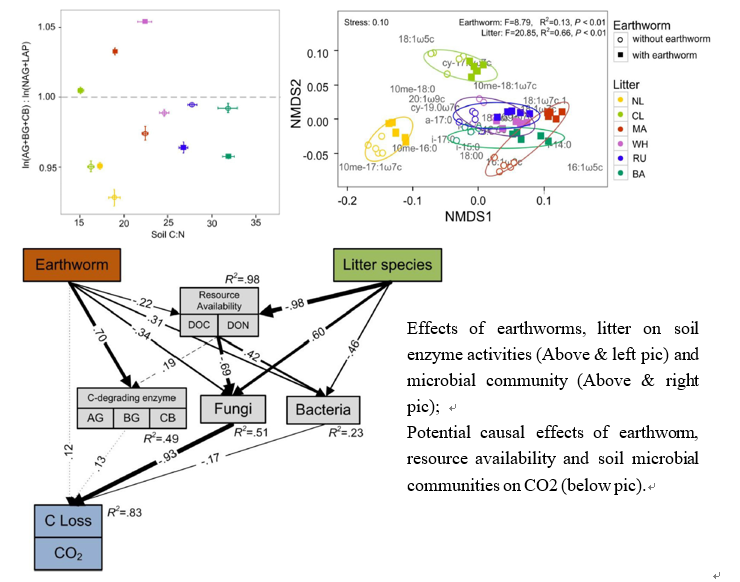
Earthworms could affect soil C and N cyclingprocess to balance their energy and nutrients requirements, and they could alsoregulate soil microbial community structure and microbial acquisition for C andN. However, the connection between faunal and microbial stoichiometry in thecoupling soil C and N cycling remains poorly understood.
The author amended soil with five littersdiffering in litter chemistry (clover, maize stover, wheat straw, Rumex andbagasse fiber) including a no litter control and treated them without or withearthworms. After 90 d incubation, changes in earthworm tissue and microbialstoichiometry and different soil C and N fractions were examined.
Mainresults:
1.Litter chemistry modified earthworm effects onsoil C as earthworms reduced POC and SOC under high solublecompounds litter species but no significant effects under high ligninlitter species;
2.Earthworm effects on C loss was mainlyattributed to earthworm-induced soil fungi abundance decrease, whilemuch less related to C-degrading enzyme activity;
3.earthwormcontrolled microbial C/N acquisition effort as C to N-degrading enzyme activityratio was significantly increased by earthworms in the low lignin litterspecies (clover, maize stover and wheat straw), while such effect was reversedin the high lignin litter species (Rumex and bagasse fiber).
Article2 title:Changes in litter qualityinduced by N deposition alter soil microbial communities
Downloadwebsite: https://doi.org/10.1016/j.soilbio.2018.11.025
Maincontents:
Soil microbial community composition and litterquality are important drivers of litter decomposition, but how litter qualityinfluences the soil microbial composition largely remains unknown.
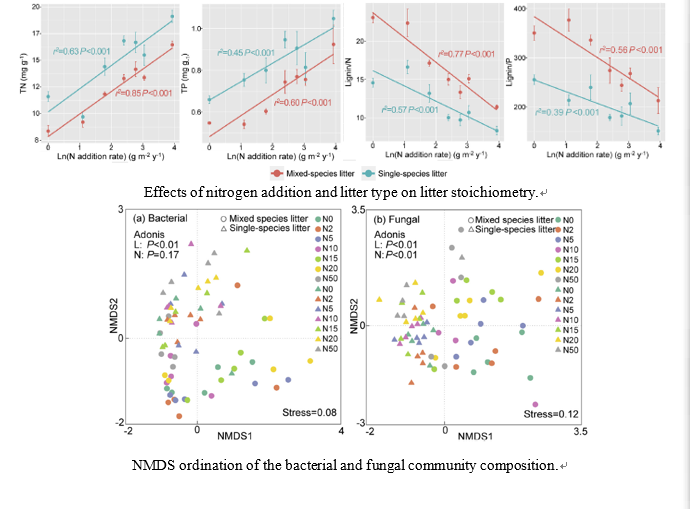
The author conducted a microcosm experiment toexamine the effects of changes in litter quality induced by long-term Ndeposition on soil microbial community composition. Mixed-species litter andsingle-species litter were collected from a field experiment with replicateplots exposed to long-term N-addition in a semiarid grassland in northernChina. The litters were decomposed in a standard live soil after which thecomposition of the microbial community was determined by Illumina MiSeqSequencing.
Mainresults:
1.Changes in litter quality following N-depositionalters soil fungal community diversity in our grassland soils but thatit had no significant impacts on soil bacterial diversity;
2.Increased saprophytic fungi anddecreased ammonia-oxidizing bacteria with the enhancement of litterquality were observed;
Article3 title:Altitude and decompositionstage rather than litter origin structure soil microarthropod communities intropical montane rainforests
Downloadwebsite: https://doi.org/10.1016/j.soilbio.2018.07.017
Maincontents:
Microarthropods impact organic matter turnoverand nutrient cycling via processing of organic matter entering the soil aslitter and root exudates.Variationsin the structure of soil microarthropod communities are due to both biotic andabiotic factors such as local climatic conditions and litter quality.However, in particular in tropical ecosystemsthe relative importance of these factors for structuring soil microarthropodcommunities are little understood.
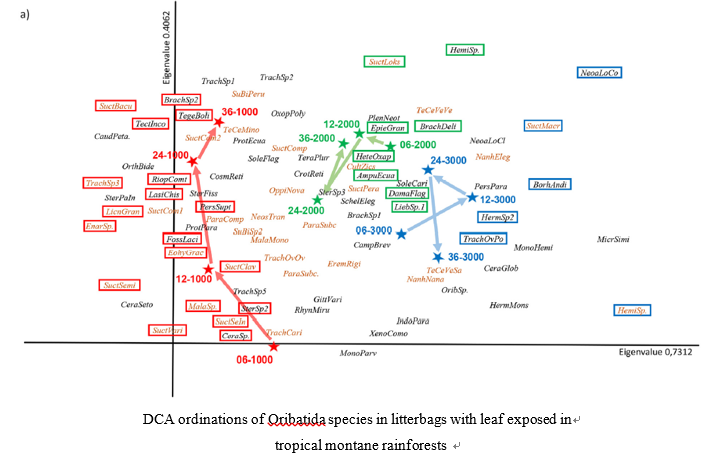
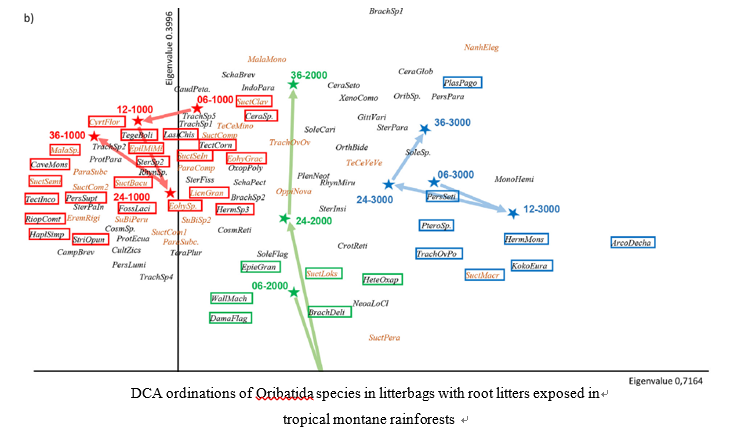
The author investigated variations in thestructure of soil microarthropod communities in leaf and root litter from threealtitudes (1000, 2000, 3000m) exposed in three tropical montane rainforests atdifferent altitude in southern Ecuador for three years (6, 12, 24, 36 months).
Mainresults:
1.Microarthropod abundance and Oribatida diversitydecreased with increasing altitude and were closely linked to changesin litter quality and the microbial community of decomposing litter;
2.The decomposition stage and environmentalfactors changing between rainforests of different altitude, such as temperatureand soil pH, are more important in structuring the decomposer community intropical montane rainforests than the origin and therefore quality of littermaterial.
The above contents mayhave some mistakes since the sharer’s low English skill. Please contact the boyif you got any question of the contents. (Sharer: junboyang123@163.com)