
文章题目:Redistribution of soil water by asaprotrophic fungus enhances carbon mineralization
文章链接:http://www.pnas.org/content/112/47/14647
实验材料与方法:
General Setup. Experiments were carried outin mesocosms (adapted from 39) (Fig. S1) represented by two chambers (a 6 × 20× 15 cm), filled with a steam sterilized mixture (2:1:1 vol/vol/vol) of loamysoil (17% clay; 76% silt; 7% sand) and medium coarse quartz sand (Dorsilit 8;particle size range, 0.3–0.8 mm) as well as coarse quartz sand (Dorsilit 7,0.6–1.2 mm; Dorfner GmbH& Co.). The two chambers made of Makrolon (BayerAG) had openings on the sides facing each other, which were covered by two160-μm pore size stainless steel mesh screens. A 2-mm-thick air gap betweenboth chambers prevented capillary flow of water and was stabilized by twoadditional perforated stainless steel mesh screens with 2 mm pore sizes.Chamber tops were removable and were air-tight if closed. The soil surface wascompressed slightly to obtain a uniformly flat surface. Fungal cultures [DSMNo.3056, A. bisporus (Lange) Imbach]were received from the Leibniz Institute DSMZ and grown on malt extract peptoneagar at 14 °C. The soil of chamber I was inoculated by placing a 1 cm2 agarplate with fungal hyphae into the substrate close to the air gap at a depth ofapprox. 2 cm. A. bisporus was
chosen because it is one of the best studied filamentous fungal species, with acomplete available genome, that shows a fast growth rate. Both chambers weremaintained at 23 °C and irrigated regularly to field capacity with a liquidfungal growth medium (2% glucose, 0.2% peptone, 0.2% yeast extract, 0.1%K2HPO4, 0.46% KH2PO4, and 0.05% MgSO4) (40) for 6 wk. The chamber tops werekept open but were covered with glass microfiber filter paper (Grade 934-AH,Whatman Ltd.) during the growth phase to facilitate air exchange and avoidcontaminations. Volumetric water content was controlled continuously using soilmoisture sensors monitoring the dielectric constant of the media (ECH2O-10moisture sensor; Decagon Devices Inc.).
Quantification of Hydraulic Redistribution.
After desiccation for 6 wk at 23 °C to asoil water potential of approximately –9.5 MPa in both chambers, chamber I wasrewetted to field capacity (–0.03 MPa) with deuteriumlabeled water (3% atdeuterium enrichment; ROTH GmbH + Co. KG). Mescosms were then closed air-tightand only opened for sampling of soil cores. Soil cores of chamber II weredestructively sampled 72 h after irrigation of chamber I. Water for isotopeanalyses was extracted from soil samples by cryogenic vacuum extraction (41).Hydrogen-stable isotope analyses were conducted at the Laboratory forIsotopic-Biogeochemistry (University of Bayreuth) using thermalconversion/isotope-ratio mass-spectrometry (isotope mass spectrometer, delta Vadvantage; Thermo Fisher Scientific). In addition, soil water potential wasmeasured on collected soil samples (4 cm diameter, 0.5 cm thickness) using thechilled mirror dewpoint method (WP4-T; Decagon Devices Inc.) (42). Controlswere established by mesocosms treated in the same way as described above, butthe hyphal connections between the chambers in the air gap were severed bycutting with a thin stainless-steel wire before irrigating chamber I. In total,four mescosms with intact fungal connections as well as four control mescosomswere treated with deuterium-labeled water.
Mineralization of Organic Matter.
CO2 efflux from the soil is an indicator ofthe general activity of soil microorganisms and was therefore used to estimatethe impact of hydraulic redistribution on mineralization of organic matterunder drought conditions. The use of 13C-labeled plant material (Triticumaestivum L. green shoots; >97 atom% 13C; C/N ratio, 15; IsoLife) enabled usto trace the origin of collected CO2. Labeled plant material (five groundsamples of 20 mg each) were placed at regular intervals of 4 cm from the meshscreen on the soil surface of the nonirrigated chamber II, shortly beforerewetting chamber I. Mescosms were then closed air-tight and were not openedfor 7 d. CO2 effluxes were regularly measured for 7 d at 20 °C using thedynamic closed-chamber technique (43) (Fig. S2). CO2 concentrations in themesocosms headspace (1.2 L) were measured every 6 min for 30-min periods forthe first 24 h with an infrared gas analyzer (LiCOR 820; Licor). Beginning withthe second day of experiments, CO2 concentrations were measured for periods of48 min. Soil CO2 effluxes were calculated from the slope of the linearregression between CO2 concentration and incubation time. An alternative airpath flow was opened at the end of each measurement cycle for 30 min on thefirst day of measurements and subsequently for 12 min to flush the system withCO2-free synthetic air and reduce the CO2 concentration. In addition, theextracted air was collected every 12 h for further analysis of 13C isotopecontents to determine the percentage of decomposed plant material in chamberII. Extracted air was stored in 10 mL butyl rubber septum-capped vials byflushing for 90 s. Septa were heated at 105 °C for 12 h before vial closing toprolong stability of CO2 isotope composition (44). Vials were flushed with N2for 90 s prior to use to remove environmental CO2. 13C-CO2 efflux for the wholemeasurement cycle was interpolated from measured 13C-CO2 efflux values using aGaussian function extended with a linear term to adjust for divergences from anormality distribution. Function fitness was optimized using Solver (MicrosoftCooperation). δ13C analyses were conducted at the Laboratory forIsotopic-Biogeochemistry (University of Bayreuth) using an Elemental analyzer(NA 1108; CE Instruments)– isotope ratio mass spectrometer (delta S; FinniganMAT) linkage. In total, five mescosms with intact fungal connections as well asfive control mescosoms were treated with labeled plant material.
Analysis of Soil Enzyme Activity.
The impact of hydraulic redistribution onsoil enzyme activity was analyzed using soil zymography (ref. 45 modified byref.46). This in situ method allows for analysis of the 2D distribution ofenzyme activities in soil with high spatial resolution and under differentwater
contents in contrast to more traditional methods that are based on the determinationof enzyme activity in solution. Hence, this provided a comprehensive picture ofthe allocation of redistributed water in chamber II and the resulting influenceon enzyme activities. In addition, the study of enzymatic activities providesfunctional information on specific aspects of organic
matter decomposition and can therefore support the results of CO2 efflux measurements.N-acetylglucosaminidase and cellobiohydrolase activity were analyzed using theartificial substrates 4-Methylumbelliferyl N-acetyl-β-Dglucosaminide (4-MNG) and4-methylumbelliferyl β-D-cellobioside (4-MC; both Sigma-Aldrich Chemie GmbH),respectively. The fluorogenic 4-methylumbelliferone (MUF) is released from4-MNG and 4-MC due to hydrolytic cleavage in the presence of compatibleenzymes. In soils, the activity of chitinase is considered as a good indicatorof fungal biomass and activity (47, 48). A 1% agarose gel (size of 0.1 × 12.0 ×11.0 cm) was cast in systems usually used for vertical gel electrophoresis(Biometra GmbH). The gel was sliced in four parts at 2 × 11 cm, and all fourparts were attached to the soil surface of the nonirrigated chamber II in thespace between the labeled plant material samples. Polyamide membrane filters(0.45 μm pore size; Sartolon, Sartorius AG) were sliced in 10 parts at 2 × 275px. Half of the slices were saturated with a 4-MNG solution or 4-MC solution(25% wt/vol; Sigma-Aldrich Chemie GmbH), respectively. Four slices of eachgroup were placed in turn on top of the gel slices, starting with the 4-MNGgroup. The membrane filter was extracted after an incubation time of 25 min at20 °C for 4-MNG and 20 min for 4-MC and illuminated on a fluorescenttransilluminator in the dark (wavelength, 355 nm; Desaga GmbH). Pictures weretaken with a digital camera (Nikon D3100) and analyzed in comparison withcontrols without hydraulic redistribution. To adjust for differences inexposure time, which are necessary to avoid overexposure at high activities andloss of details at low activities, one filter slice was not incubated on thesoil but photographed together with the others and served as a standard of zeroactivity.
A calibration line was prepared from membranes soaked in different solutions ofMUF concentrations (0, 35, 70, 130, and 200 μM). These calibration membraneswere cut into strips of 2 cm and photographed under the UV light in the sameway as the zymogram membranes. The amount of MUF on an area basis wascalculated from the volume of solution taken up by the membrane and by the sizeof the membrane.
Image processing and analysis were done using the open source software imageJ1.46r (Wayne Rasband, National Institutes of Health, Bethesda, MD). The digitalimages were transformed to 8-bit—that is, grayscale images. To illustrate theresults, the values of the grayscale image were depicted in false color. Thelinear correlation between the MUF concentration and the mean of grayscale inan area of 4 cm2 of each calibration gel were calculated using the software R.A segment at 1.5 × 7.5 cm with no visible disturbance was
selected from the soil zymograms, and mean values of the grayscale were measured.Values were standardized based on the difference between the standards of zeroactivity and the calibration membrane with 0 μM MUF concentration. Values wereexpressed as pmol MUF/h and mm2.
数据分析:
All statistical analyses and graphics weredone using R 3.1.0 (R Developmental Core Team). Normality and homogeneity ofthe data were tested using Shapiro–Wilk test and Levene’s test, respectively.Enzyme activities were analyzed using linear mixed-effect models as implementedin the R package nlme (49). The sample origin from the different chambers was
added as a random factor into the model to adjust for random variances among chambers.For pair-wise post hoc comparisons, general linear hypotheses based on Tukeyall-pair comparisons were conducted, using the R package multcomp (50).
Kruskal–Wallis test with pair-wise Wilcox tests for post hoc comparisons wereused if data were not normal and/or variances were not homogeneouslydistributed.
装置图:
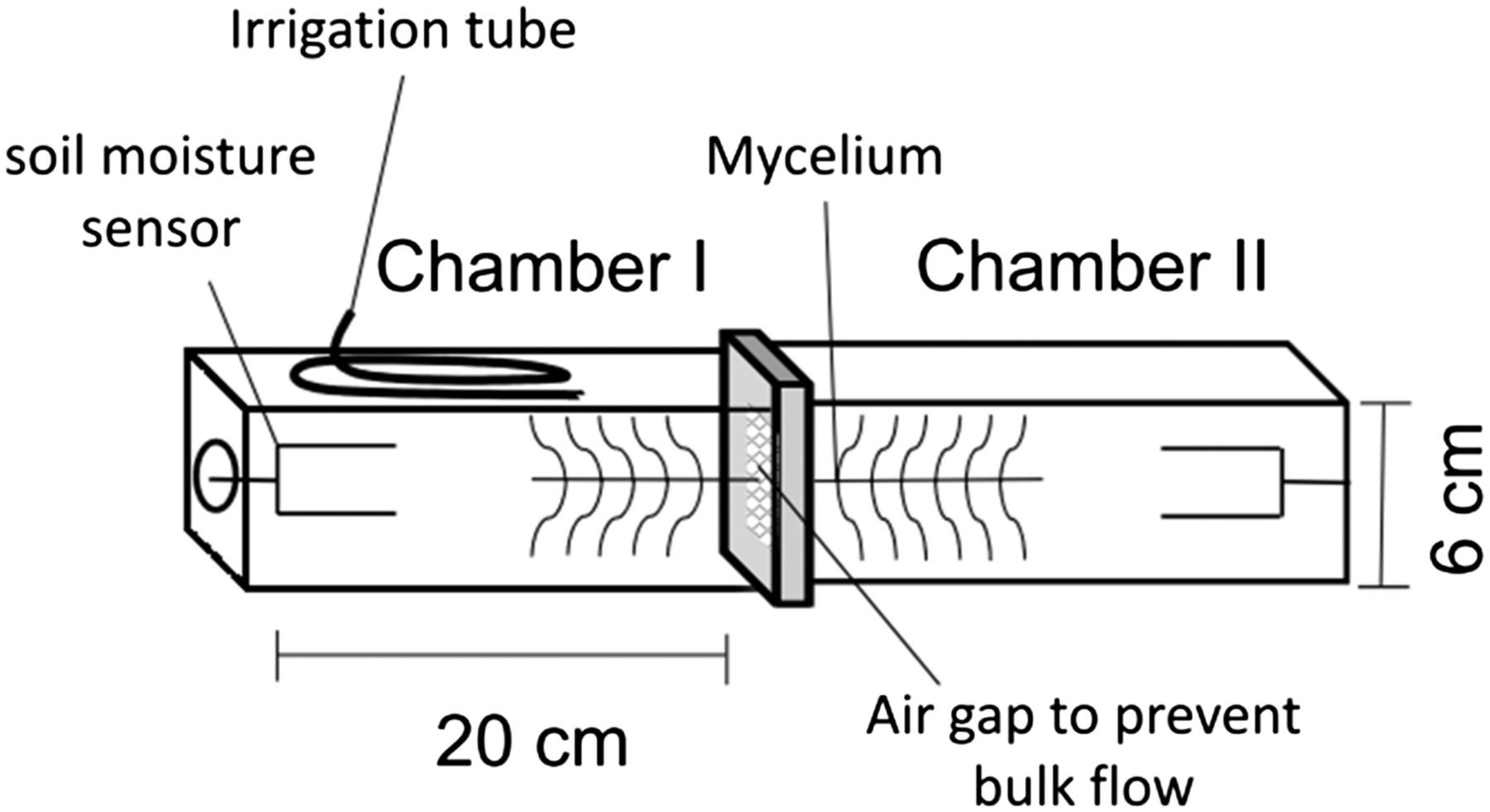
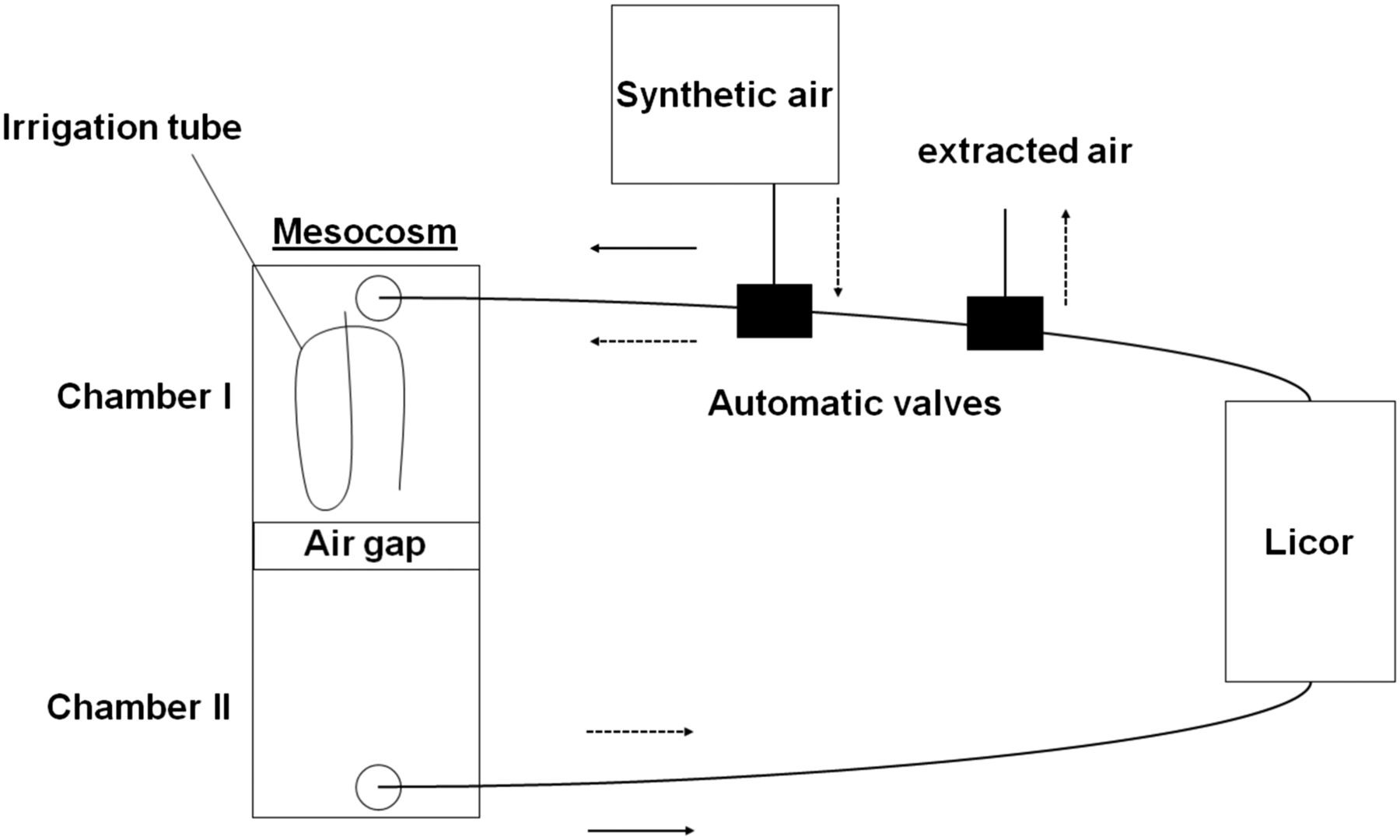
实验结果:
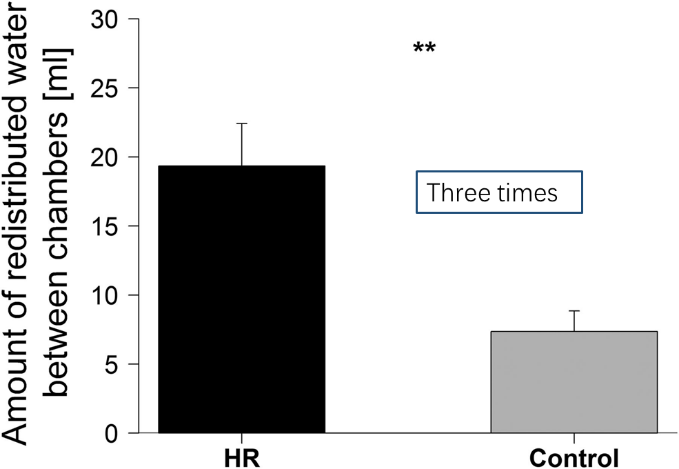
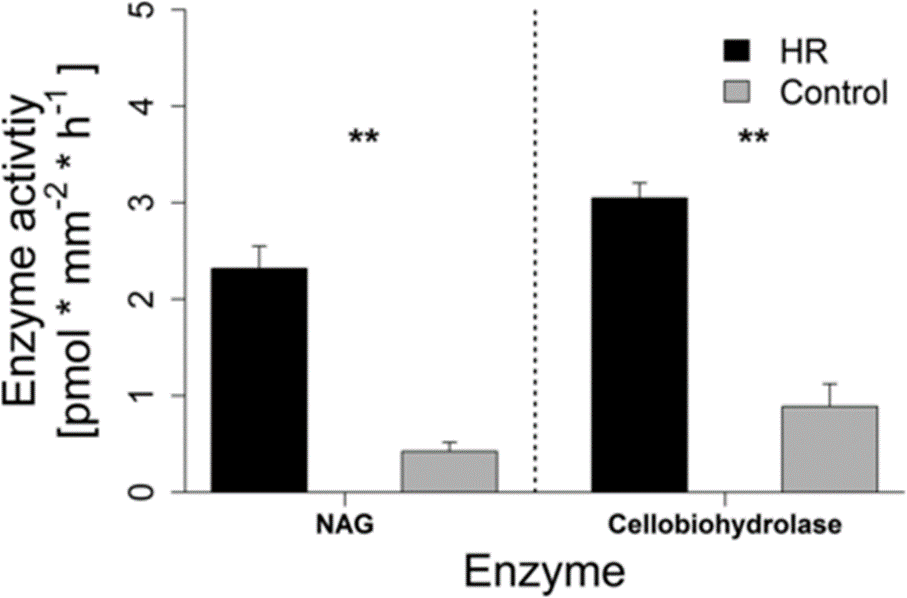
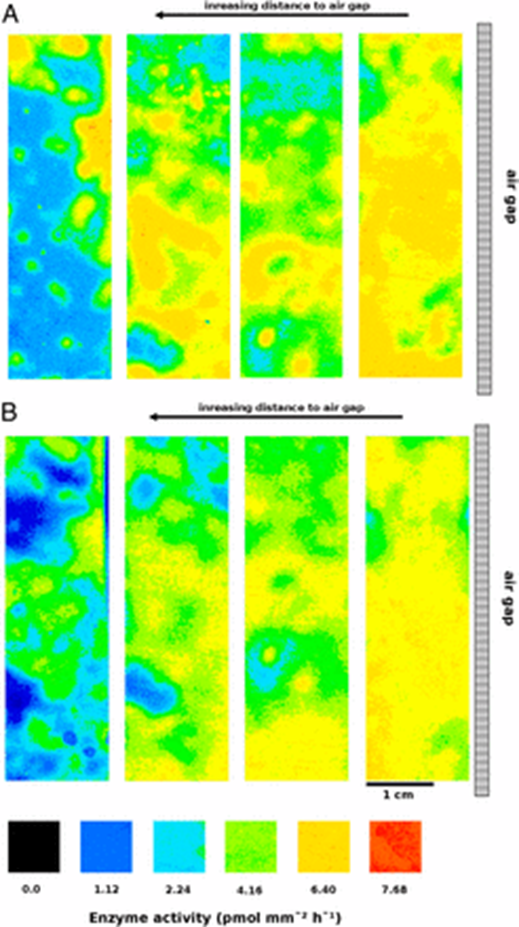
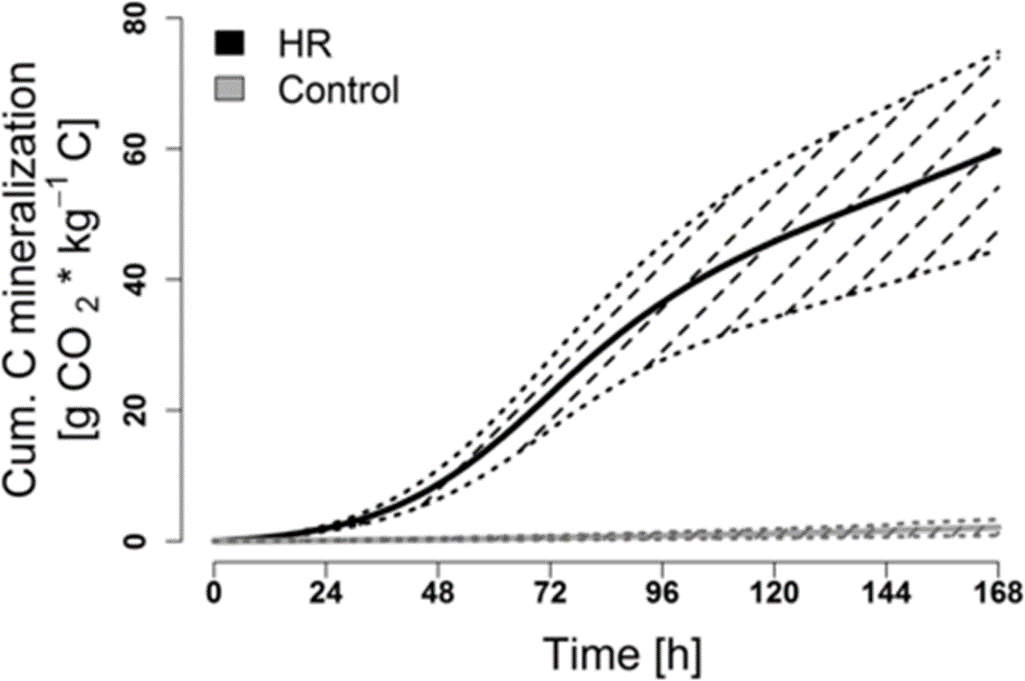
1.the volumetric soil water content :
HR:0.5px3H2O/cm3
Control:0.15px3H2O/cm3
Average water flux between bothchambers: 67 μL·cm−2·d−1
The number of hyphae bridging the twochambers in the air gap was about 2,300 cm-2.
The water flow velocities observed for thecentral cell lumen in arbuscular mycorrhizal hyphae (0.3 cm·min-1).
2. The increase in soil moisture byhydraulic redistribution significantly enhanced carbon mineralization by 2,800%and enzymatic activity by 250–350% in the previously dry soil compartmentwithin 168 h.
3. Enzyme activities decreased withincreasing distance to the air gap in chamber2.
4. After 168 h, the cumulative Cmineralization amounted to 59.7 g CO2·kg−1 C with active hydraulic redistribution and 2.1 g CO2·kg−1 C in controls.
from 方悠