
Becauseof the pronounced deterioration of water quality, phosphorus is considered asthe main factor in fostering eutrophication. In general, phosphorus in lakeshas two origins: internal release from sediment and external loading. Even ifthe external sources were under control, release of endogenous phosphorus fromsediment remained a primary source of nutrients for eutrophication in shallowlakes. Therefore, it is critical to control endogenous phosphorus(P) release orincrease P immobilization. We set calcium silicate hydrates(CSH) as an exampletocontrolP release from the sediment in the representation. CSH, a type of wollastoniteformed in the hyperalkaline and hydrothermal environment, used as a low-costnon-toxic inorganic seeding material for hydroxyapatite crystallization forphosphorus recovery.
Forthe literature 1st, you can get it from http://dx.doi.org/10.1016/j.cej.2017.02.117. This study aimed toinvestigate the immobilization and release of phosphorus in lake sediment by additionof CSH. The effects of CSH dosage, pH, and contact time on the release ofphosphorus and phosphorus species in sediment were studied.Theconclusions of the study are summarized as follows:
(1)CSH restrained effectively phosphorus release from the sediment. The optimalCSH dosage was 50 mg·g−1 for the sediment (see Table 1).
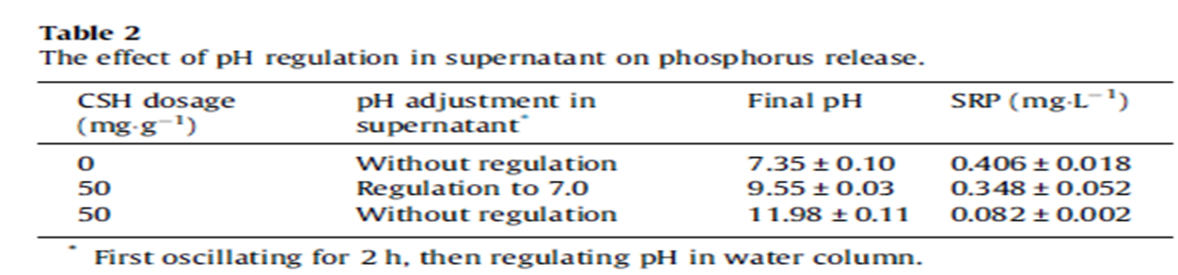
(2)pH had a significant effect on phosphorus immobilization in sediment by CSH(see Table 2).
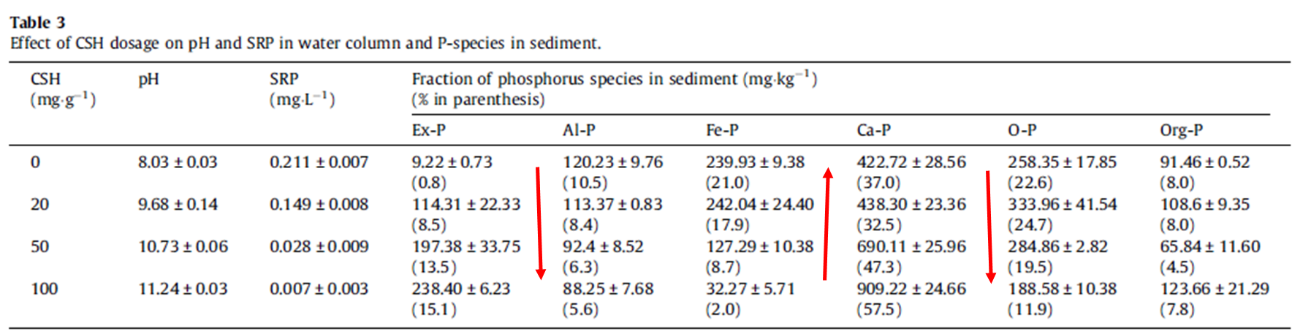
(3)CSH amendment led to the increase of Ca-P and Ex-P that were mainly convertedfrom Fe-P and Al-P, especially from Fe-P due to the ligand exchange reactionswhere hydroxide ions replaced phosphate under the elevated pH by CSH (see Table3).
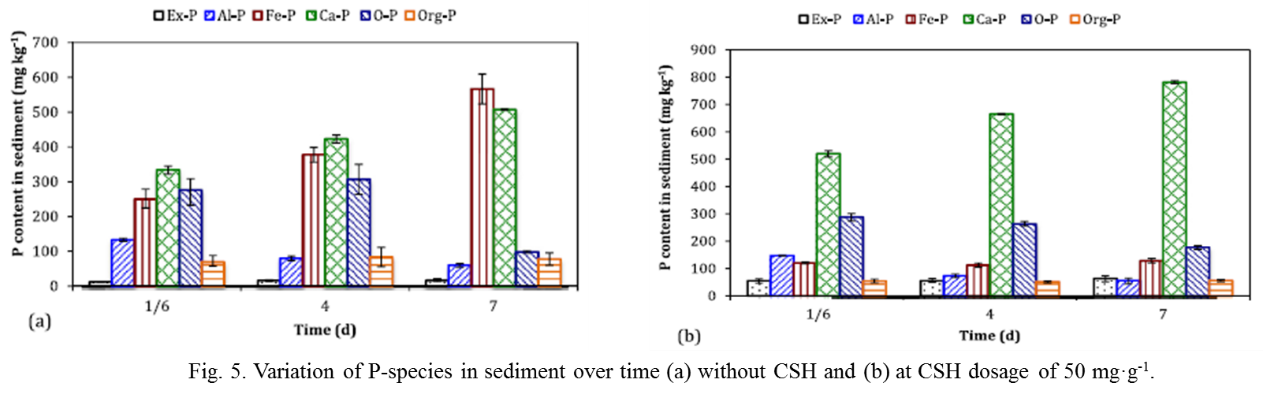
(4)CSH can reduce the potential risk of phosphorus release from sediment (see Fig.5).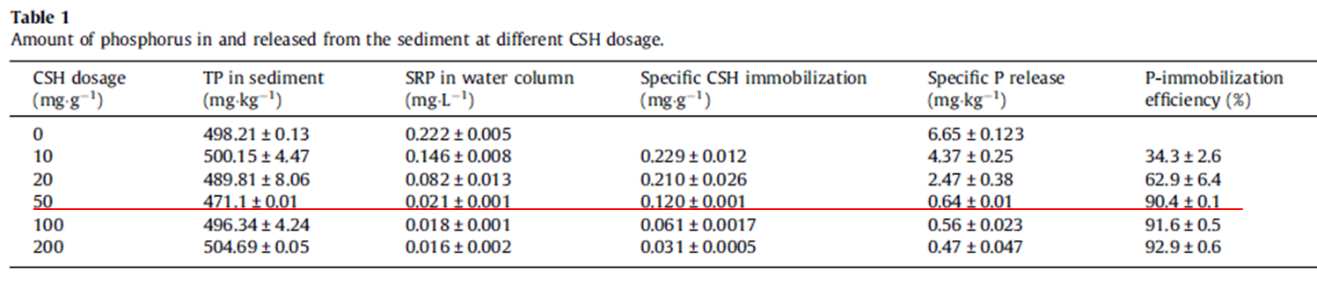
Forthe literature 2nd, you can get it from http://dx.doi.org/10.1016/j.cej.2017.08.134. The objective of thisstudy is to investigate the impact of Myriophyllumspicatum coupled with CSH on the immobilization and sorption of phosphorusin the sediment of a shallow lake. The following major conclusions can bedrawn:
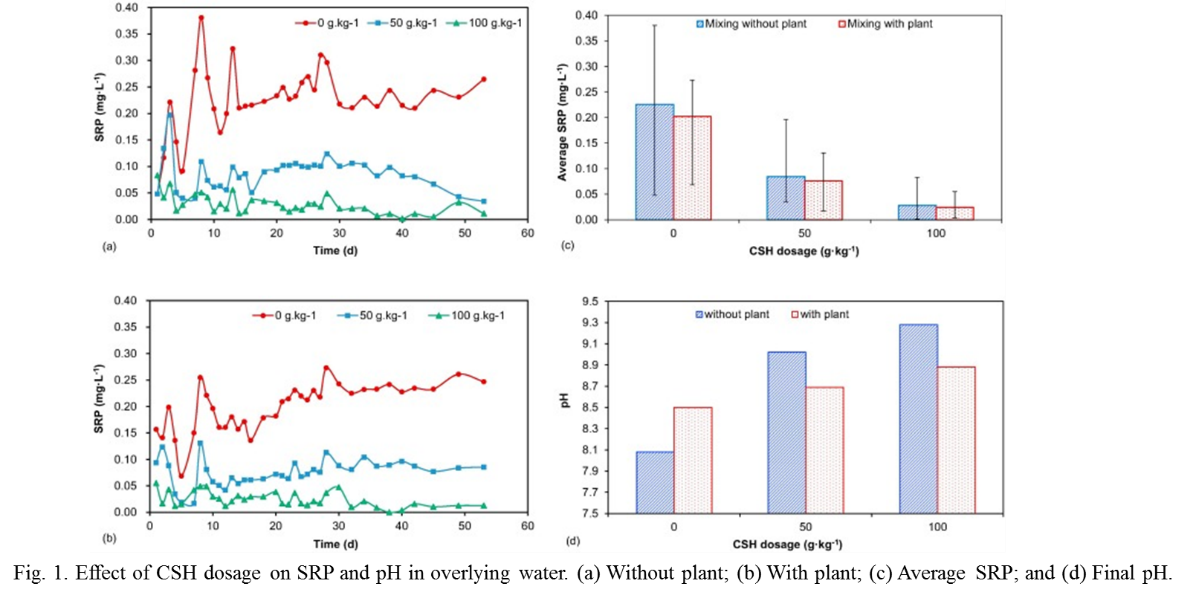
(1)CSH amendment had significant effect on immobilization of phosphorus insediment (see Fig.1 a and b).
(2)Plants mitigated the increase of pH caused by the CSH amendment (see Fig.1 d).
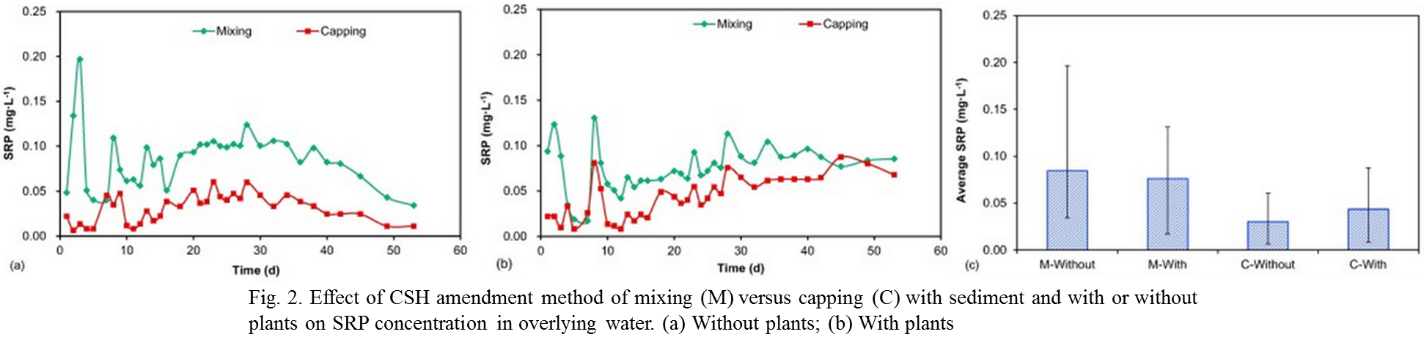
(3)CSH amendment methods, capping and mixing, had discernible effect on SRP inoverlying water. The SRP from the CSH capping sediment was generally lower thanthe CSH mixing sediment, especially for the case without plants (see fig.2).
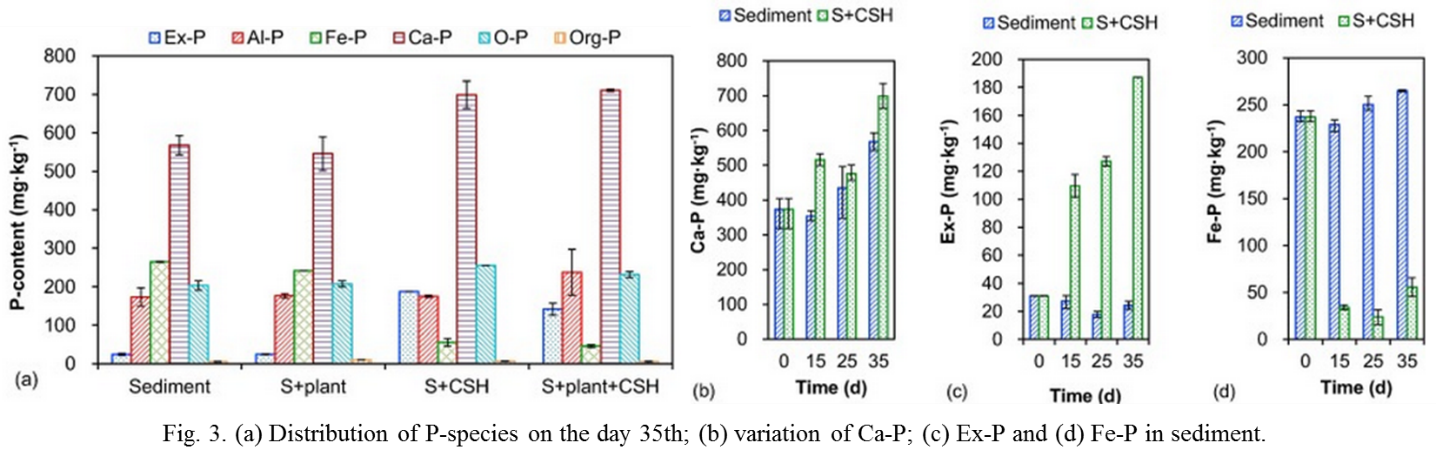
(4)CSH had more decisive effect on the phosphorus speciation than the plants (seeFig.3).
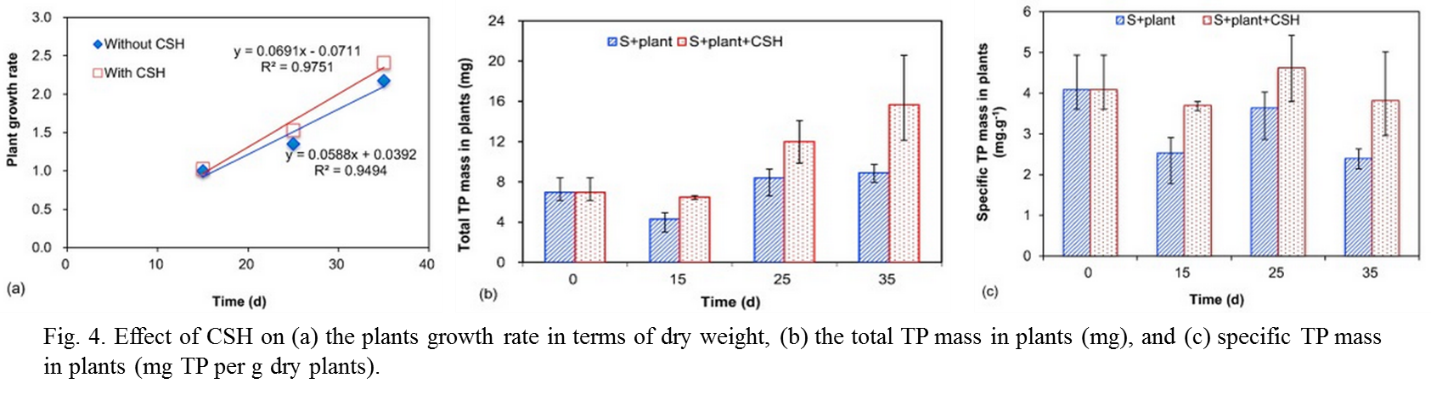
(5)Myriophyllum spicatum showed lesseffect on the phosphorus immobilization and speciation in the sediment, butuptook bioavailable phosphorus as nutrition, thereby reducing phosphorus in thesediment (see Fig.4).
from 李强